Does Palmistry Work?

Does Palmistry Actually Work?

It is the most direct question anyone can ask about palmistry, and it deserves a direct answer that does not dodge into either sneering dismissal or misty faith.

The answer depends on what you mean by "work" — and clarifying that turns out to be the most useful thing you can do before picking up someone's hand.

Quick answer

Palmistry does not work as a verified predictive system. It can work as a reflective tool — a structured framework for self-exploration — if used with appropriate expectations.

No As PredictionPotentially As ReflectionNot Supported Scientific EvidenceThousands of Years Cultural Longevity
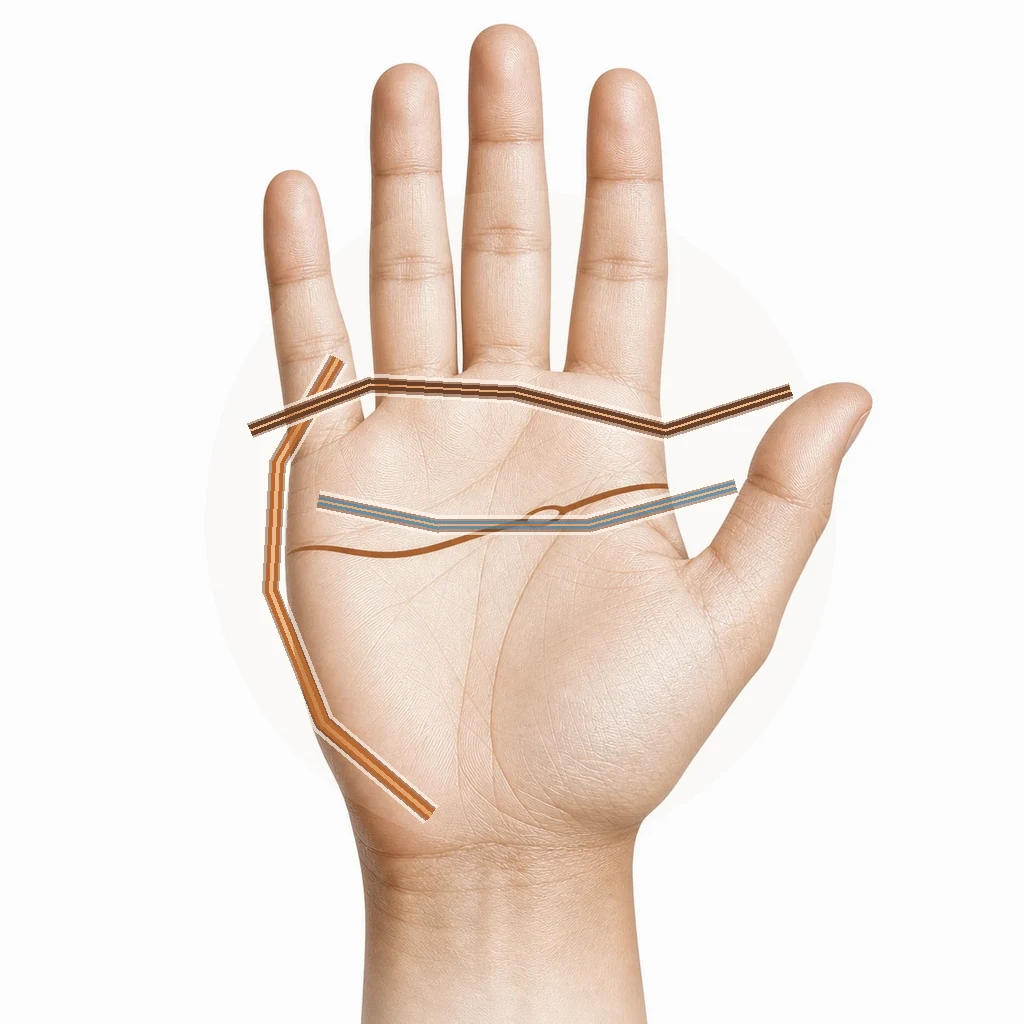
Editorial illustration of an open palm with a balance scale annotation
Museum field-note style illustration of a palm on aged parchment with a fine balance scale drawn beside it, warm editorial tone, no mystical symbols.
01Overview

Overview

The short answer

As a system for predicting specific future events, health outcomes, or personality traits: palmistry does not work. No controlled study has found it to perform better than chance when readers cannot see or interact with the subject.

As a reflective practice — a culturally rich, structured way to prompt thinking about one's tendencies, relationships, and life direction — it can be genuinely useful to people who approach it with that intent.

The distinction matters because conflating the two leads to real harms: people making consequential decisions based on readings, experiencing unnecessary fear from predictions of death or illness, or failing to seek professional help because a palmist said everything would be fine.
Evidence summary

Verdict

Not as prediction. Potentially as reflection, with appropriate expectations.

No Predictive EvidenceReflection Can Be UsefulExpectations Matter
02WHAT WORKING MEANS

What "working" would require

For palmistry to work as prediction, readers would need to demonstrate above-chance accuracy on specific claims under conditions that control for visual cues, cold reading, and confirmation bias. This has not been achieved in controlled testing.

For palmistry to work as reflection, it needs only to provide a meaningful framework for self-exploration that people find useful. This is a much lower and more honest bar — and one the tradition can genuinely meet for many people.

03WORKING MYTHS

Myth versus reality

Myth

Palmistry works because it has survived for thousands of years.

Reality

Cultural longevity reflects human interest in self-knowledge and pattern-finding, not verified predictive accuracy.

Myth

It worked for me, so it must work.

Reality

Personal confirmation is the Barnum effect and confirmation bias in action, not controlled evidence.

Myth

It either works completely or is complete nonsense.

Reality

A practice can be reflectively valuable and predictively unverified at the same time.

04DECISION TEST

The decision test

Should you use palmistry to decide something important?

No. It is not a verified decision-making instrument. Use it to prompt reflection, not to reach conclusions.

05PERSPECTIVE

Perspective

Asking whether palmistry works is like asking whether poetry works. It depends entirely on what you want it to do. If you want an accurate map of the future, neither can help. If you want a language for thinking about human experience, both can be remarkable.

06TAKEAWAYS

Verdict

Palmistry does not work as a predictive system — no controlled evidence supports it.

Supporting Finding

It can work as a reflective tool for people who approach it with realistic expectations.

Practical Use

The difference between these uses is important and affects the potential for harm.

Evidence Status

Cultural longevity is not evidence of predictive accuracy.

07FAQ

FAQ

Common follow-up questions

If palmistry does not work, why do so many people believe in it?

The Barnum effect, confirmation bias, and the human desire to find patterns and meaning all contribute. These are powerful psychological forces that operate independently of whether the system is accurate.

Are there any verified palm-based predictions in history?

No independently verified, controlled predictions from palmistry are on record. Anecdotal accounts exist but do not constitute evidence.

Can palmistry be used alongside therapy?

Some practitioners use symbolic or projective tools, including palmistry, as prompts for self-reflection. The value in this context comes from the conversation, not from the palm's predictive accuracy.