Marriage Line Basics

How Many Marriage Lines Should You Have?

The marriage line is small enough to miss and emotionally large enough to worry about. Once people find it, the next question usually comes fast: how many should there be?

Is one marriage line ideal, are two lines alarming, and does having no visible line mean anything definite?

Marriage lines are less like a count of future weddings and more like marginal notes about significant emotional bonds.

Quick answer

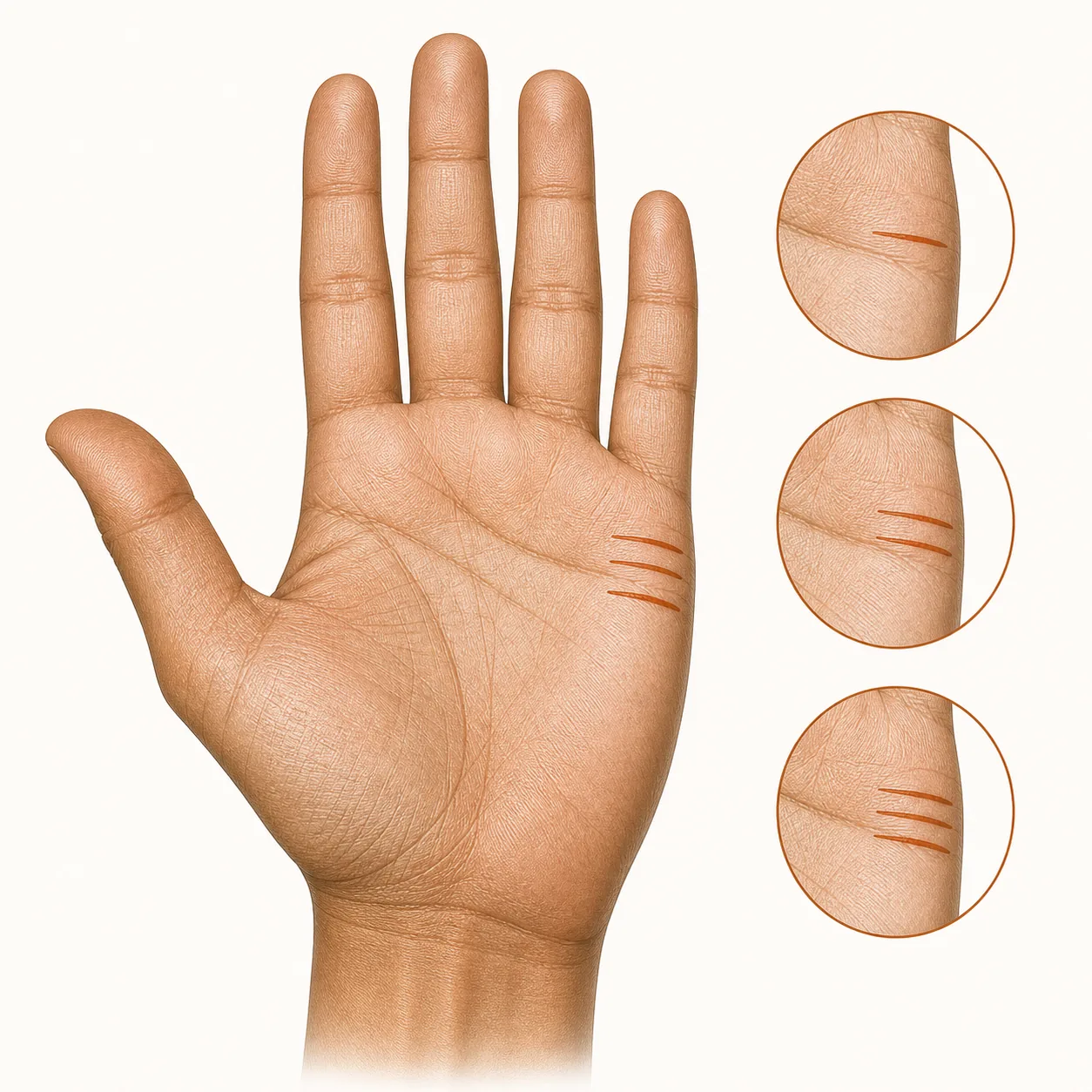
Most people have one to three marriage lines. One clear line is traditionally read as one central bond. Two or three lines suggest multiple significant relationships or emotional chapters. More lines usually indicate complexity, sensitivity, or relationship turbulence rather than a literal number of marriages.

One to three Common countNo No line means no love?Significant bonds Multiple linesDepth and clarity Best clue
Editorial illustration of a palm showing several small marriage lines below the little finger
Premium editorial palmistry illustration of an open hand with one to three marriage lines clearly highlighted below the little finger, pure white background, warm copper and walnut tones.
01Overview

Overview

The short answer

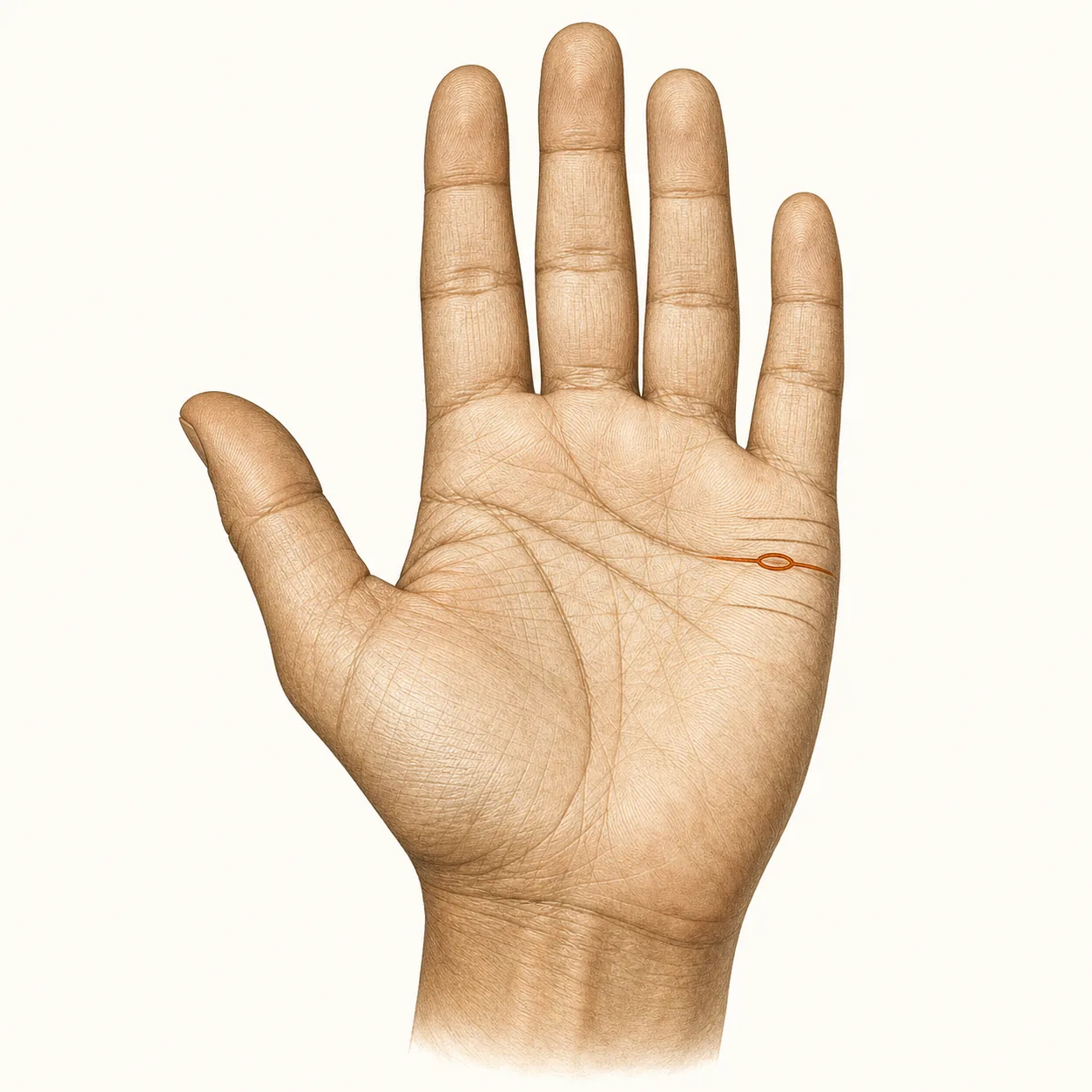
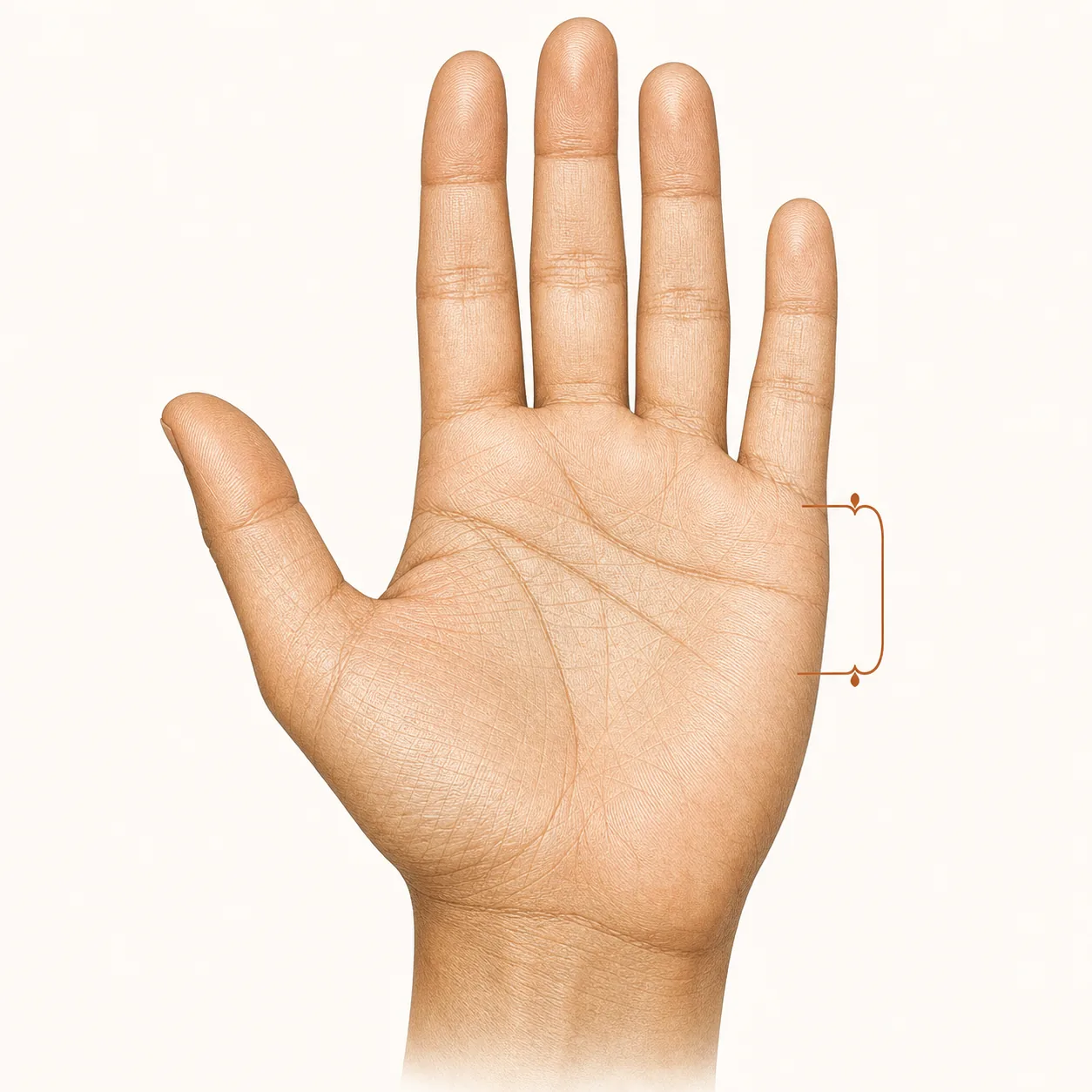
In palmistry, the marriage lines are the small horizontal marks on the outer edge of the palm below the little finger. Most hands show one to three visible lines in this area. That range is normal, and none of those counts should be treated as strange.

The mistake is assuming the count works like arithmetic. Two marriage lines do not automatically mean two legal marriages. Three lines do not mean three spouses. A faint secondary line may represent an important relationship, an emotional attachment, an engagement, or a chapter that mattered without becoming a formal marriage.

Palmists usually read the strongest line first. Depth, length, clarity, breaks, islands, forks, and overlap matter more than the raw number of lines.
02LINE COUNTS

What each count usually means

One clear marriage line is traditionally read as one central relationship theme: a bond that carries unusual emotional weight, whether or not it becomes a formal marriage. If the line is deep, straight, and unbroken, palmistry tends to read it favorably.

Two marriage lines suggest two significant emotional bonds or two relationship chapters. One may be a marriage, one may be an earlier relationship, or both may describe different phases of the same long partnership. The deeper and longer line is usually treated as the primary one.

Three or more marriage lines point less toward a precise number of marriages and more toward relational complexity. Some palmists read this as sensitivity, romantic idealism, or a life shaped by several meaningful attachments. If the lines are tangled, broken, or uneven, the reading becomes more complicated.

03THE NUMBER IS NOT THE VERDICT

The number is not the verdict

A single faint, broken marriage line is not necessarily stronger than two clear parallel lines. Palmistry gives more weight to clarity, continuity, depth, and markings than to the simple count of visible lines.

04COMPARISON

Marriage line counts at a glance

No visible line

Traditional reading

Romance may not be a central current theme

Reality check

Does not mean no love or no marriage

One line

Traditional reading

One dominant bond or relationship theme

Reality check

Most common simple reading

Two lines

Traditional reading

Two significant emotional bonds or phases

Reality check

Not automatically two marriages

Three or more

Traditional reading

Relationship complexity or sensitivity

Reality check

Quality and order matter more than count

05COMMON MYTHS

Myth versus reality

Myth

The number of marriage lines equals the number of marriages.

Reality

Marriage lines are read as significant emotional bonds, not a legal marriage counter.

Myth

One line is always better than two.

Reality

One line can be weak or broken, while two lines can include one clear primary relationship and one minor emotional chapter.

Myth

No marriage line means you will never marry.

Reality

Many people with faint or absent marriage lines still form lasting relationships. Fine lines change and visibility varies by skin texture, age, and hand use.

06DECISION TEST

The decision test

Should I judge my relationship future by the number of marriage lines?

No. Use the count only as a starting point for reflection. The clearer question is which line looks strongest, whether it continues cleanly, and whether the broader palm supports the same interpretation.

07PERSPECTIVE

A better way to read the lines

The palmistry mistake is treating the hand like a receipt. Relationships do not arrive as neat numbered items, and the palm does not become more truthful by pretending they do. A more useful reading asks what kind of emotional pattern the lines suggest: steadiness, selectivity, intensity, ambiguity, or change. That is where the conversation becomes more interesting than counting.

08TAKEAWAYS

Verdict

The number of marriage lines is a starting clue, not a literal count of future marriages.

Supporting Finding

Most people have one to three visible marriage lines.

Important Limit

Depth, clarity, continuity, and markings matter more than the number of lines.

Reader Guidance

No visible marriage line does not mean a person cannot love, marry, or form lasting partnerships.

09FAQ

FAQ

Common follow-up questions

Is it normal to have more than one marriage line?

Yes. Multiple marriage lines are common and usually indicate multiple significant emotional bonds or relationship phases rather than multiple legal marriages.

Which marriage line should I read if I have several?

Start with the deepest, longest, clearest line. Palmists usually treat that as the primary relationship line, while fainter lines add secondary context.

Can marriage lines appear later?

Yes. Fine lines in this area can deepen, fade, or become more visible over time as skin texture, age, hand use, and emotional life change.