Definitions

What Is a Destiny Number in Numerology?

Numerology isn't one system wearing a trench coat — it's several, and they don't fully agree with each other.

The destiny number is a good place to see that disagreement up close, because three major schools calculate it three different ways.

Quick answer

In numerology, the destiny number is the sum of a person's full birth name, converted letter by letter into numbers and reduced to a single digit or master number. It sits within a family of core numbers used to describe personality and life direction, and its exact calculation method depends on which numerological tradition — Western/Pythagorean, Chaldean, or Vedic — is being used.

This describes numerology's internal framework. It does not assert that the framework accurately predicts anything about a real person.

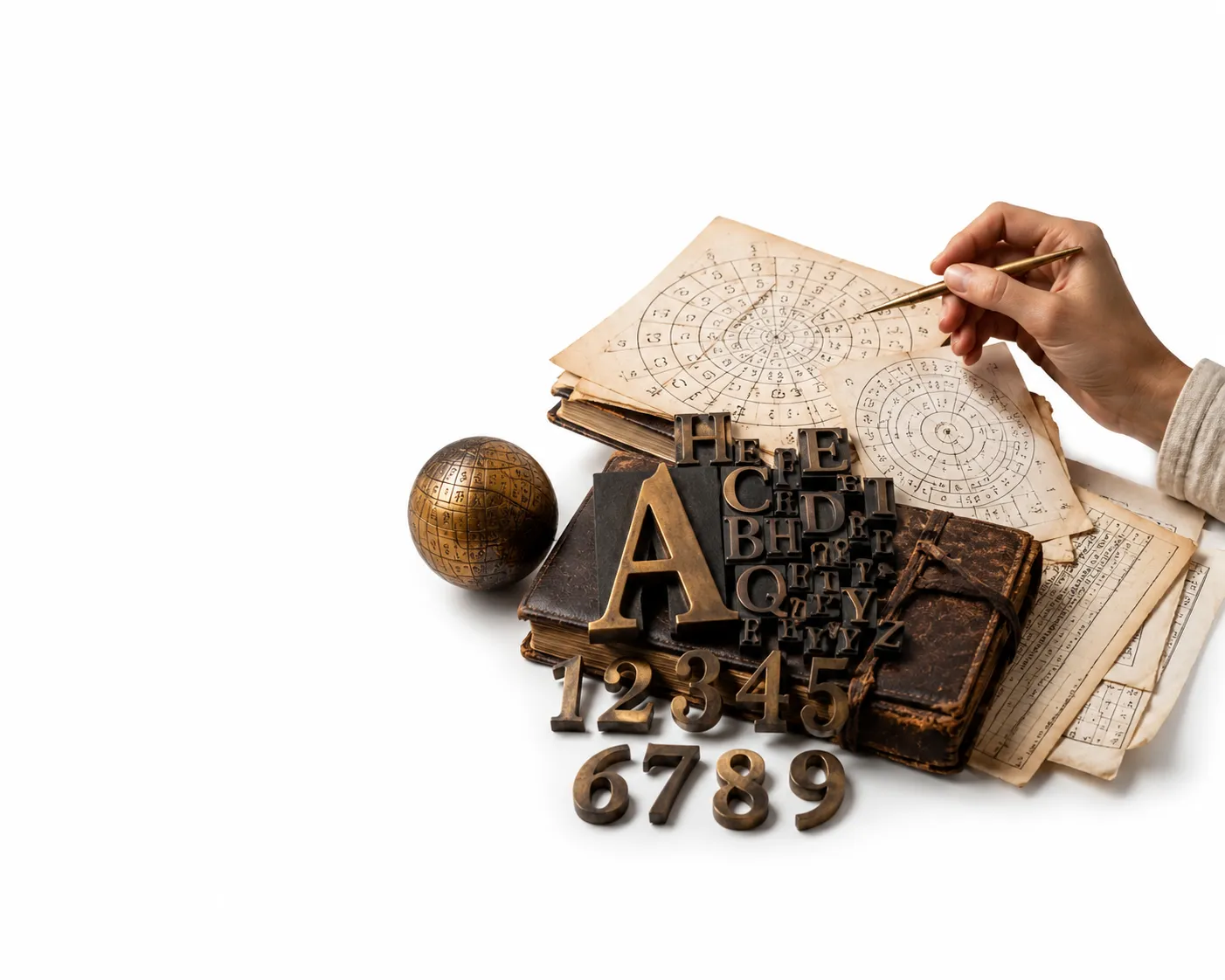
Three overlapping letter-to-number charts representing different numerology schools
Core NumbersFamily
Full Birth NameInput
Western, Chaldean, VedicSchools
PartialAgreement
01Overview

Overview

One concept, three competing rulebooks

Interpretation is traditional

Western, or Pythagorean, numerology assigns letters values 1 through 9 in strict alphabetical sequence, repeating the cycle. Chaldean numerology, which claims older roots, uses a different letter-value table and treats the number 9 as too sacred to assign to any letter at all.

Vedic numerology, tied to Indian astrological tradition, sometimes calculates a comparable "name number" but weights it differently against birth-based numbers, which it treats as primary.

None of this is a case of one school being more "correct" than another — they're separate rule sets that happen to use the same vocabulary. A destiny number of 7 in one system and a destiny number of 4 in another, calculated from the identical name, aren't a contradiction. They're just different games with different rules.

02SCHOOL COMPARISON

How the schools differ

How the schools differ
FeatureWestern/PythagoreanChaldean
Letter orderSequential A–Z cycling 1–9Grouped by sound/vibration, not alphabet order
Uses the number 9?Yes, for I, R, and other lettersNo — considered too sacred to assign
Claimed originModern Western revival, 19th–20th centuryOlder Middle Eastern tradition (contested)

"Claimed origin" reflects how each tradition describes itself, not a verified historical lineage.

03PRACTICAL NOTE

Why this matters if you're calculating your own

If you calculate your destiny number using two different apps or books and get two different answers, that's usually not an error — it's two schools' worth of convention producing two legitimate-within-their-own-rules results.

03TAKEAWAYS

Verdict

"Destiny number" names a concept, not a single fixed calculation

Supporting Finding

Western, Chaldean, and Vedic systems assign letter values differently

Important Limit

Always state which convention produced a given number before comparing results