Practical Palmistry

How to Identify Your Hand Type

Identifying your hand type requires exactly two measurements and slightly more self-awareness than usual. The measurements are objective; the self-awareness helps with the mixed cases, which is to say: most cases.

The interesting thing about measuring your hand is that it forces a level of attention you almost never pay to something you use constantly. Most people could not accurately describe their own palm shape without looking.

Quick answer

To identify your hand type: (1) Compare your palm's height to its width — roughly equal = square palm; noticeably taller = oblong/rectangular palm. (2) Compare your middle finger length to your palm height — fingers shorter than palm = short fingers; fingers roughly equal or longer = long fingers. Then match: square + short = Earth; square + long = Air; oblong + short = Fire; oblong + long = Water.

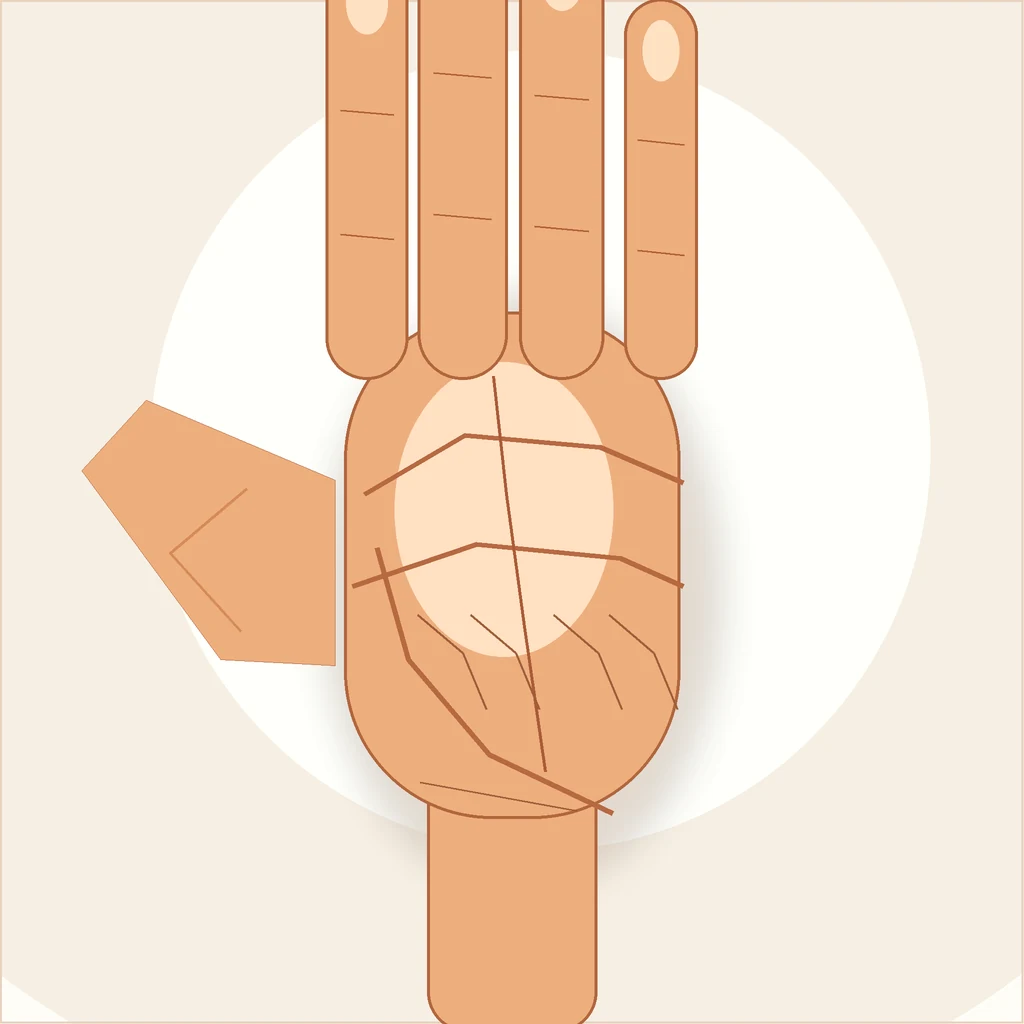
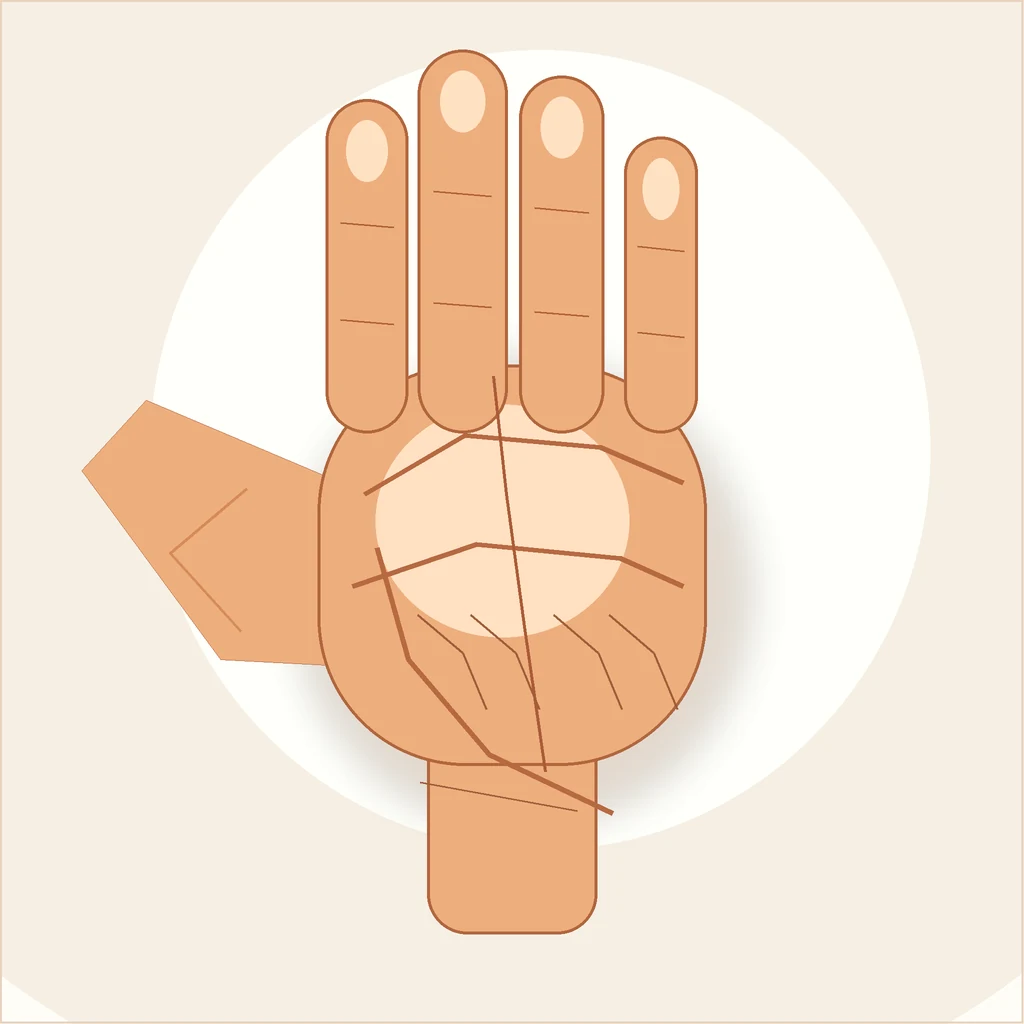
Editorial diagram showing palm measurement method
Museum field-note editorial illustration of a palm with measurement arrows showing palm height, palm width, and middle finger length, educational diagram style on aged parchment.
Palm shape: square or oblong?Step 1
Finger length: short or long vs palm?Step 2
EarthSquare + Short
WaterOblong + Long
01Overview

Overview

The measurement method

Palm height is measured from the base of the middle finger (the crease where the finger meets the palm) down to the wrist crease. Palm width is measured across the widest part of the palm, usually just below the finger bases. These two measurements give you palm shape.

For finger length, measure the middle finger from its base (same starting point as the palm height) to its tip. Compare this to the palm height measurement. If the middle finger is clearly shorter than the palm, your fingers are "short." If the middle finger is roughly equal to the palm height or longer, your fingers are "long."

This produces your type from the grid. Most people will find the match approximate rather than exact, which is normal and expected. Use the grid as a starting point, then adjust based on which features feel most dominant.
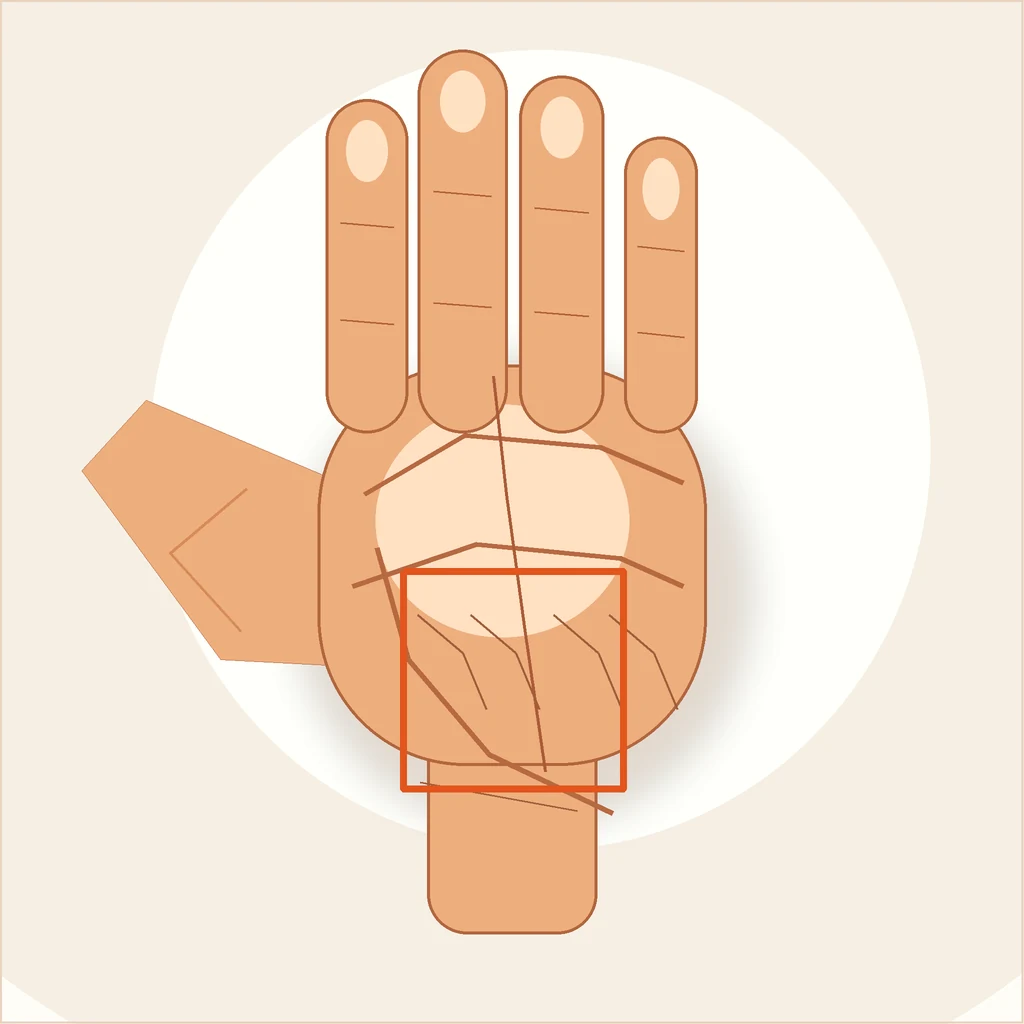
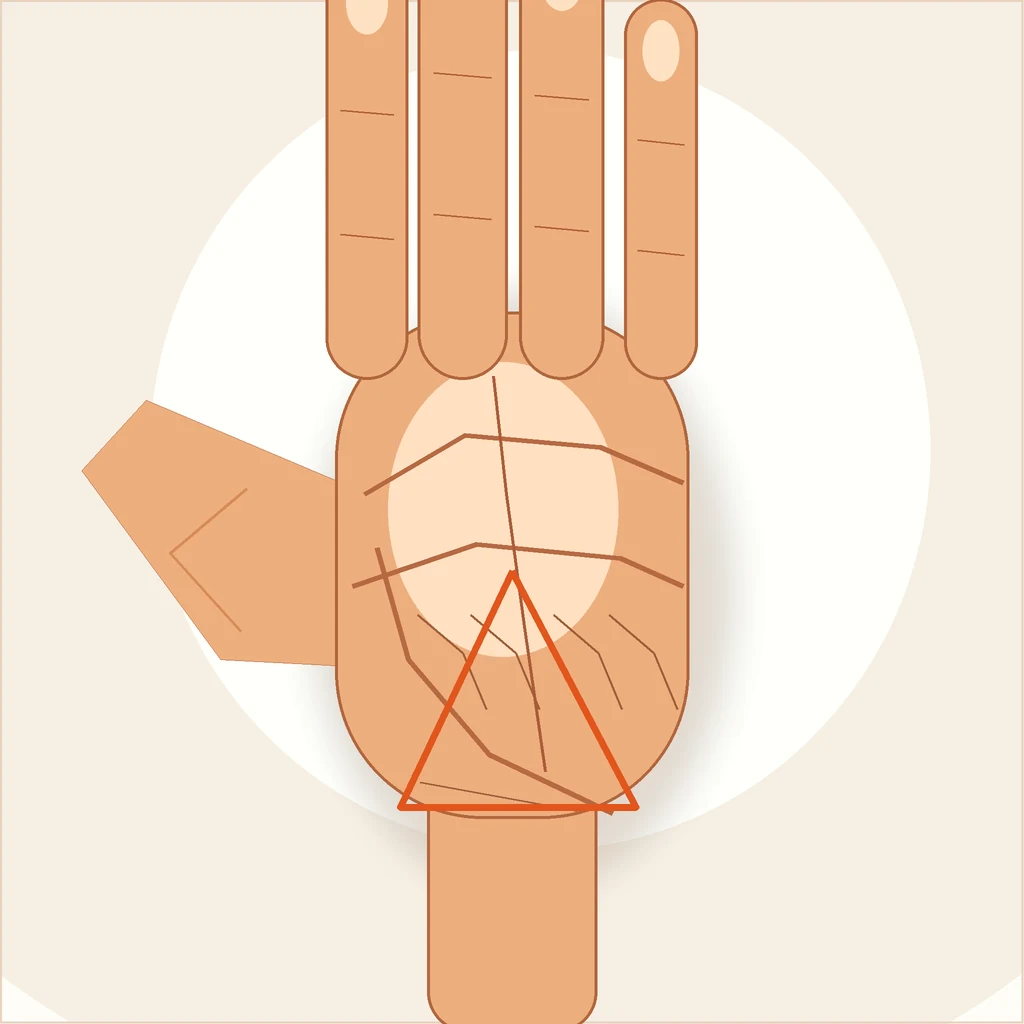
AI capability map

What the model can detect versus what it cannot know

Can do

Describe visible features, compare lines, and apply a learned palmistry framework.

Cannot do

Verify future events, hidden facts, spiritual claims, or medical conclusions.

02MIXED RESULTS

What to do with mixed results

If your palm is borderline between square and oblong, look at the overall visual impression first. Square palms look compact and solid. Oblong palms look longer, with more vertical emphasis. The eye often judges these more accurately than a millimetre-scale measurement, because it integrates multiple cues simultaneously.

If your fingers are borderline (close to equal to the palm height), consider the quality of the fingers as well. Long fingers often have visible joints and a certain delicacy. Short fingers often look broad in proportion to their length. These secondary observations can help resolve ambiguous measurements.

If you remain genuinely between two types, you are a Mixed type. Identify which type feels more dominant, read both, and note which combination produces a description that resonates. Palmistry, particularly in the four-element system, rewards reading the combination rather than insisting on a single box.

03TAKEAWAYS

Verdict

Identify palm shape by comparing height to width: equal = square; taller = oblong.

Supporting Finding

Identify finger length by comparing middle finger to palm height: shorter = short; equal/longer = long.

Important Limit

Match to type: Earth (square/short), Air (square/long), Fire (oblong/short), Water (oblong/long).

Practical Use

Most hands are mixed — use the dominant type and note secondary influences.

04FAQ

FAQ

Common follow-up questions

Should I use a ruler or is eyeballing enough?

A ruler gives more consistent results, especially for borderline cases. Eyeballing works well for clear-cut types (very square palms, very long fingers) but misses the subtler mixed cases.

Which hand should I measure?

In most modern practice, measure the dominant hand for your current type. You can also measure both and compare — differences between hands are sometimes informative.