Palmistry Accuracy

Is Palmistry Accurate?

Palmistry readings often feel startlingly accurate. The question is whether that feeling tracks reality, or whether something else is doing the work.

Understanding the gap between felt accuracy and verified accuracy is the most useful thing a curious person can know about palm reading.

Quick answer

Palmistry has not been shown to be accurate in controlled tests. Readings feel accurate largely due to psychological effects — but this does not mean they have no value as a reflective tool.

Not Supported Scientific EvidenceOften High Felt AccuracyBarnum Effect ExplanationReflection Best Use
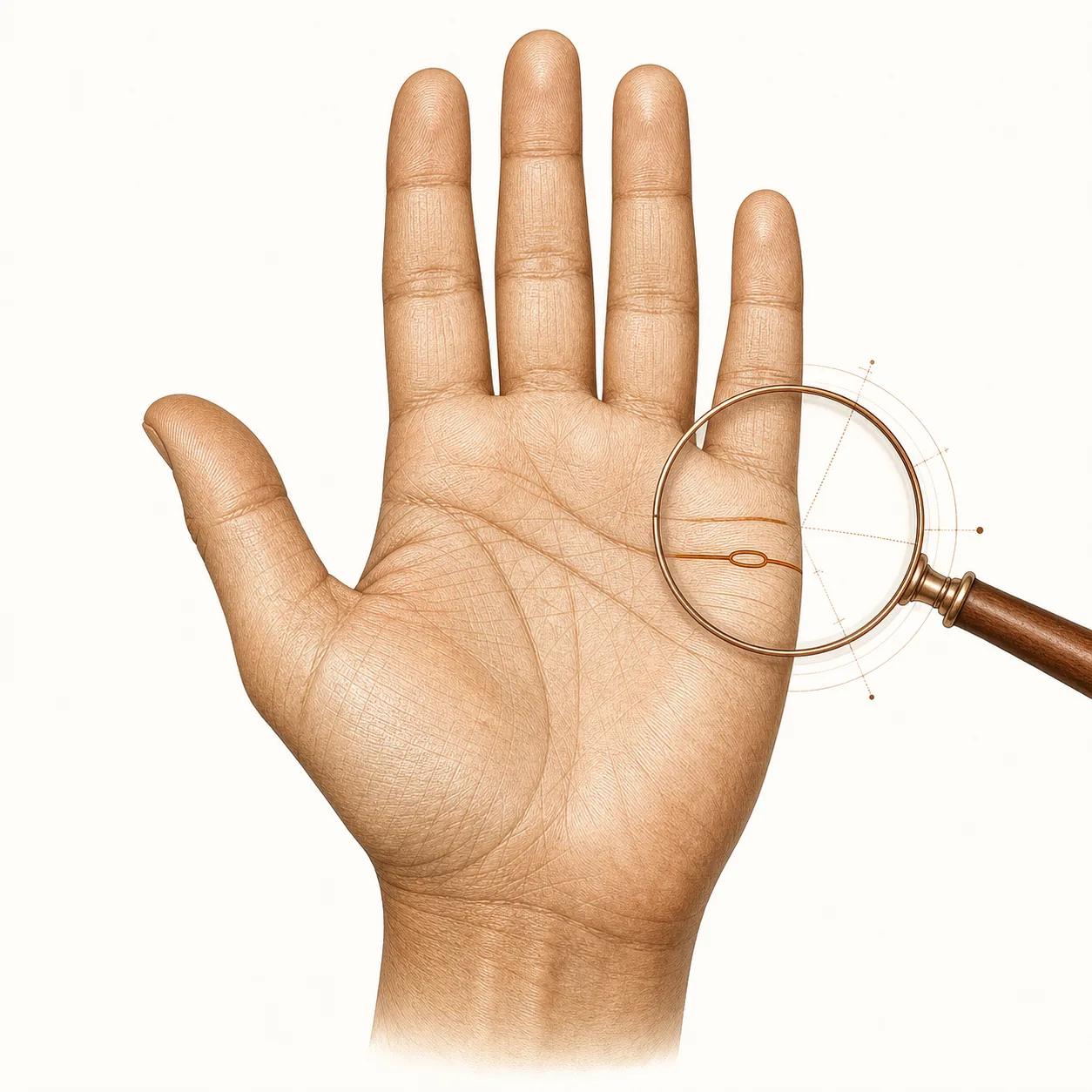
Editorial illustration of a palm with annotated lines and a magnifying glass
Museum field-note style illustration of a hand on aged parchment with a fine lens nearby, warm editorial tone, no mystical symbols.
01Overview

Overview

The short answer

Several researchers have tested palmistry's accuracy by having palmists read hands without knowing the subject, then checking predictions against life facts. Results have not exceeded chance. The most methodologically robust studies show that palmistry does not reliably identify personality traits, health history, or future events.

Readings feel accurate for well-documented reasons: the Barnum effect (generic statements feel personal), the cold reading techniques many practitioners use unconsciously, and confirmation bias (we remember the hits and forget the misses).

This does not make palmistry worthless. As a reflective or meditative practice — a structured way to think about one's life, tendencies, and choices — it has real value for many people. That value comes from the reflection, not the prediction.

Evidence summary

Verdict

Not accurate as prediction; potentially useful as reflection. The felt accuracy is real but has a psychological, not a palmistic, explanation.

No Controlled EvidenceBarnum Effect Explains ResultsReflective Value Remains
02WHY IT FEELS TRUE

Why readings feel accurate

The Barnum (or Forer) effect is the primary explanation. Statements like "you have untapped potential you have not yet fully used" or "you sometimes doubt whether you made the right decision" apply to nearly everyone, yet feel personally revealing. Palmistry readings are full of such statements.

Cold reading — the unconscious or deliberate use of visual cues, clothing, age, body language, and verbal responses to shape a reading — also makes readings feel more accurate than the palm itself produces. A skilled reader is often a skilled observer of people.

03STUDIES

What the studies show

Multiple controlled studies, including those testing palmistry against personality inventories and medical histories, have not found palmistry to exceed chance accuracy. When readers cannot see or interact with the subject — reducing cold reading opportunities — accuracy drops sharply.

04ACCURACY MYTHS

Myth versus reality

Myth

Palmistry has been proven accurate over thousands of years.

Reality

Longevity reflects cultural continuity, not accumulated evidence. Confirmation bias preserves traditions even when they do not predict reliably.

Myth

A reader who was right about me must have real ability.

Reality

One accurate reading in many is expected by chance. The Barnum effect makes general readings feel personally accurate to almost everyone.

Myth

Scientific studies have confirmed palmistry.

Reality

No published, peer-reviewed study has confirmed palmistic predictions at above-chance rates under double-blind conditions.

05BY CLAIM TYPE

Accuracy across palmistry claims

Personality traits

Evidence level

Very low

Notes

Controlled studies find no consistent match

Health markers

Evidence level

Very low

Notes

Some hand features link to genetics, but not palmistry's own system

Life events

Evidence level

None demonstrated

Notes

No verified predictive accuracy

Reflective insight

Evidence level

Moderate (subjective)

Notes

Works as a prompt for self-reflection

06DECISION TEST

The decision test

Should palmistry accuracy claims affect important life decisions?

No. The accuracy is not verified at the level needed to justify major decisions. Use it as a conversation with yourself, not a report card from the universe.

07PERSPECTIVE

Perspective

Accuracy and value are not the same thing. A novel is not accurate about events that never happened, but it can be profoundly true about human experience. Palmistry occupies a similar space — and is most honest when it knows that about itself.

08TAKEAWAYS

Verdict

Controlled studies have not confirmed palmistry accuracy above chance.

Why It Feels True

Readings feel accurate due to the Barnum effect and cold reading, not genuine predictive ability.

Important Limit

Palmistry retains value as a reflective practice — a structured way to think about one's life.

Evidence Status

Treating palmistry as a literal forecasting instrument is not supported by evidence.

09FAQ

FAQ

Common follow-up questions

Has any scientific study ever confirmed palmistry?

No peer-reviewed, double-blind study has confirmed palmistry predictions at above-chance rates.

What is the Barnum effect?

The tendency to accept vague, general personality statements as specifically accurate descriptions of oneself. First described by psychologist Bertram Forer.

Are some palmists more accurate than others?

Some are more skilled at cold reading and observation, which makes readings feel more accurate — but this is about reading people, not palms.