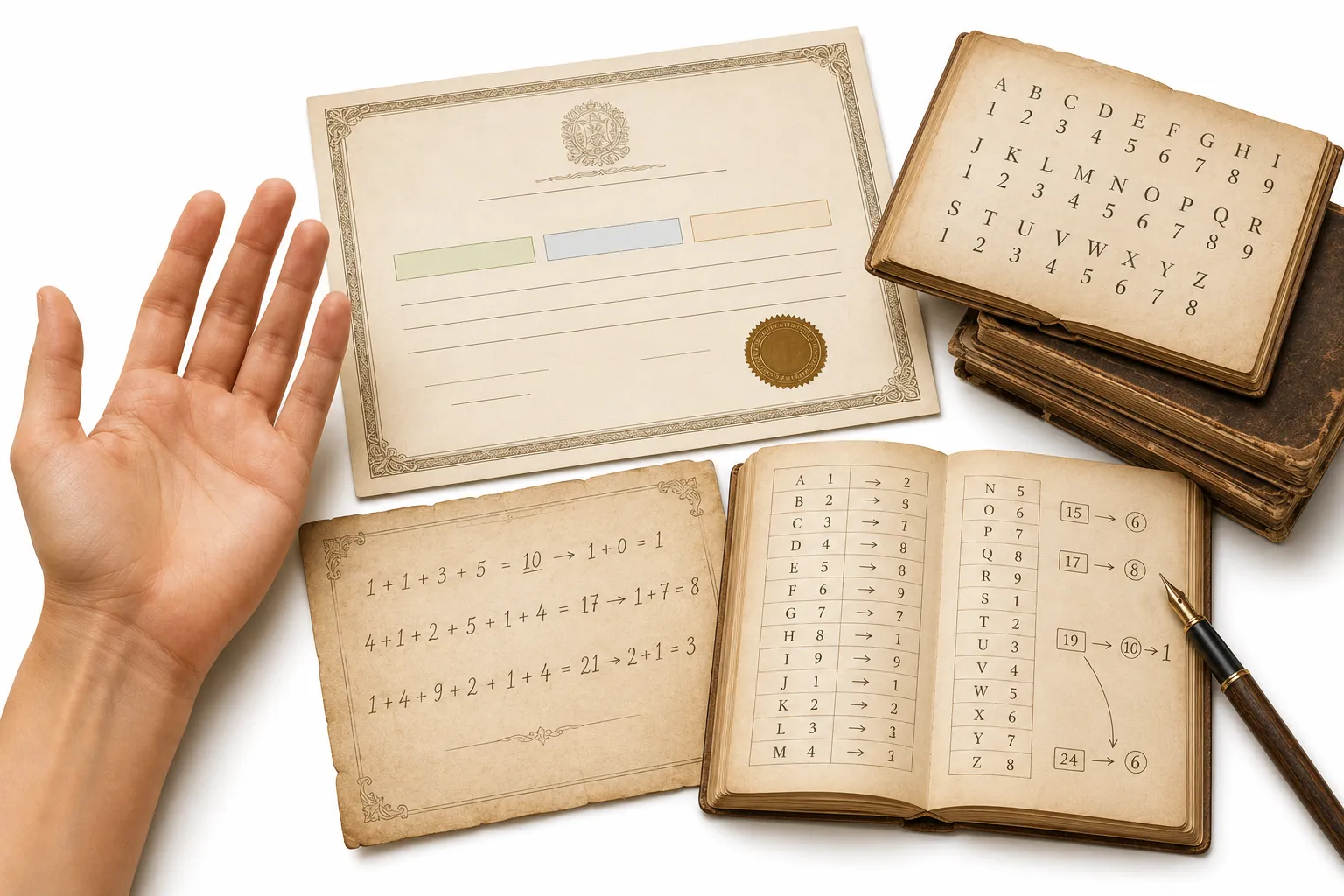
The logic mirrors the middle-name rule: the destiny number is meant to represent the complete name given at birth, and a surname is as much a part of that as a first name. There's no numerological convention that treats the surname as optional or secondary within the core calculation.
Where it gets more interesting is after a legal surname change — marriage being the most common case. Numerology tends to treat the birth surname's calculation as the fixed, foundational number, while a new surname produces a distinct, secondary figure rather than overwriting the original.