Number Index

What Does Each Life Path Number Mean?

Twelve possible numbers, nine single digits and three masters, and numerology has an interpretation for every one.

But the interesting part isn't just the flattering description. Each number also has a difficult expression, and different numerology traditions can disagree about what that expression looks like.

Quick answer

Life Path numbers run from 1 through 9, with 11, 22, and 33 commonly treated as master numbers in Western numerology. Each is traditionally associated with particular strengths, challenges, motivations, and patterns. These meanings are part of numerology tradition, not scientifically validated personality findings.

Every description below reflects numerology tradition, not evidence about real personality, appearance, relationships, or fate.

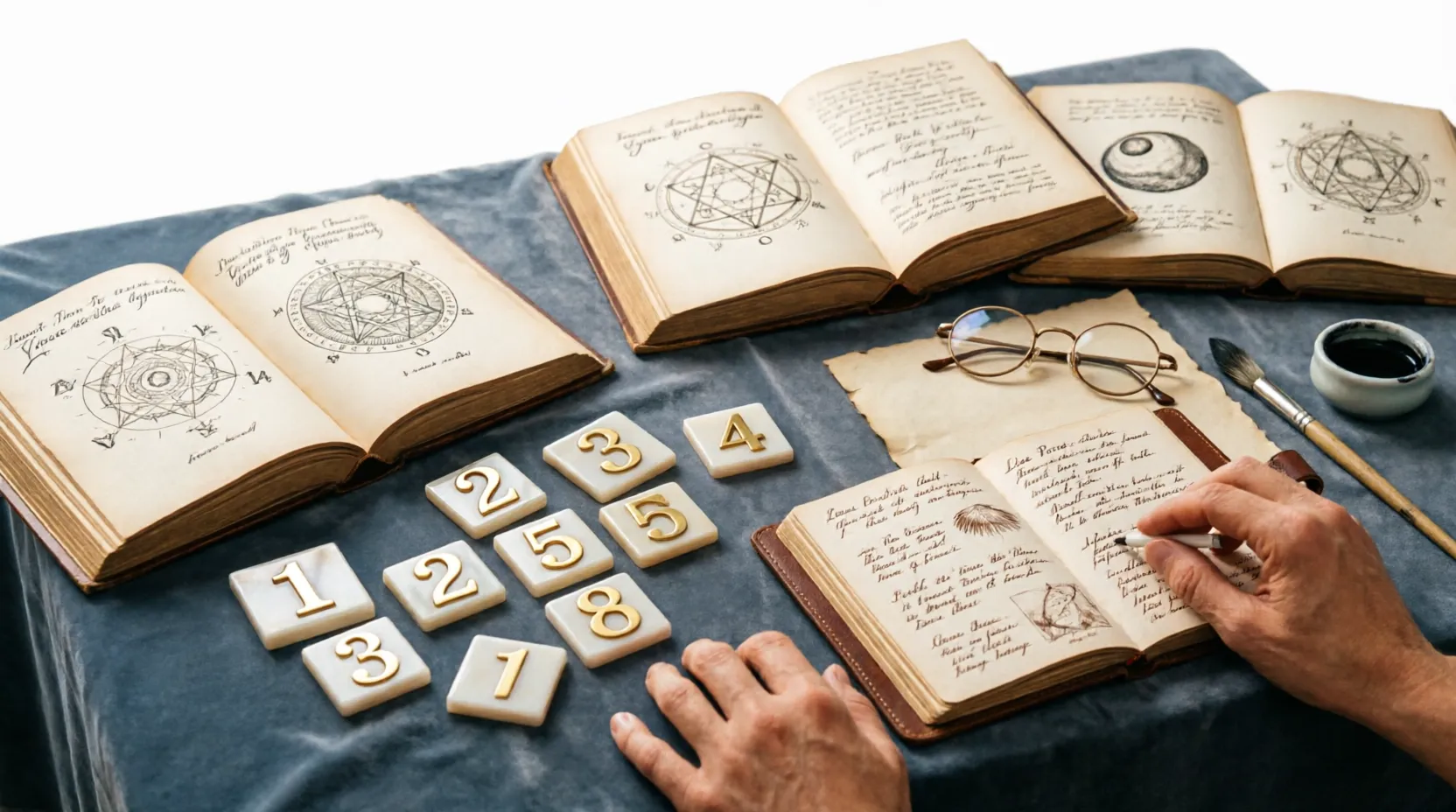
Editorial illustration of the numbers 1 through 9 arranged in a progressing arc, with 11, 22, and 33 set apart above them
9 Core + 3 MasterTotal Numbers
Western PythagoreanSystem
Full Birth DateBasis
TraditionMeaning Source
01Overview

Overview

A number is more than a flattering label

Interpretation is traditional

Traditional numerology does not usually describe a Life Path only in terms of its strengths. Each number is also given difficult expressions: habits, fears, excesses, or tendencies that are supposed to appear when its qualities become unbalanced.

That distinction matters when reading numerology. A description that says a 2 is "sensitive" or an 8 is "ambitious" is only the beginning. Traditional interpretations also ask what happens when sensitivity becomes conflict avoidance, when ambition becomes excessive control, or when independence becomes isolation.

The profiles below therefore separate the commonly described strengths from their traditional challenges. They are best treated as symbolic archetypes rather than fixed descriptions of every person who shares a number.

02ALL NUMBERS

The full lineup

These are traditional associations used in Western numerology writing—not verified personality diagnoses.

Life Path

Life Path 1 The Initiator

Traditionally read as independent, driven, self-directed, and inclined to lead rather than follow.

Often linked with: Self-reliance, Decisiveness, Leadership

Common frictions: Impatience, Difficulty collaborating, Becoming overly self-reliant

Read more ->

Life Path

Life Path 2 The Diplomat

Associated with cooperation, sensitivity, partnership, and a talent for sensing and smoothing interpersonal tension.

Often linked with: Empathy, Patience, Cooperation

Common frictions: Conflict avoidance, Over-reliance on approval, Difficulty asserting boundaries

Read more ->

Life Path

Life Path 3 The Communicator

Linked to creativity, expression, optimism, and the ability to communicate ideas or emotions.

Often linked with: Charisma, Creative fluency, Self-expression

Common frictions: Scattered focus, Avoiding deeper issues with humor, Difficulty following through

Read more ->

Life Path

Life Path 4 The Builder

Read as practical, disciplined, dependable, and oriented toward structure and tangible results.

Often linked with: Reliability, Work ethic, Discipline

Common frictions: Rigidity, Resistance to change, Over-control

Read more ->

Life Path

Life Path 5 The Free Spirit

Traditionally described as adaptable, curious, freedom-seeking, and drawn toward experience rather than routine.

Often linked with: Adaptability, Resourcefulness, Curiosity

Common frictions: Restlessness, Difficulty committing, Abandoning things when novelty fades

Read more ->

Life Path

Life Path 6 The Nurturer

Associated with responsibility, care, family, beauty, and a pull toward creating harmony around others.

Often linked with: Loyalty, Responsibility, Care for others

Common frictions: Overcommitting, Difficulty saying no, Taking too much responsibility for others

Read more ->

Life Path

Life Path 7 The Seeker

Read as analytical, introspective, independent-minded, and drawn toward questions that require deeper investigation.

Often linked with: Depth of thought, Independence of mind, Introspection

Common frictions: Isolation, Over-analysis, Withdrawing from others

Read more ->

Life Path

Life Path 8 The Executive

Traditionally tied to ambition, authority, organization, material achievement, and learning how to use power responsibly.

Often linked with: Drive, Organizational skill, Persistence

Common frictions: Workaholism, Impatience with slower processes, Excessive focus on control or material success

Read more ->

Life Path

Life Path 9 The Humanitarian

Associated with compassion, idealism, generosity, broad perspective, and completion.

Often linked with: Generosity, Big-picture thinking, Compassion

Common frictions: Over-giving, Difficulty with boundaries, Holding on when it is time to let go

Read more ->

Master number

Life Path 11 The Intuitive Master

Traditionally treated as an intensified 2, combining sensitivity and cooperation with intuition, inspiration, and a stronger sense of inner tension.

Often linked with: Intuition, Perceptiveness, Inspiration, Sensitivity

Common frictions: Nervous energy, Self-doubt, Emotional sensitivity, Difficulty trusting intuition

Read more ->

Master number

Life Path 22 The Master Builder

Traditionally framed as an amplified 4, combining structure and practicality with a larger-scale vision.

Often linked with: Vision paired with practicality, Persistence, Large-scale thinking

Common frictions: Pressure of high expectations, Fear of failing a larger purpose, Becoming overwhelmed by responsibility

Master number

Life Path 33 The Master Teacher

Traditionally framed as an amplified 6, associated with compassion, guidance, service, and responsibility toward others.

Often linked with: Compassion, Ability to uplift others, Service

Common frictions: Self-neglect, Over-responsibility, Difficulty balancing service with personal needs

03SAME NUMBER, DIFFERENT PERSON

Does the same Life Path mean the same personality?

Not necessarily, even within numerology. Traditional readings treat a Life Path as one symbolic layer rather than a complete biography. Two people can share a number while having very different personalities, circumstances, relationships, and life histories. Other numerology numbers are traditionally used to add further layers, which is one reason practitioners rarely treat the Life Path as the whole chart.

04HIGH VS LOW EXPRESSION

The high and low expression of a number

A recurring idea in numerology communities is that a number can be expressed constructively or destructively. Independence can become isolation. Sensitivity can become approval-seeking. Discipline can become rigidity. Ambition can become control. This high-versus-low framing is useful for understanding why numerology descriptions often contain both strengths and warnings, but it remains a traditional interpretive framework rather than a validated psychological model.

05MASTER NUMBERS

Are master numbers supposed to be better?

Traditional numerology usually does not frame 11, 22, and 33 as simply "better" versions of the single digits. They are often described as carrying greater potential alongside greater pressure, responsibility, or difficulty. For example, 11 is commonly connected with the qualities of 2 while adding themes of intuition and inspiration. Some numerologists therefore interpret the master number alongside its underlying digit rather than ignoring the 2 entirely.

06LIFE PATH 11

Why does Life Path 11 seem so different?

Life Path 11 is one of the numbers where interpretations vary noticeably between practitioners. Some describe it as an intensified 2, emphasizing harmony, cooperation, sensitivity, and relationships. Others put much more weight on intuition, spirituality, inspiration, creativity, or a persistent feeling of inner tension. Discussions among people who identify as 11s also show why the number attracts so many questions: some describe strong intuition and nervous energy, while others question whether 11 should be treated separately from 2 at all. There is no single scientifically established meaning of 11.

07APPEARANCE CLAIMS

Can a Life Path number determine your appearance?

Some numerology traditions make claims about physical attractiveness, facial features, body type, or sexual magnetism. These claims are not established by the Life Path calculation itself and should not be presented as factual predictions. Numerology discussions illustrate the problem clearly: people sharing the same number can disagree strongly about whether an appearance description fits, and readers can reject or challenge physical stereotypes attached to particular numbers. Treat appearance interpretations as tradition at most, not as a reliable way to judge how someone looks.

08RELATIONSHIPS

What about relationships?

Life Path numbers are often used in numerology to discuss compatibility, partnership styles, and recurring relationship patterns. The traditional logic usually comes from the same strengths and challenges listed above: a highly independent number may be paired with themes of autonomy, while a sensitive number may be associated with harmony and emotional reassurance. These are symbolic interpretations, not evidence that two people with particular numbers will or will not have a successful relationship.

09A LIFE PATH NUMBER IS NOT A PERSONALITY DIAGNOSIS

A Life Path number is not a personality diagnosis

The descriptions here are archetypal interpretations. They should not be used to diagnose personality, determine physical appearance, judge someone's character, predict compatibility, or make decisions about health, money, or the future.