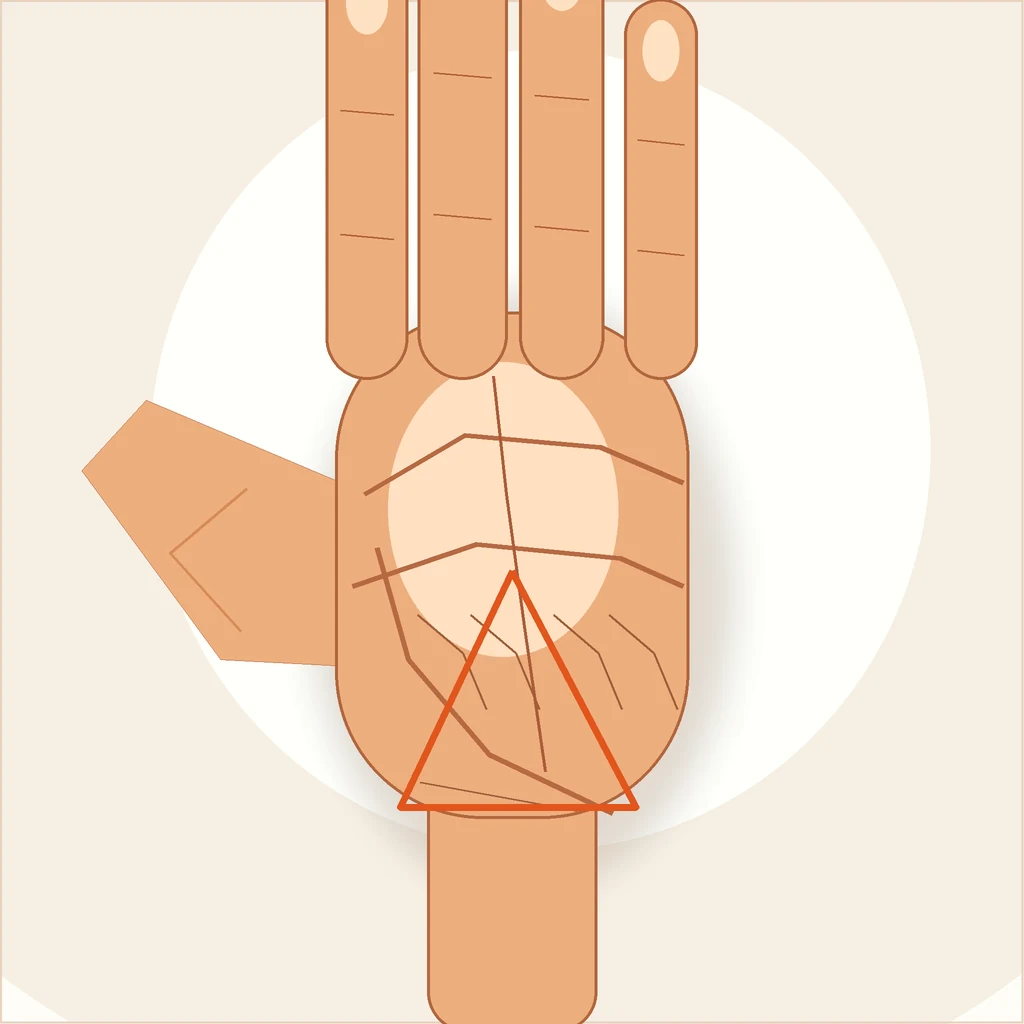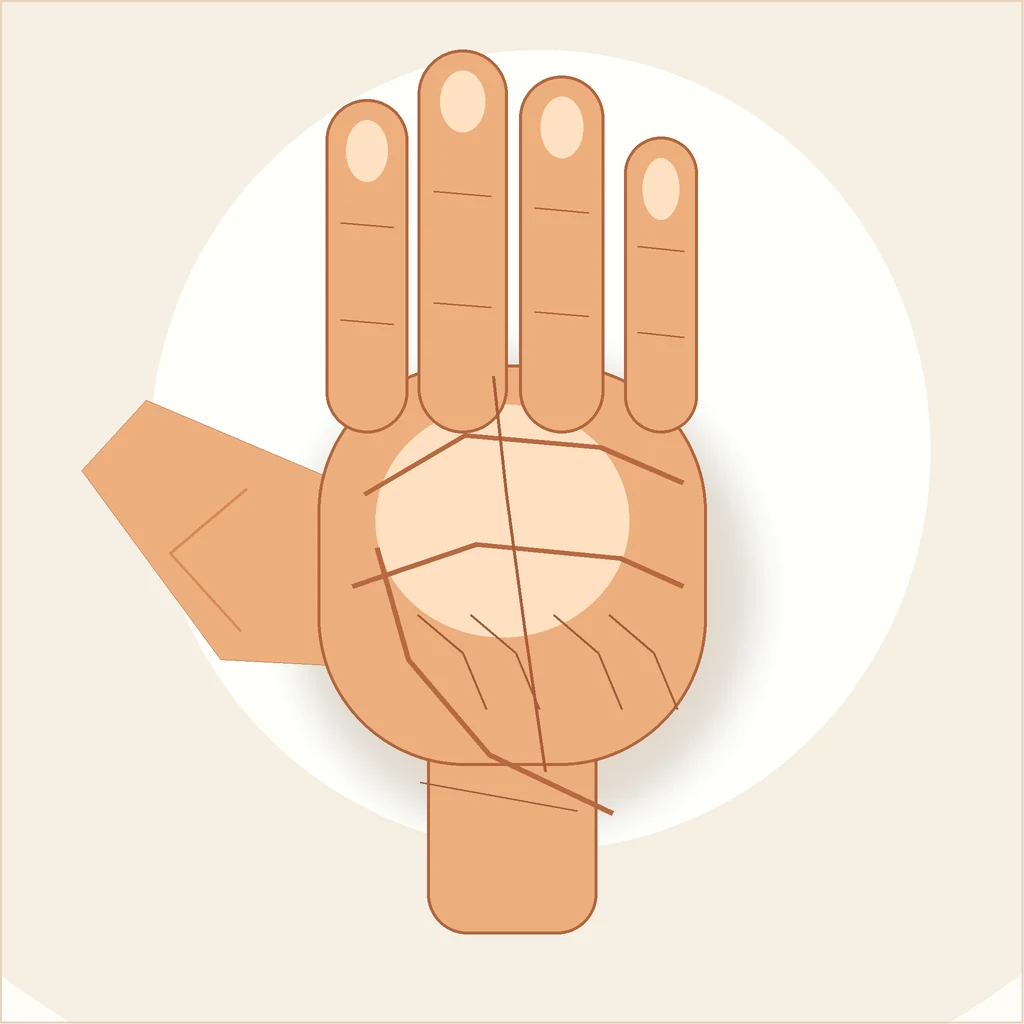
Hand Types

What Is the Most Common Hand Shape?

The most honest answer to "what is the most common hand shape" is: the one that does not fit neatly into any single category. This is not a failure of the classification system so much as a feature of human biology, which has never particularly respected taxonomies.

In both the seven-type Victorian system and the modern four-element system, the category reserved for "a bit of everything" turns out to describe most people. The named types are the interesting exceptions; the average hand is a compromise.

Quick answer

In the seven-type Victorian system, the Mixed hand is the most common type — a combination of features from two or more other categories. In the four-element system, the Earth hand (square palm, short fingers) is generally considered the most common pure type, but most people again have mixed characteristics. Hands that resist clean categorisation are the statistical majority.

Editorial illustration of a typical mixed-type hand
Museum field-note editorial illustration of a typical hand showing moderate proportions, not extreme in any direction, annotated as mixed type, aged parchment style.
Mixed (most common)7-Type System
Earth (most common pure type)4-Element System
Relatively uncommonTruly "Pure" Types
Mixed characteristicsMost Hands
01Overview

Overview

The short answer

In the seven-type Victorian system, the Mixed hand was explicitly acknowledged as the most common classification. The system's authors knew that most hands shared features across categories, and rather than forcing every hand into a pure type, they created a Mixed category that they then read by identifying the dominant combination. A hand that was mostly Square with Spatulate elements was read as predominantly Square.

In the four-element system, the Earth hand (square palm, short fingers) is generally considered the most common pure type, reflecting the statistical reality that most humans have relatively compact hands — the agricultural, industrial, and physical-labour baseline from which the other types diverge. Long-palmed fire hands are somewhat common; the rarer types (Water, and in the seven-type system, Psychic) represent genuine morphological outliers.

The practical implication is that most palmistry readings are readings of Mixed types, which requires the reader to prioritise features rather than slot the hand into a predetermined box.
AI capability map

What the model can detect versus what it cannot know

Can do

Describe visible features, compare lines, and apply a learned palmistry framework.

Cannot do

Verify future events, hidden facts, spiritual claims, or medical conclusions.

02PERSPECTIVE

Perspective

The frequency of the Mixed type is a gentle corrective to the category-loving part of human psychology. We like clean boxes. Palmistry offers them, and then immediately admits that most hands do not fit. This is unusually honest for a divination system. Most of them claim their categories are definitive.

03TAKEAWAYS

Verdict

The Mixed hand is the most common type in the seven-category Victorian system.

Supporting Finding

Earth is the most common pure type in the four-element system.

Important Limit

Most hands share features across categories and resist clean classification.

Reader Guidance

Pure types (especially at the extremes) are the minority.

04FAQ

FAQ

Common follow-up questions

If I am a Mixed type, does palmistry tell me anything useful?

Yes. Mixed types are read by identifying the dominant type (the one most features belong to) and noting which secondary type adds nuance. A predominantly Earth hand with strong Air (long finger) features suggests someone practical who thinks carefully — a more textured picture than either type alone.