Quran & Palmistry

What Does the Quran Say About Palmistry?

The Quran does not name palmistry — it is not a text that catalogues every human practice. What it does establish is a principle that Islamic scholars have consistently applied to palm reading.

Understanding that principle, rather than searching for a verse that mentions palm lines, is the more honest and useful approach.

Quick answer

The Quran does not mention palmistry by name, but its teaching that knowledge of the unseen (al-ghayb) belongs to Allah alone is the Quranic basis for the prohibition on fortune-telling, including palmistry.

No Palmistry NamedYes (al-ghayb) Relevant Principle6:59; 31:34; 27:65 Key SurahsYes, to fortune-telling Applied By Scholars
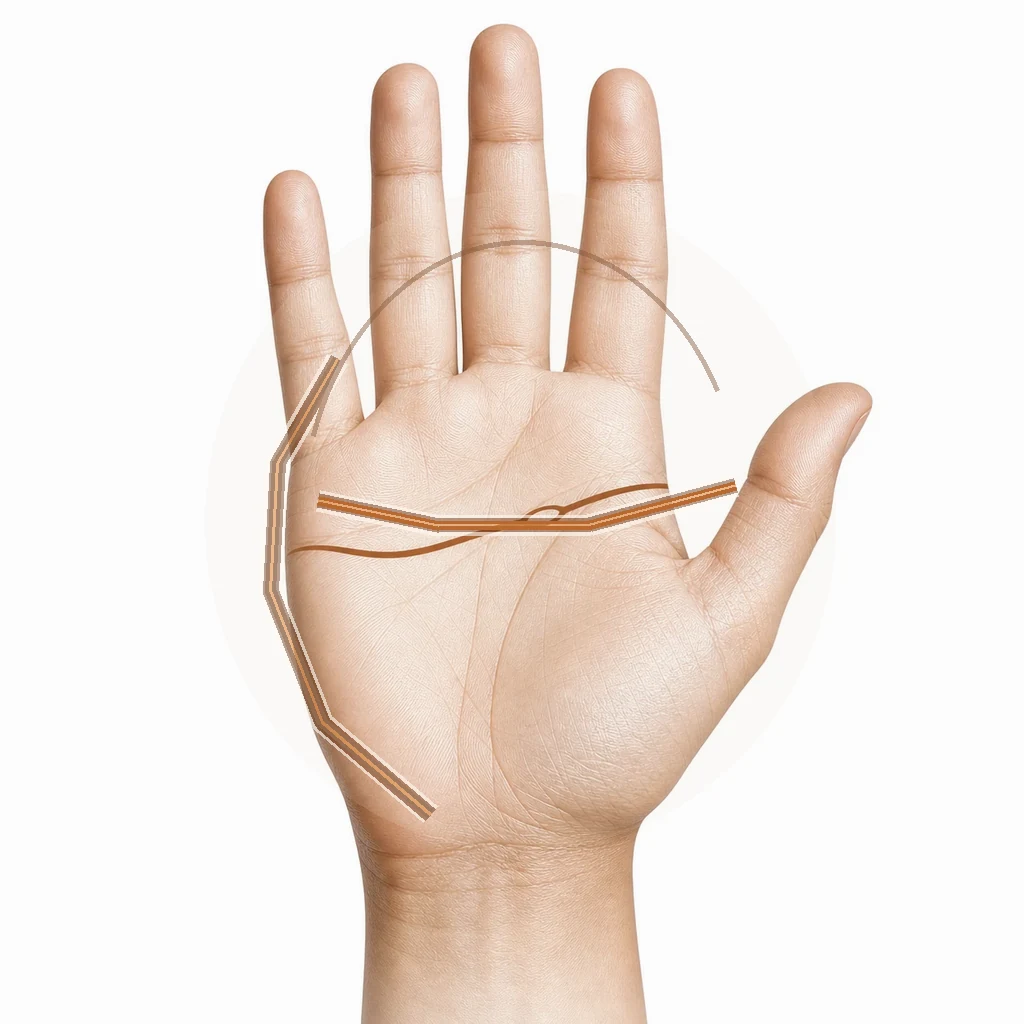
Respectful editorial illustration of an open palm and a Quranic text motif
Respectful museum field-note style image of an open palm on aged parchment with fine Arabic calligraphic border pattern (no specific Quranic text reproduced), warm editorial tone.
01Overview

Overview

The short answer

The Quran does not specifically mention palmistry, chiromancy, or hand-reading. This is expected: the Quran addresses principles and values rather than cataloguing every specific practice. Its relevance to palmistry comes through the concept of al-ghayb — the unseen — which the Quran reserves exclusively for Allah's knowledge.

Several Quranic verses state that knowledge of what is hidden or in the future belongs only to Allah. Scholars apply this principle to palmistry because palm reading claims to access precisely this kind of knowledge: what will happen, who someone will marry, how long they will live.

The hadith literature is more specific, directly prohibiting the consultation of fortune-tellers. Together, Quranic principle and hadith application form the basis of the Islamic ruling.
Direct answer

Treat this as a ruling-style explanation

This page keeps the layout serious and text-led, with emphasis on practical boundaries rather than mystical visuals.

02KEY PASSAGES

The key Quranic passages and their relevance

Surah Al-An'am (6:59) states that with Allah are the keys of the unseen; none knows them except Him. This verse establishes that hidden knowledge, including the future, is exclusively divine. Palmistry claims to access such knowledge, placing it in tension with this principle.

Surah Luqman (31:34) lists five things known only to Allah: the hour of judgement, the sending of rain, what is in the womb, what a person will earn tomorrow, and where a person will die. This verse is frequently cited by scholars as evidence that specific future knowledge belongs only to Allah — precisely the kind of knowledge palmistry claims to offer.

Surah An-Naml (27:65) states that none in the heavens and earth knows the unseen except Allah. Scholars read this as a comprehensive statement that excludes any created being — including palmists — from genuine knowledge of the unseen.

03SCHOLARLY APPLICATION

How scholars connect this to palmistry

Islamic scholars reason that since palmistry claims to reveal future events, relationship outcomes, health, and lifespan — all forms of al-ghayb — it falls under the Quranic prohibition on claiming access to the unseen. The hadiths then provide specific precedent against consulting fortune-tellers. The Quran gives the principle; the hadiths give the application.

04MISUNDERSTANDINGS

Common misunderstandings

Myth

Since the Quran does not mention palmistry, it cannot be haram.

Reality

Islamic law (fiqh) applies Quranic principles to specific acts. Many prohibited acts are not named in the Quran but fall under clear principles.

Myth

The Quran only prohibits idol worship, not palm reading.

Reality

The Quran addresses al-ghayb as a category; fortune-telling falls within it as claiming knowledge reserved for Allah.

Myth

Different Quranic interpretations mean the ruling is unclear.

Reality

On this issue, the four major schools of Islamic jurisprudence agree, suggesting the application of the principle is consistent.

05TAKEAWAYS

Summary

The Quran does not mention palmistry by name.

Supporting Finding

The relevant Quranic principle is al-ghayb: knowledge of the unseen belongs only to Allah.

Important Limit

Key verses include Surah Al-An'am 6:59, Surah Luqman 31:34, and Surah An-Naml 27:65.

Practical Use

Scholars apply this principle to palmistry because palm reading claims access to the unseen.

Supporting Finding

Hadiths on fortune-telling provide the specific prohibition that scholars reference alongside these verses.

06FAQ

FAQ

Common follow-up questions

Which Surah is most relevant to the palmistry question?

Surah Luqman (31:34) is frequently cited for its explicit list of things known only to Allah — future earnings and death among them. Surah Al-An'am (6:59) is also central.

Does the Quran say anything about the hand specifically?

References to the hand in the Quran relate to actions, oaths, and deeds — not to reading the hand as a form of divination.

Where do the hadiths on fortune-telling come from?

The most cited hadiths are from Sahih Muslim and Abu Dawud. They address visiting fortune-tellers and believing their claims, and are classified as sahih (authentic) by hadith scholars.