My ranking at a glance
The 14 main lines, cleanly ordered
This is a ranking of establishment across tradition and evidence, not fortune-telling accuracy. I am evaluating what most anchors the physical, mental, and historical structure of a serious palm reading.
| Rank | Palm Line | Main contribution | Why I ranked it here | Evidence |
|---|---|---|---|---|
| #1 | Life Line | Vitality, health, and physical resilience | I rank the life line first because it tops every factor except cross-tradition agreement. It is universally present, heavily weighted in readings, and the most analyzed line in the field. | Strongly documented |
| #2 | Head Line | Mental scope, focus, and practical navigation | I put the head line at second because its prevalence and reading importance rival the life line, even though its core claims are harder to test empirically. | Reasonably documented |
| #3 | Heart Line | Emotional temperament and relationship focus | I place the heart line third. It has massive popular search interest and high reading weight, but the definitions differ wildly across schools. | Mixed evidence |
| #4 | Fate Line | Life path, career stability, and direction | I rank the fate line fourth because it represents a major structural reading but is genuinely optional. A missing fate line is a recognized reading of its own. | Reasonably documented |
| #5 | Simian Line | Intensity and single-mindedness | I put the simian line at fifth because while rare in prevalence, it carries genuine clinical and genetic documentation outside folklore. | Strongly documented |
| #6 | Marriage Lines | Signaling relationship volume or impact | I rank marriage lines sixth. They have huge search interest, but low agreement across traditions whether to read them literally or figuratively. | Mixed evidence |
| #7 | Sun Line | Success, recognition, and creative fulfillment | I put the sun line at seventh because it is treated everywhere as supplementary and fades in consistency next to the foundations above it. | Traditional attribution |
| #8 | Bracelets (Rascettes) | General prosperity and resilience | I place the bracelets at eighth because they are highly prevalent, yet most modern traditions treat them only as a footnote. | Traditional attribution |
| #9 | Mercury Line | Health status and communicative fluidity | I put the Mercury line ninth. Some schools treat it favorably, while others prefer its absence. This friction drags down its agreement score. | Mixed evidence |
| #10 | Girdle of Venus | Heightened sensitivity or emotional intensity | I rank the girdle of Venus tenth because it appears infrequently and is poorly defined across various schools. | Traditional attribution |
| #11 | Children Lines | Estimating children or significant dependents | I rank children lines eleventh because they remain heavily contested by modern palmists, despite huge public curiosity. | Unverified |
| #12 | Ring of Solomon | Wisdom and intuition about people | I put the ring of Solomon at twelfth because it is rare, minor, and rarely anchors a comprehensive reading. | Traditional attribution |
| #13 | Travel Lines | Restlessness or documented travel impact | I rank travel lines thirteenth due to extremely low agreement on what constitutes a significant mark. | Traditional attribution |
| #14 | Via Lactea (Intuition Line) | Heightened intuition | I put the Via Lactea last because it is the least prevalent, least agreed-upon, and least evaluated line in palmistry. | Unverified |
Life Line
Vitality, health, and physical resilience
I rank the life line first because it tops every factor except cross-tradition agreement. It is universally present, heavily weighted in readings, and the most analyzed line in the field.
Strongly documentedHead Line
Mental scope, focus, and practical navigation
I put the head line at second because its prevalence and reading importance rival the life line, even though its core claims are harder to test empirically.
Reasonably documentedHeart Line
Emotional temperament and relationship focus
I place the heart line third. It has massive popular search interest and high reading weight, but the definitions differ wildly across schools.
Mixed evidenceFate Line
Life path, career stability, and direction
I rank the fate line fourth because it represents a major structural reading but is genuinely optional. A missing fate line is a recognized reading of its own.
Reasonably documentedSimian Line
Intensity and single-mindedness
I put the simian line at fifth because while rare in prevalence, it carries genuine clinical and genetic documentation outside folklore.
Strongly documentedMarriage Lines
Signaling relationship volume or impact
I rank marriage lines sixth. They have huge search interest, but low agreement across traditions whether to read them literally or figuratively.
Mixed evidenceSun Line
Success, recognition, and creative fulfillment
I put the sun line at seventh because it is treated everywhere as supplementary and fades in consistency next to the foundations above it.
Traditional attributionBracelets (Rascettes)
General prosperity and resilience
I place the bracelets at eighth because they are highly prevalent, yet most modern traditions treat them only as a footnote.
Traditional attributionMercury Line
Health status and communicative fluidity
I put the Mercury line ninth. Some schools treat it favorably, while others prefer its absence. This friction drags down its agreement score.
Mixed evidenceGirdle of Venus
Heightened sensitivity or emotional intensity
I rank the girdle of Venus tenth because it appears infrequently and is poorly defined across various schools.
Traditional attributionChildren Lines
Estimating children or significant dependents
I rank children lines eleventh because they remain heavily contested by modern palmists, despite huge public curiosity.
UnverifiedRing of Solomon
Wisdom and intuition about people
I put the ring of Solomon at twelfth because it is rare, minor, and rarely anchors a comprehensive reading.
Traditional attributionTravel Lines
Restlessness or documented travel impact
I rank travel lines thirteenth due to extremely low agreement on what constitutes a significant mark.
Traditional attributionVia Lactea (Intuition Line)
Heightened intuition
I put the Via Lactea last because it is the least prevalent, least agreed-upon, and least evaluated line in palmistry.
UnverifiedThe result that surprised me most
I expected the Heart Line to run away with it based on popular interest.
The heart line is massively popular in search volume, but I found that its definitions vary far too widely across schools for it to beat the sheer consistency of the life line. The life line carries a heavy weight in every tradition, making it the most established line overall.
What I weighed to make this list
These are the lines that appear in most standard modern texts
I mapped these against prevalence, reading weight, cross-tradition agreement, interpretive depth, evidence, and search interest. This is a ranking of which lines are most established, not a ranking of predictive accuracy.
Final ranked candidates
- Life Line
- Head Line
- Heart Line
- Fate Line
- Simian Line
- Marriage Lines
- Sun Line
- Bracelets (Rascettes)
- Mercury Line
- Girdle of Venus
- Children Lines
- Ring of Solomon
- Travel Lines
- Via Lactea (Intuition Line)
Serious challengers
- Mars Line
- Health Line
- Medical Stigmata
Investigated but not ranked
- Billionaire Line
- Letter M Pattern
- X on Palm
How I decided what deserved to rank
I scored each line on six factors, then finalized the structure
I did not act like an algorithm. I gathered the evidence, weighed their specific scoring against the criteria, and then made a subjective editorial judgment on what line ultimately matters most to a reading.
Prevalence
How often does this line appear?Some lines are near-universal, while others are absent on most palms. A higher prevalence anchors a line firmly in reality.
Traditional reading weight
How central is this to a reading?I look at whether a line is one no palmist skips, versus one consulted only for extra color.
Cross-tradition agreement
Do the major traditions agree?A line whose meaning is consistent across Western, Indian, and Chinese palmistry suggests an established convention, whereas low agreement points to unresolved folklore.
Interpretive depth
How much sub-detail attaches to the line?This tracks the scrutiny of elements like breaks, forks, islands, chains, and crossings with other lines.
Evidence & scrutiny
Has it been examined outside palmistry?I weight how much the line has actually been examined in dermatoglyphics, psychology, or medicine, regardless of what that examination found.
Search & cultural interest
How much curiosity does it generate today?A line's modern search volume helps dictate its enduring cultural impact.
Traditional weight and external evidence are not the same thing
A central line can still be built on weak foundations
Evidence confidence controls how strongly I state a claim about each line. A line like the Marriage Lines might have 'mixed evidence' structurally, but its cultural presence in readings remains undeniable.
High agreement in tradition, plus external scrutiny or near-universal presence.
Present in most hands and central to classical texts, but lacking rigorous external evaluation.
High cultural impact, but deeply contradictory meanings between various palmistry schools.
Accepted inside palmistry as a minor note, without much deeper consensus or strict analysis.
Highly contested even within palmistry, with folklore often completely outpacing consensus.
#1
Life Line
The closest thing palmistry has to a universal constant
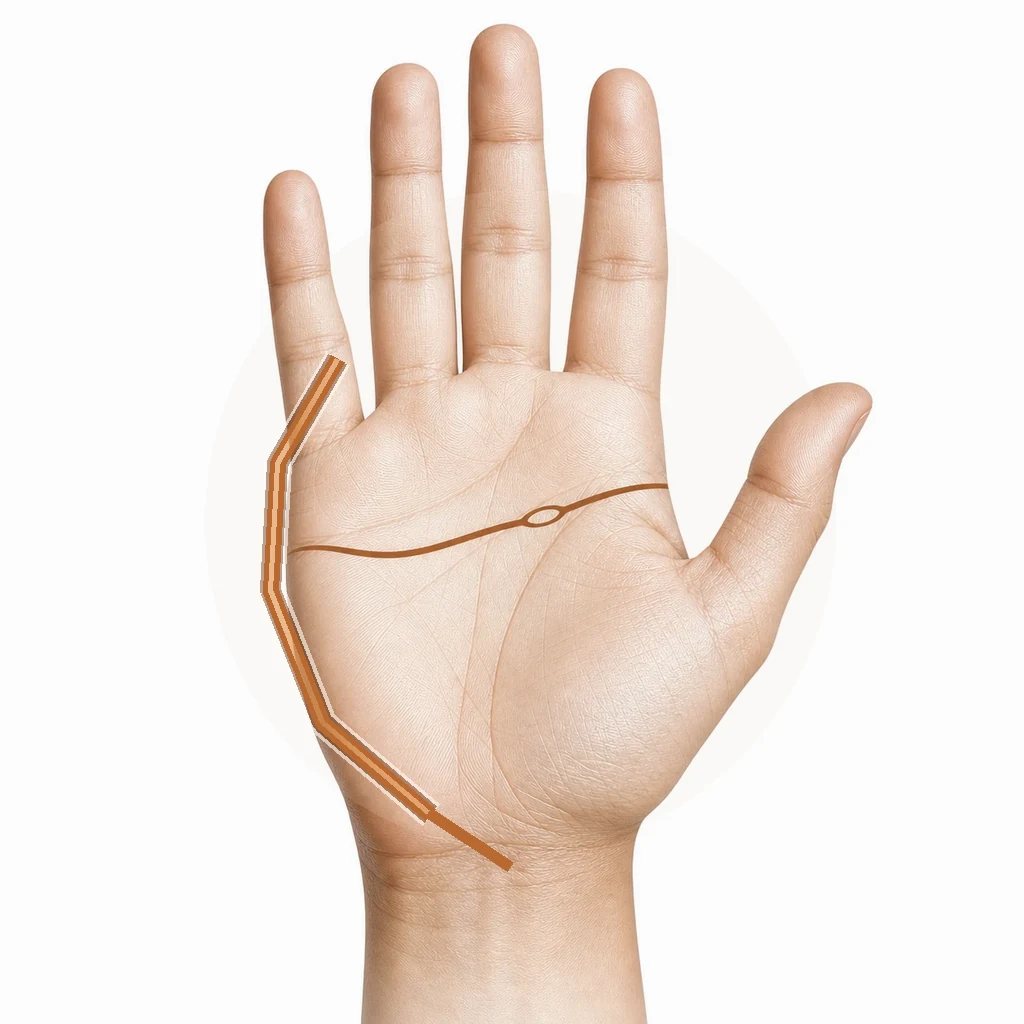
I put the life line at #1 because it tops every factor except cross-tradition agreement. It is the most robust and scrutinized line in the field.
Why it sits at the absolute top
The life line is the closest thing palmistry has to a universal constant: it appears clearly on nearly every hand, curving around the base of the thumb. Its traditional subject is not lifespan despite the name, as most schools treat it as an index of vitality, health, and physical energy rather than a strict countdown.
It earns my number one spot because it is heavily weighted in every reading and is the single most scrutinized line in palmistry. The length-equals-lifespan claim has even been tested and rejected in published research, an unusual level of outside attention.
How deep the interpretation goes
The depth of interpretation for the life line is staggering. Palmists look at depth and curve width for vitality, breaks and islands for health disruptions, chaining for delicacy, and branches toward other mounts for career or travel implications.
#2
Head Line
The mental compass
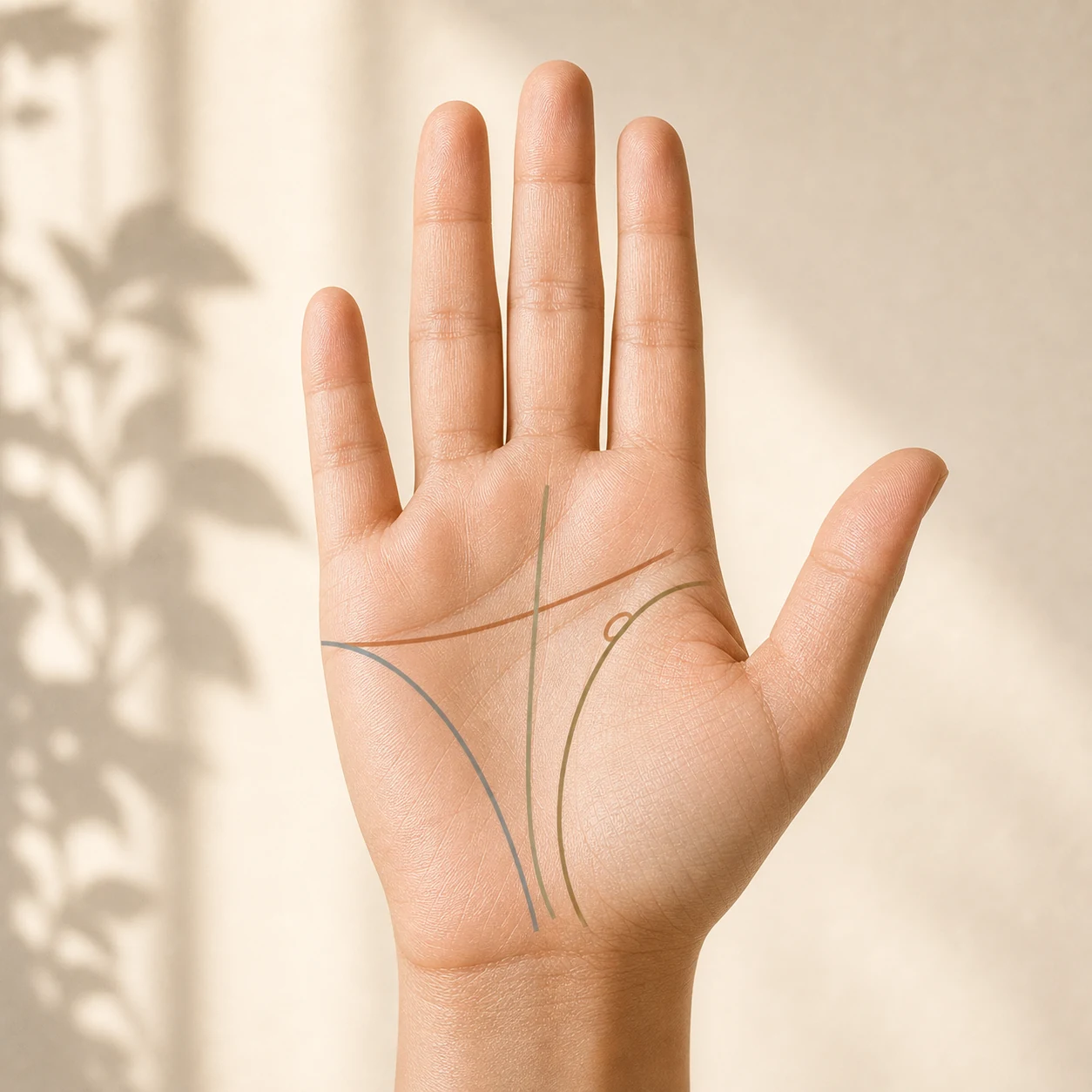
I put the head line at #2 because its prevalence and reading weight rival the life line, but its traditional claims are significantly harder to test externally.
The line of practical navigation
Running horizontally through the middle of the palm, the head line is read for intellect, thinking style, and decision-making. I evaluate its length for scope, its depth for focus, and its curve versus straightness for creative versus practical thinking.
I place it high on the list because it is as universal and central to a reading as the life line. However, its core claims (like a straight line meaning "logical" and a sloping line meaning "creative") are harder to rigorously test than concrete health markers.
#3
Heart Line
The single most-searched palm line by a wide margin
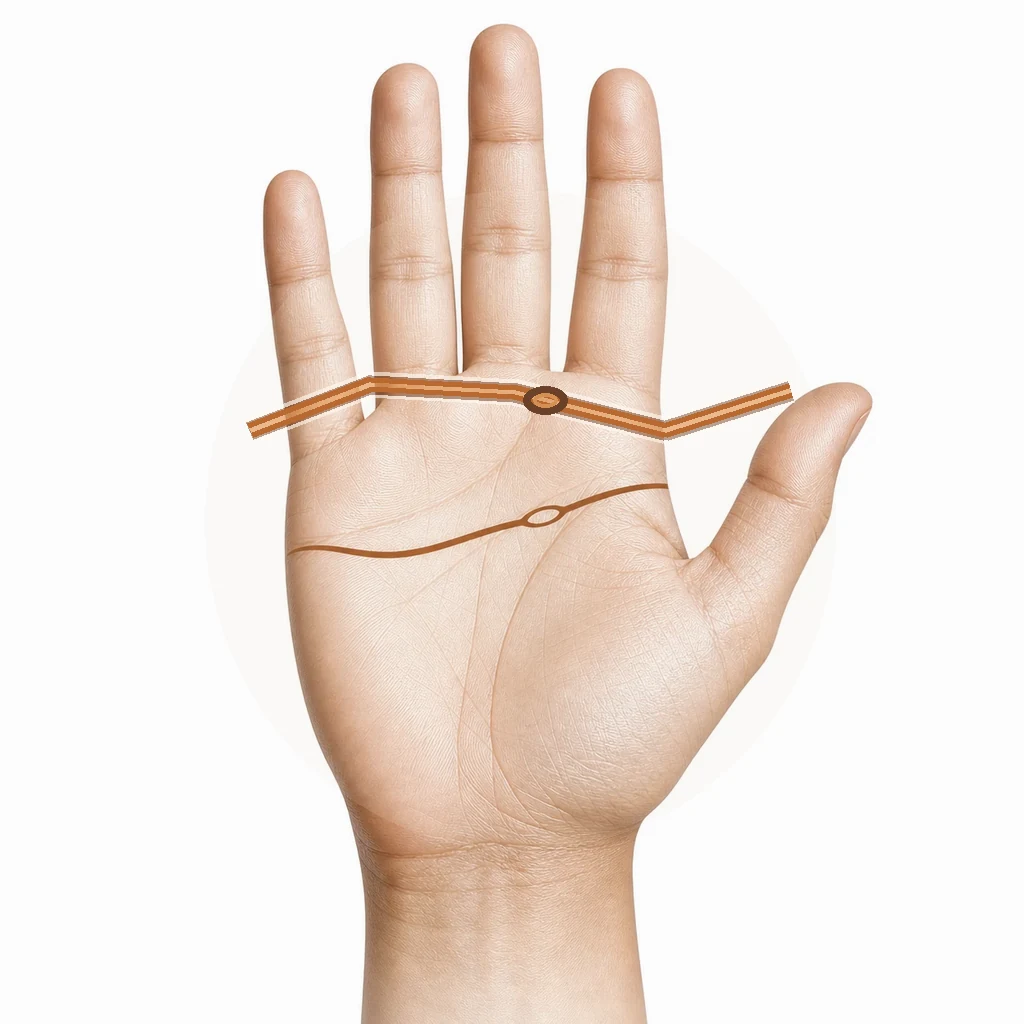
I rank the heart line #3 because it has unparalleled cultural interest but suffers from contradictory cross-tradition interpretations.
The line of emotional temperament
The uppermost horizontal line is read for emotional life, relationships, and romantic temperament. I note it is the single most-searched palm line by a wide margin; "love line" is a genuinely popular query independent of palmistry as a whole.
But I cannot rank it higher than third. Where the line starts (below the index versus below the middle finger) is read in contradictory ways across different schools. There is essentially zero independent evidence bearing on any of its claims.
#4
Fate Line
The directional line that is genuinely optional
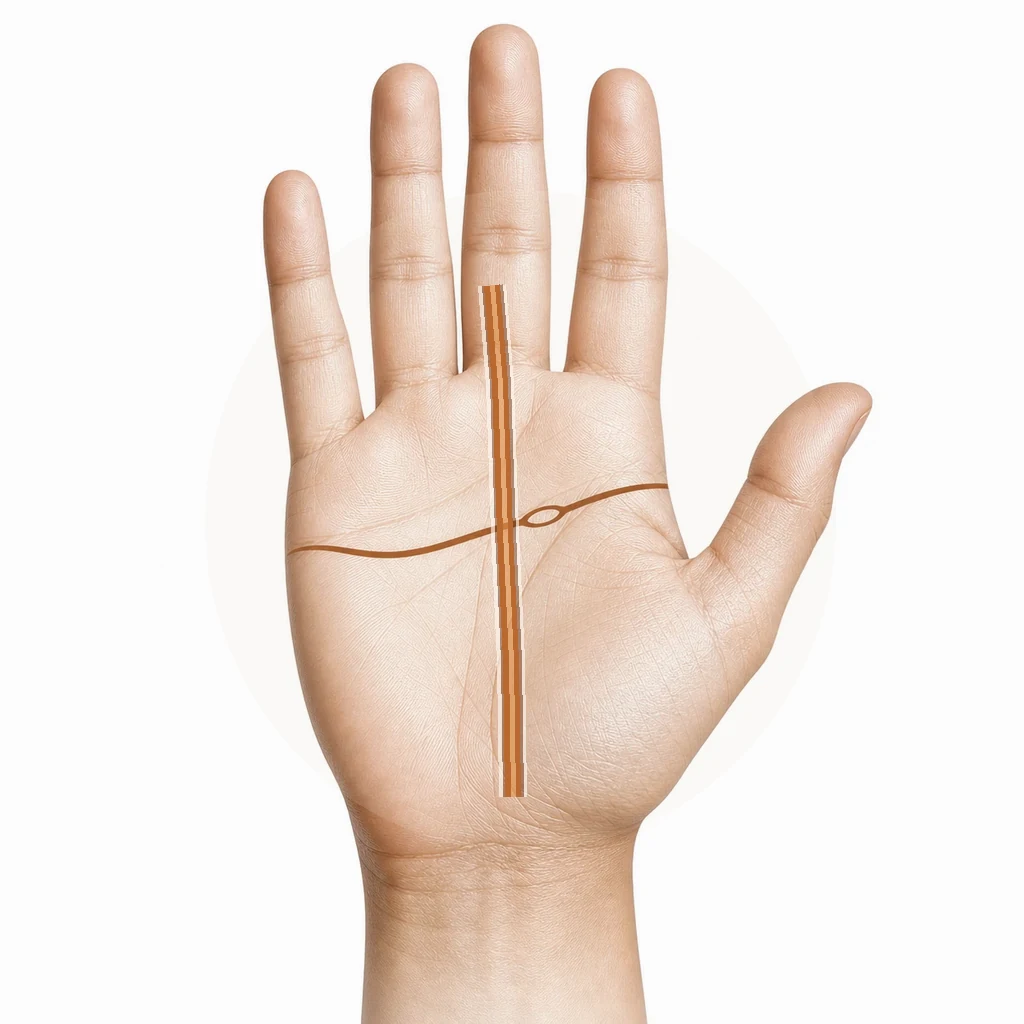
I put the fate line at #4 because it grounds readings about career path and direction, even though it is entirely missing from many hands.
The marker of structured purpose
The fate line is a vertical line running from the base of the palm toward the middle finger, tied to career direction and life structure. I find what sets it apart from the top three is that it is genuinely optional. A meaningful share of hands show no fate line at all.
Its absence is itself a traditional reading (often interpreted as "a lack of a fixed path"), not merely a gap in the data. However, it has received virtually no outside scrutiny.
#5
Simian Line
The rare crease of clinical importance
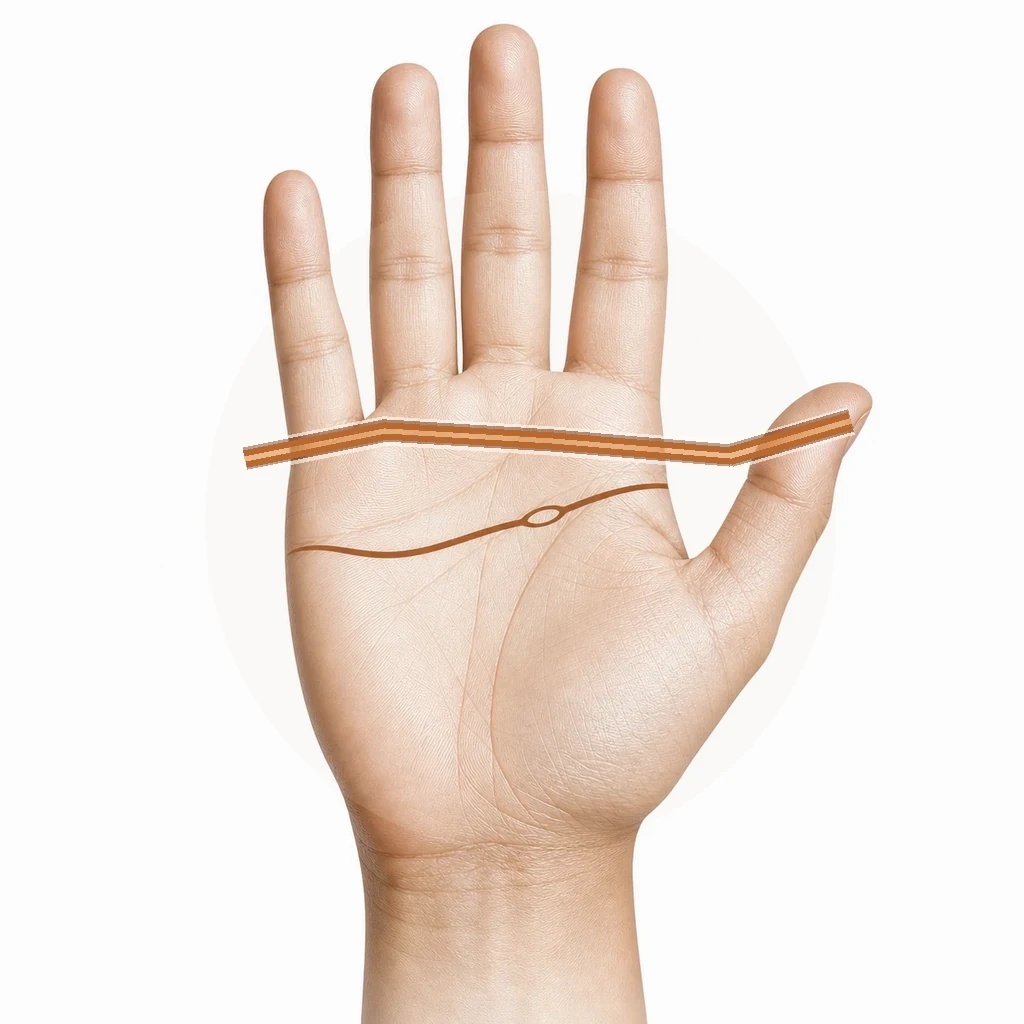
I put the simian line at #5 because it combines significant reading importance with a surprisingly genuine clinical literature trail.
A legitimate clinical marker
The simian line is a single transverse crease formed when the head and heart lines fuse into one line instead of two. It is rare, present on a minority of hands, but when it shows up, palmistry treats it as highly significant. I note that palmists associate it with intensity and single-mindedness.
The reason I rank it firmly at #5 despite low prevalence is because it has a real evidence trail. The simian crease has documented associations in clinical genetics, though it is also a normal, harmless variant for many. This type of scrutiny deserves careful, non-alarmist treatment rather than pure folklore.
#6
Marriage Lines
Highly searched yet highly disputed
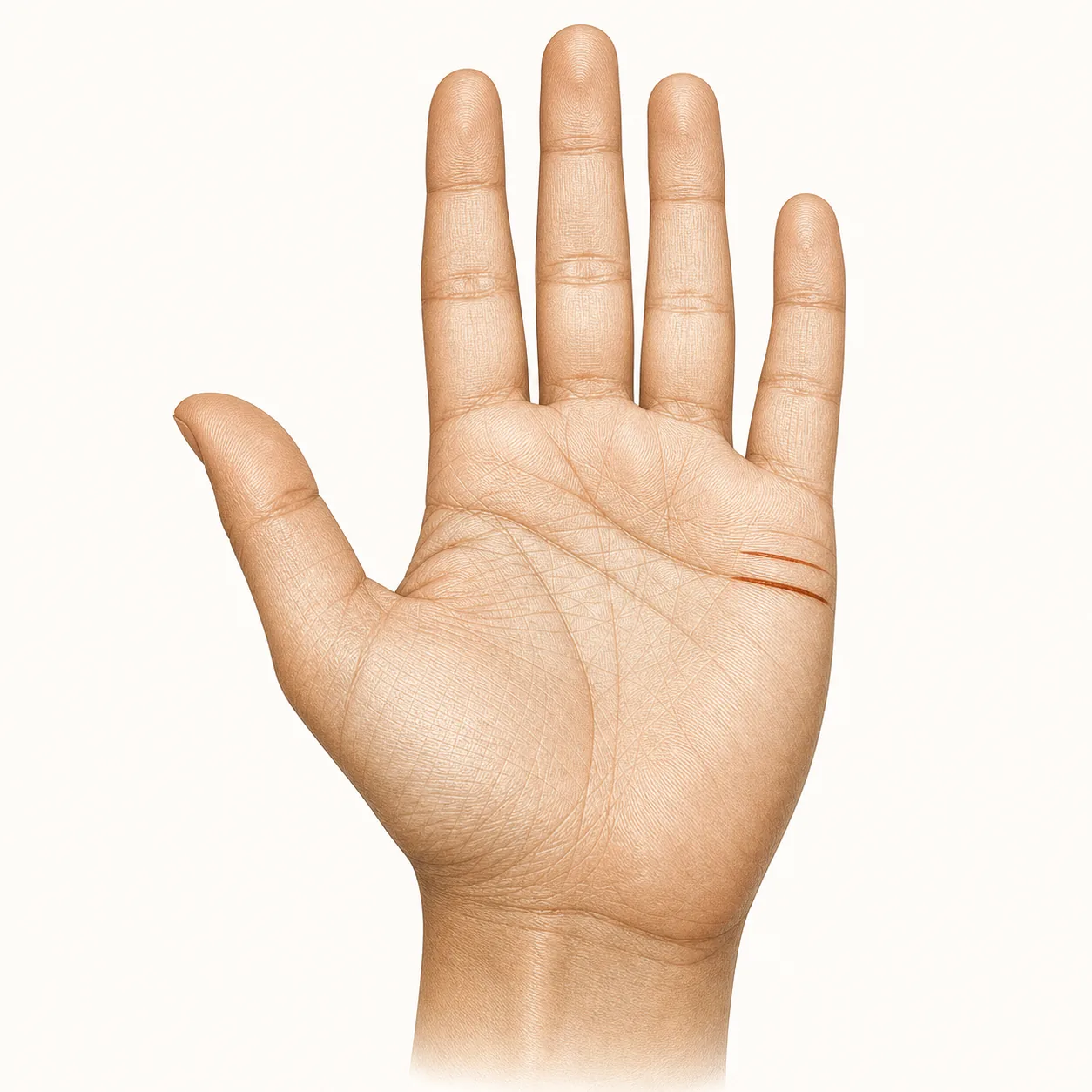
I rank marriage lines at #6. They have massive appeal, but taking them literally as a relationship counter remains deeply contested.
Popular demand meets fractured interpretation
Marriage lines are the small horizontal lines on the side of the palm below the pinky. They carry high search interest but suffer from notably low cross-tradition agreement.
I have observed that the "count the lines, count the marriages" reading is fiercely disputed even within palmistry itself. Many serious practitioners reject a literal count in favor of reading depth and clarity instead.
#7
Sun Line
The supplementary line of Apollo
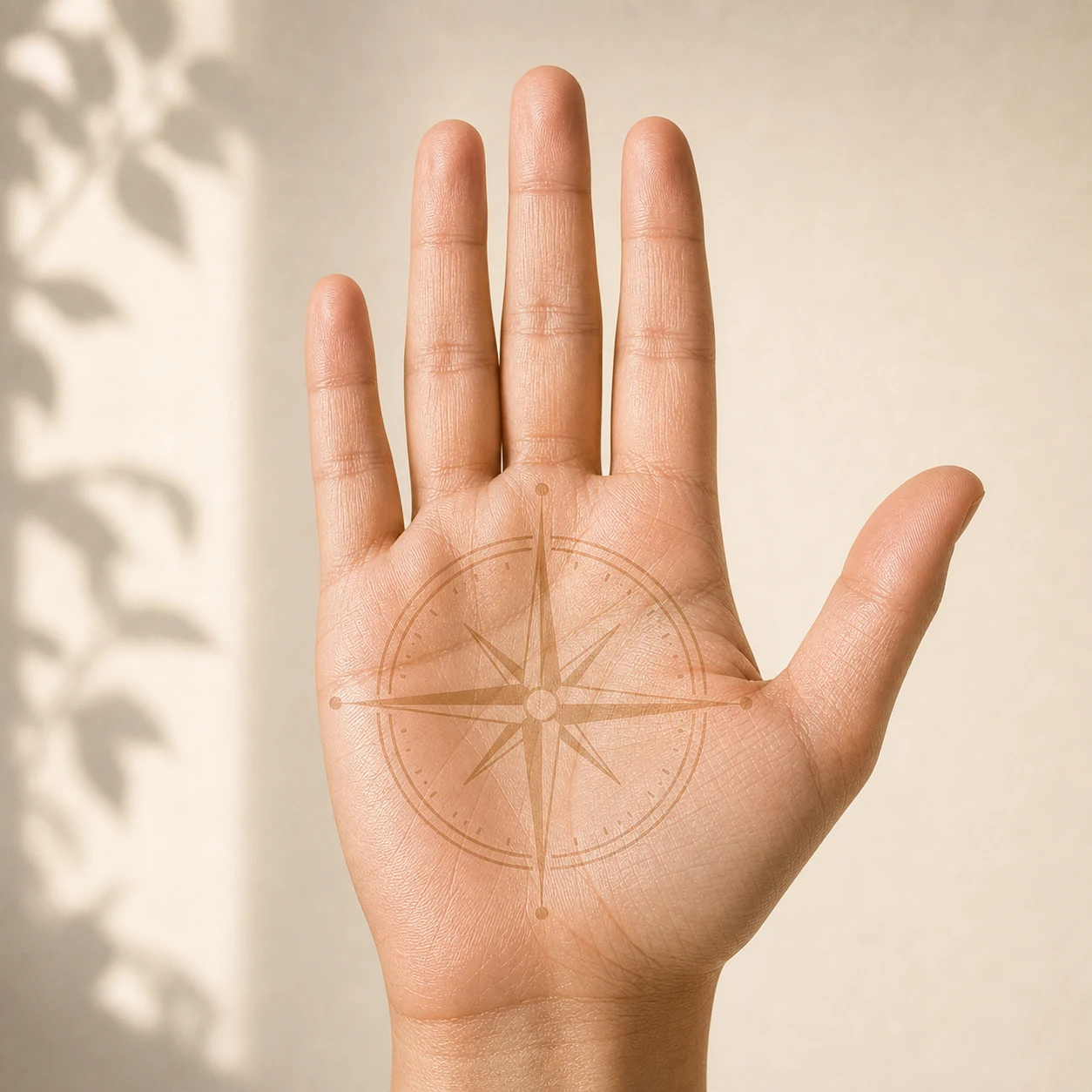
I put the sun line at #7 because it serves as a nice supplement but is almost never foundational to a deep reading.
The marker of public success
Also called the Apollo line, this vertical line rising toward the ring finger is read for success, recognition, and creative fulfillment.
It is fainter and less consistently present than the core lines above it, and I find it is treated universally as a supplementary influence rather than a load-bearing pillar of the reading.
#8
Bracelets (Rascettes)
The highly prevalent but lightly read wrist lines

I put the bracelets at #8 because while they appear on almost everyone, they contribute very little to a dynamic palm reading.
Prevalent but peripheral
The horizontal lines at the wrist, where the palm ends, are known as bracelets or rascettes. Almost all hands show at least one, granting them solid prevalence.
However, I rank them low because their reading weight is minimal. Most modern palmistry consigns them to a mere footnote marking generalized health and prosperity.
#9
Mercury Line
The polarizing line of health and communication
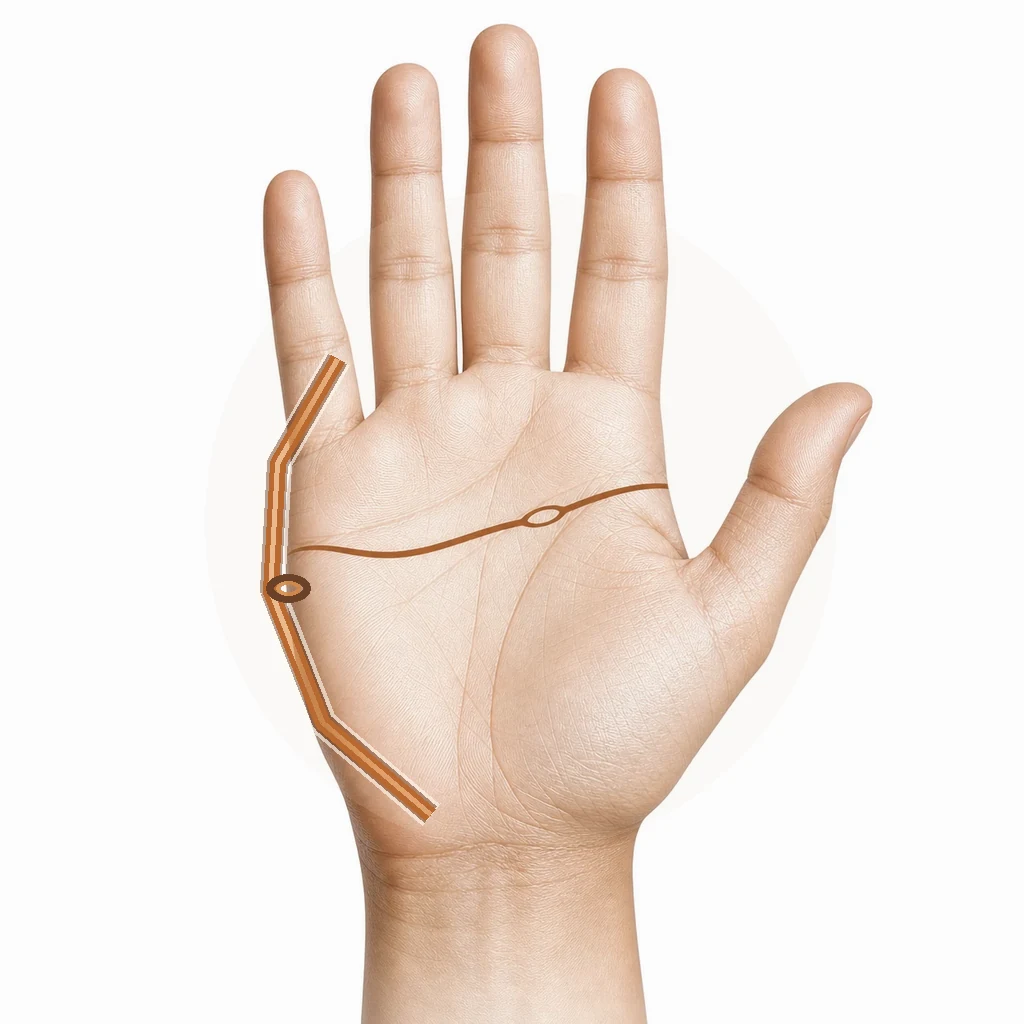
I rank the Mercury line at #9. A line whose very presence is seen as both a positive and a negative depending on who you ask cannot rank highly.
A line wrapped in contradiction
This vertical line running toward the pinky finger is associated with health and communication.
Its presence is read inconsistently. Some schools treat a clear Mercury line as a distinctly positive sign, while others insist its total absence is the better outcome. In my view, this contradiction severely drags down its practical reliability.
#10
Girdle of Venus
The niche emotional amplifier
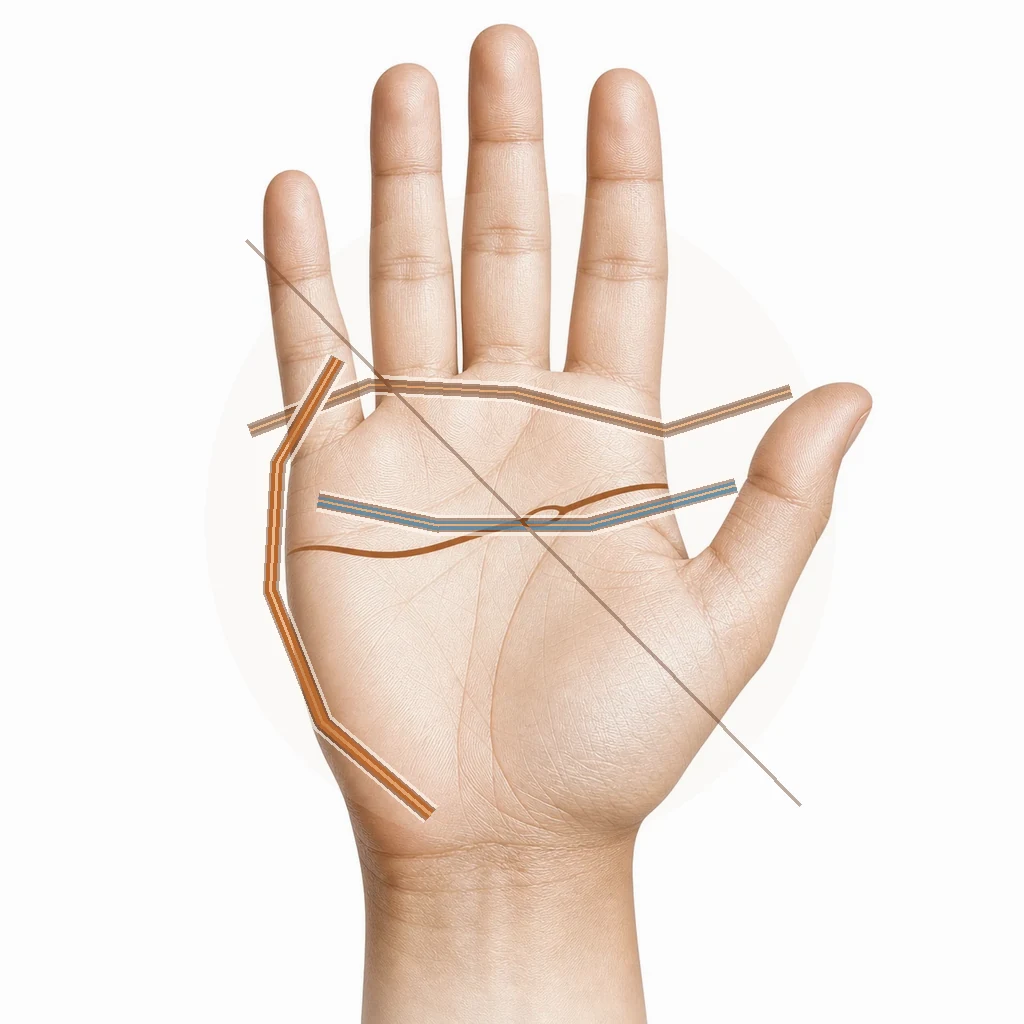
I rank the girdle of Venus at #10 because it is rare, niche, and highly variable in interpretation.
The emotional overtone
A short curved line above the heart line, the girdle of Venus is generally associated with heightened sensitivity or intense emotional swings.
Present only on a minority of hands, it is rarely treated as a primary reading element and remains inconsistently defined.
#11
Children Lines
The heavily scrutinized claim of offspring
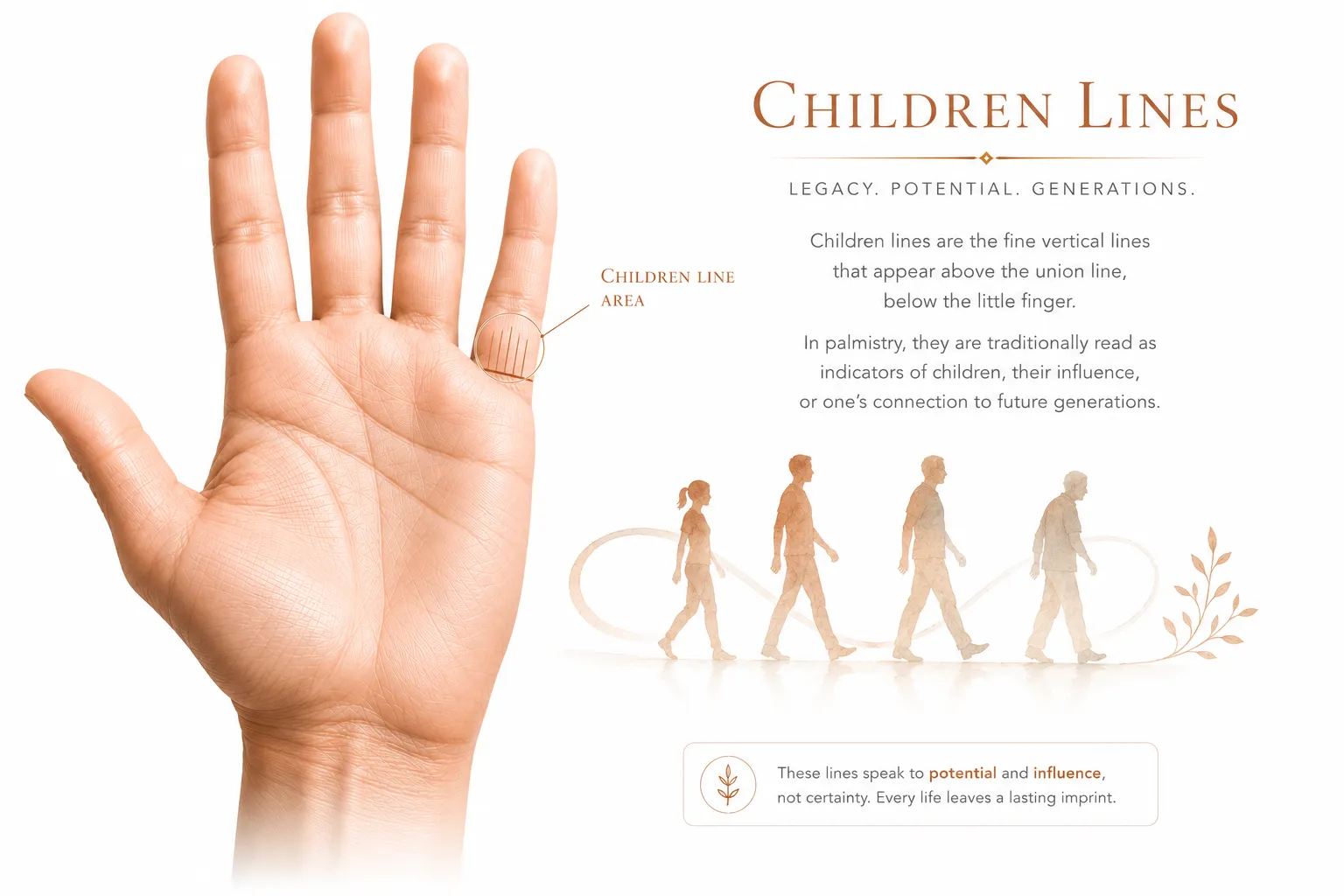
I rank children lines at #11 because their immense popular curiosity is completely undercut by poor traditional consensus.
A massive claim with weak foundations
These small vertical lines on the side of the palm near the marriage lines are traditionally counted to estimate the number of children a person will have.
This is one of the most openly contested conventions in palmistry. I see that cross-tradition agreement is near the very bottom, but the line retains solid search interest simply because the claim is so visceral.
#12
Ring of Solomon
The rare whisper of intuition
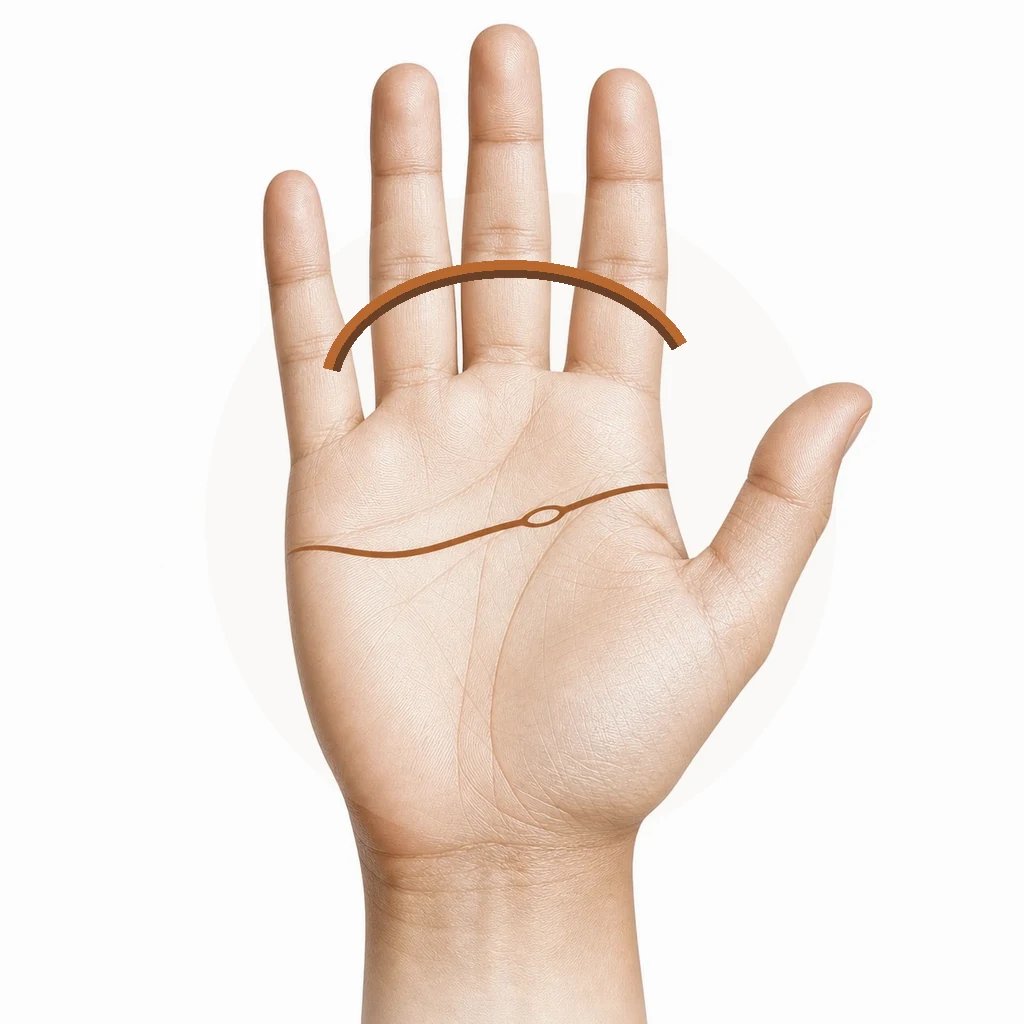
I put the ring of Solomon at #12 because it is so minor that it barely qualifies as more than passing trivia in most readings.
A footnote for the wise
A short curved line beneath the index finger, this mark is traditionally associated with wisdom, intuition about people, and leadership.
I observe that it is rare, minor, and almost never acts as the focal point of a serious palm reading.
#13
Travel Lines
The poorly agreed-upon journey marks
I place travel lines at #13 because there is practically no agreement on what counts to make this mark.
A mark with virtually no depth
These small horizontal lines on the outer edge of the palm are traditionally read as significant journeys.
Because there is low agreement on what counts as "significant enough," and essentially no depth beyond telling a client to "count the lines," I rank it purely at the bottom tier.
#14
Via Lactea (Intuition Line)
The esoteric whisper
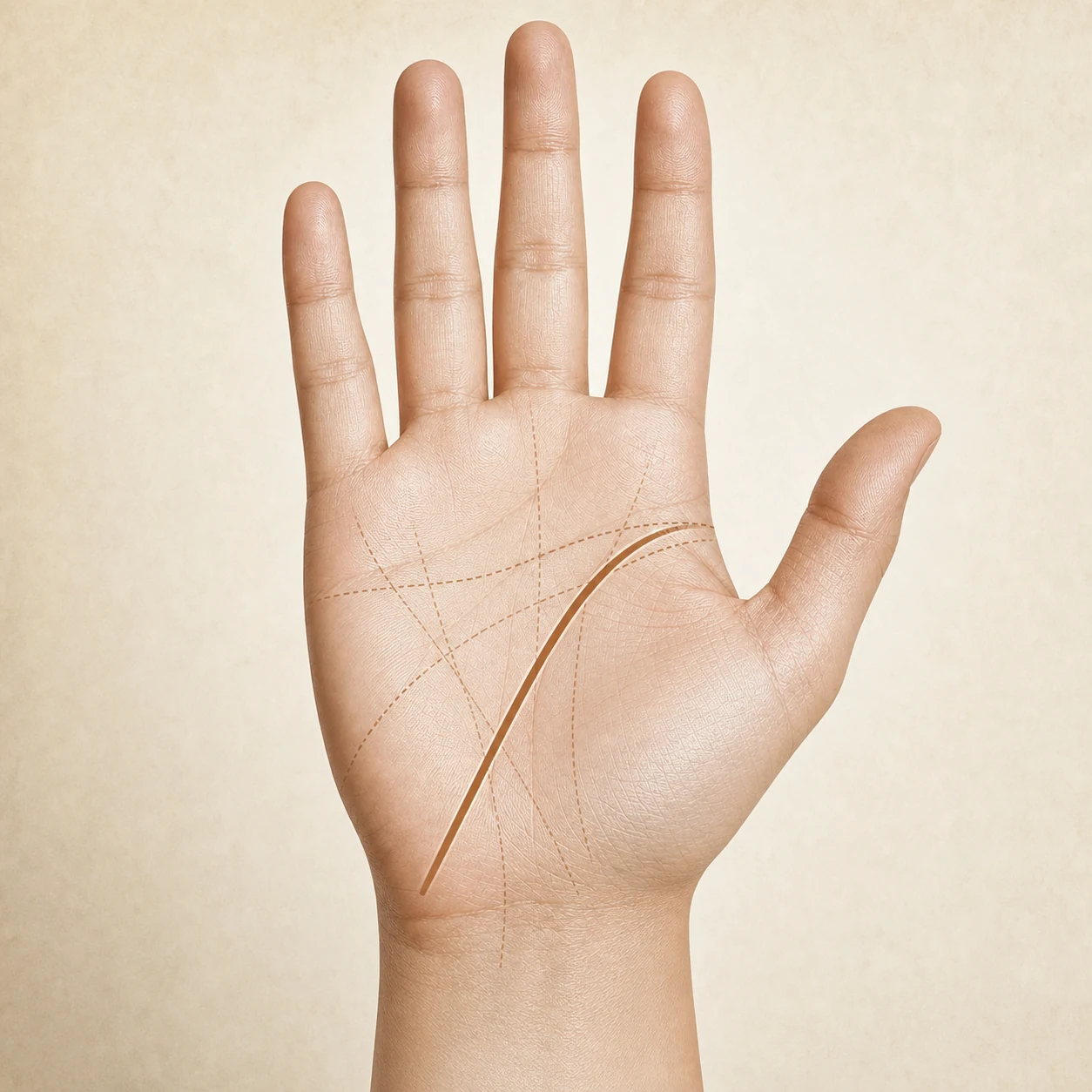
I rank the Via Lactea last. It is the least prevalent and least examined line on the entire list.
The weakest link
This faint curved line on the percussion edge is bound up in claims of heightened intuition or even psychic sensitivity.
It is the least prevalent, least agreed-upon, and least examined line I evaluated. Most modern palmistry guides mention it only in passing, if at all. It provides almost no structural value to a practical reading.
Head to head comparisons
The ranking was hardest where influence meant different things
Life Line vs Head Line
| Prevalence | Nearly universal | Nearly universal |
|---|---|---|
| Evidence & Scrutiny | Highly scrutinized | Subjective and harder to test |
| My decision | Life Line wins | Head Line takes second |
I chose the life line for the top spot because its core physical claims have been openly tested, separating it from purely psychological lines.
Marriage Lines vs Simian Line
| Public Interest | Massive search volume | Niche interest |
|---|---|---|
| Clinical Evidence | None | Strong dermatoglyphic ties |
| My decision | Folklore loses | Material evidence wins |
I ranked the simian line higher because material clinical documentation outranks popular but hotly contested relationship forecasting.
The lines that missed the final cut
These features are heavily scrutinized, but lack structural primacy
Mars Line
Why I considered them: Often cited as an inner life line denoting extra resilience.
Strongest case: Highly meaningful when present alongside a weak life line.
Why I left them out: It functions essentially as a modifier to the life line rather than a primary standalone structural feature.
Health Line (Hepatica)
Why I considered them: Mentioned heavily in classical texts.
Strongest case: Traditional texts give it weight equal to the Mercury Line.
Why I left them out: Its definition overlaps too frequently with the Mercury line itself, making it confusing to measure as an isolated feature.
Viral markers you might expect to see here
Some famous signs belong on social media, not in a serious ranking
Billionaire Line or Letter M
Why I investigated them: These generate massive modern search traffic.
What the evidence showed: They are viral modern constructs drawn from the intersection of major lines, not structurally distinct lines of their own.
Why I excluded them: I rank foundational anatomical marks, not viral social media trends.
What changed my mind while researching this ranking
The popular internet consensus did not survive contact with the structural evidence
Before the researchI initially expected the heart line to dominate because relationship questions drive the palm reading industry.
After the researchI found that the heart line's technical definitions are alarmingly inconsistent, placing it firmly behind the head and life lines.
Before the researchI assumed minor marks like marriage lines held more textual agreement.
After the researchI discovered that many core palmists aggressively challenge the idea of counting lines for marriages or children.
Myths, claims, and science I investigated
Fascinating is not the same as verified
Does the simian line mean a chromosomal disorder?
Finding: It appears frequently in certain genetic conditions (like Down syndrome) but is also a normal, harmless variant in healthy people.
My take: I rank it high precisely because it bridges the esoteric with physical reality, but it requires careful articulation.
Does a short life line mean an early death?
Finding: Empirical reviews show zero correlation between the physical length of the life line and lifespan.
My take: I treat the lifespan claim as widespread fiction, reading it instead for vitality.
Where my ranking could be wrong
The practice rewards the symbols it can easily categorize
- I am weighting Western analytical traditions heavily, which may inherently downplay heavily symbolic lines favored in classical Indian or Chinese reading.
- Search volume favors lines relating to love, wealth, and destiny, heavily distorting classical importance.
- Dermatoglyphic science rarely engages with minor lines like travel or children lines, meaning they will always struggle in the evidence category.
Even with those limits, I stand by the ranking because it separates documented anatomical presence from the massive amount of fortune-telling folklore that surrounds these lines.
What I still could not verify
The claims I would update first if better evidence appeared
The exact boundary of the Mercury Line
There is still immense friction over whether to treat it as a line of fate, a line of health, or to desire its absence.
Influence map
How these core lines structurally interact
The starting position of the head line relative to the life line is a core interpretive pairing.
When these two merge, they create the Simian Line.
My answers after doing the research
Short answers to the big questions behind these lines
What are the most important lines in palmistry?
The life line, head line, and heart line. These three frame the entire physical, mental, and emotional structure of a reading.
Is the simian line lucky or bad?
I consider it neither purely lucky nor bad; it signifies intense, singular focus where the mind and emotions fuse together.
Can lines predict when you die?
They cannot. The life line measures baseline vitality, and no line objectively counts down a lifespan.
Sources
The sources I used for the historical claims
I relied on core traditional palmistry references and modern empirical evaluations, matching these against search trends to see what truly matters today.
The Laws of Scientific Hand Reading
William G. Benham, 1900
Establishing foundational weight of major lines, Minor line interpretations
Clinical Dermatoglyphics
Assessing the simian line, Separating anatomical structures from folklore
Compiled hand reading search and tradition trends
Cross-tradition agreement, Search interest metrics
Revision history
September 14, 2026: First PalmHermit ranked list of palm lines based on foundational establishment and evidence.