Palmistry Predictions

Can Palmistry Predict Infertility?

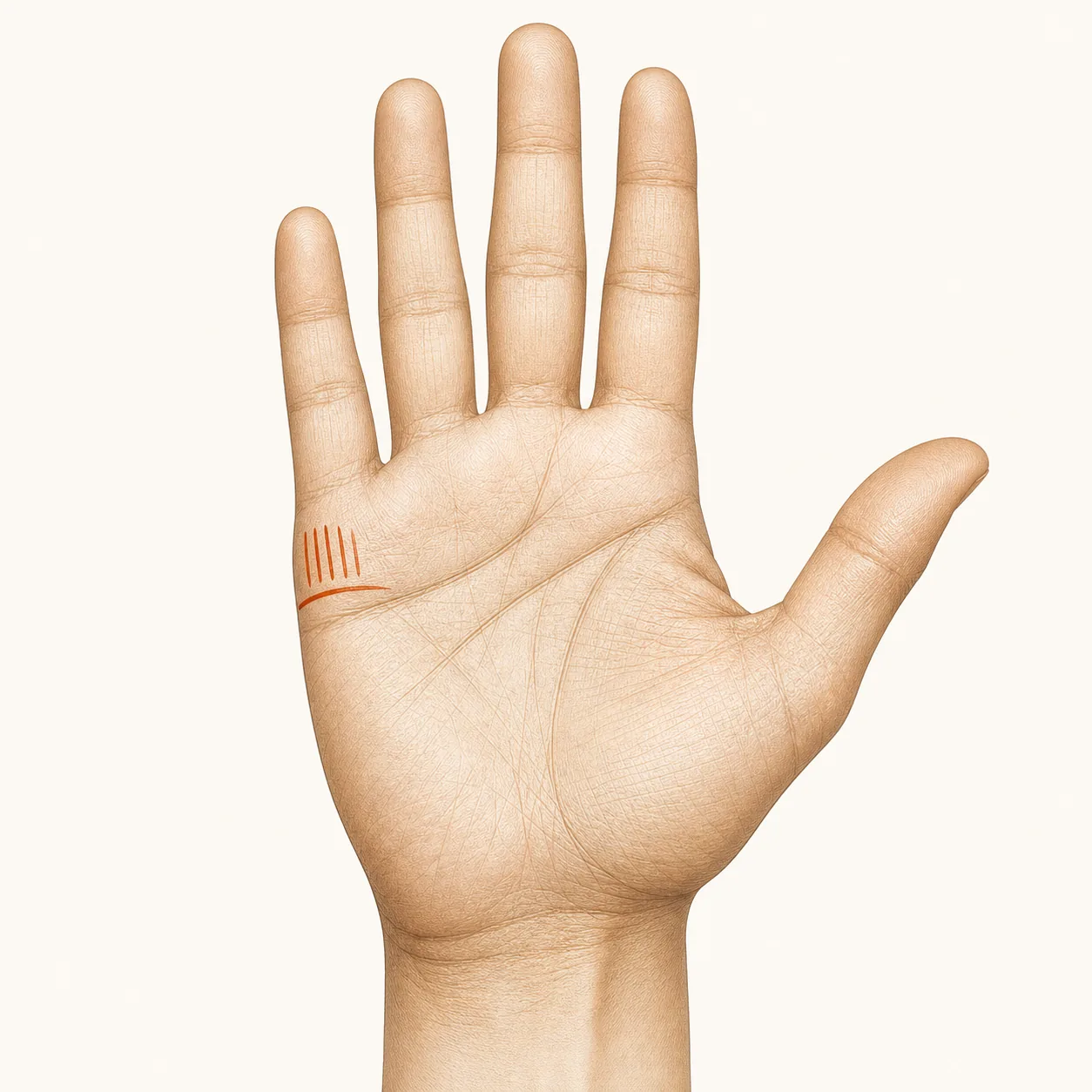
There is a set of tiny vertical lines on the outer edge of the palm, below the little finger, that palmists have traditionally called "children lines." The number of lines, their depth, their clarity — all of it, according to traditional palmistry, tells you how many children you will have. Or whether you will have any at all. It is a charming idea. It is also, medically speaking, complete fiction.

Yet people ask about this constantly, often at the most vulnerable moments of their lives. And that vulnerability is precisely why this particular palmistry claim deserves especially careful examination.

Reading fertility from palm lines is like reading a recipe from a windowpane.

Quick answer

No. Palmistry cannot predict infertility. The "children lines" tradition is one of palmistry's most persistent and most harmful claims. There is no documented connection between any palm feature and a person's reproductive capacity.

No Predicts infertility?Claimed, not validated Children lines real?Rejected Modern view?Very High Harm potential?
Palm with the edge of the hand visible, children lines area shown gently
Editorial image, open palm, soft warm tones, gentle and empathetic mood, no clinical coldness.
01Overview

Overview

The short answer

The children lines tradition appears in palmistry texts from multiple cultures and centuries. The basic claim is that vertical lines on the percussion edge of the hand — the outer edge, below the Mercury finger — indicate children. More lines, more children. Deep lines, healthy children. Faint lines, difficult pregnancies or no children at all.

This is not biology. Fertility is determined by hormonal profiles, reproductive anatomy, sperm quality, age, underlying health conditions, and a wide range of other medically understood factors. None of these have any known relationship to skin creases on the outer edge of a hand.

The reason this claim demands special attention is context. People who ask about palmistry and fertility are often people who are struggling to conceive or who are anxious about whether they will be able to. A careless reading can cause immense distress, false hope, or — perhaps worst — a delay in seeking actual medical help.
02HISTORICAL CLAIMS

The children lines tradition

The children lines tradition appears in both Western and Indian palmistry. In Western palmistry, the lines on the percussion edge beneath the Mercury finger were counted carefully. A 19th-century palmist named Count Saint-Germain — a man whose confidence considerably exceeded his evidence — described detailed systems for reading not just the number of children but their sex, health, and whether they would outlive the parent.

Indian Hasta Samudrika Shastra similarly developed a tradition of reading reproductive potential from the hand, with particular attention to the health and clarity of the "progeny lines." These traditions were culturally significant and taken very seriously. They were also never validated against actual reproductive outcomes in any systematic way.

The faint lines on the percussion edge vary throughout a person's life. They change with age, skin condition, pressure, and how you hold your hand when it's being read. They are not a stable biological record. They are, quite literally, wrinkles.

03WHY THIS ONE MATTERS MORE THAN MOST

Why this one matters more than most

Telling someone who is struggling to conceive that their palm shows "no children lines" is an act of cruelty, whether intended or not. Telling someone trying to avoid pregnancy that their lines show "no children" is potentially dangerous. Fertility questions require medical professionals, not palm readers. If a reader ventures into this territory, they have left responsible practice behind entirely.

04INFERTILITY MYTHS

Myth versus reality

Myth

Faint or absent children lines mean infertility.

Reality

Children lines vary with skin condition and age. They are not a fertility indicator in any medical sense.

Myth

The number of children lines predicts how many children you will have.

Reality

There is no documented correlation between children line count and actual number of offspring.

Myth

A skilled palmist can tell if IVF will succeed.

Reality

No palm reader can predict IVF outcomes. An IVF specialist, working with clinical data, has a much better basis for informed expectations.

05DECISION TEST

The decision test

Should you use palmistry to assess your fertility or your chances of conceiving?

No. If fertility is a concern for you, please see a doctor. A reproductive endocrinologist can give you actual, evidence-based information. A palm reader cannot.

06PERSPECTIVE

The emotional weight of this question

Fertility is one of the most emotionally loaded topics in human life. The desire for a child — or the anxiety about whether one is coming — sits very deep. It is entirely understandable that people reach for any available answer. But reaching for palm reading in this area is reaching for a comfort that could become a harm. The kindest thing anyone can say, to someone asking this question, is: go and speak with a doctor.

07TAKEAWAYS

Verdict

Palmistry cannot predict infertility.

Supporting Finding

Children lines are skin creases with no known link to reproductive capacity.

Important Limit

This is one of the highest-risk areas of irresponsible palm reading.

Practical Use

Fertility concerns deserve medical attention, not palm readings.

08FAQ

FAQ

Common follow-up questions

Do children lines mean anything at all?

Not in a medical or predictive sense. Some readers use them as a prompt for conversation about family values and hopes, which is a more defensible use — but even then, they should be clear that the lines are not predictive.

I have no children lines. Should I be worried?

No. Many people with no visible children lines have multiple children. Many people with prominent ones have none. The correlation simply isn't there.

Can palmistry tell me the sex of a future child?

No. Claims to this effect are among the least defensible in the palmistry tradition. No palm feature predicts the sex of a future child.