Palmistry Predictions

Can Palmistry Predict Miscarriages?

Miscarriage affects roughly one in five known pregnancies. It is extraordinarily common, extraordinarily painful, and — here is the thing that matters — extraordinarily unpredictable even by modern medicine, which has rather more sophisticated tools than a lamp and a magnifying glass looking at someone's palm.

Yet some palmistry traditions have claimed exactly this: that marks on the hand can warn of pregnancy loss before it happens, or explain it after. These claims deserve to be examined carefully and honestly.

Predicting miscarriage from a palm is not mysticism. It is, at its worst, a very cruel form of false certainty.

Quick answer

No. Palmistry cannot predict miscarriages. Some older traditions pointed to specific marks near the children lines as indicators of pregnancy complications or loss. These claims have no medical basis and can cause profound harm.

No Predicts miscarriage?Some do Old texts claim?Firmly rejected Modern view?Severe Harm potential?
Gentle close-up of a palm, soft light, empathetic tone
Editorial image, open palm in soft diffused light, warm neutral tones, deeply empathetic mood, no clinical coldness.
01Overview

Overview

The short answer

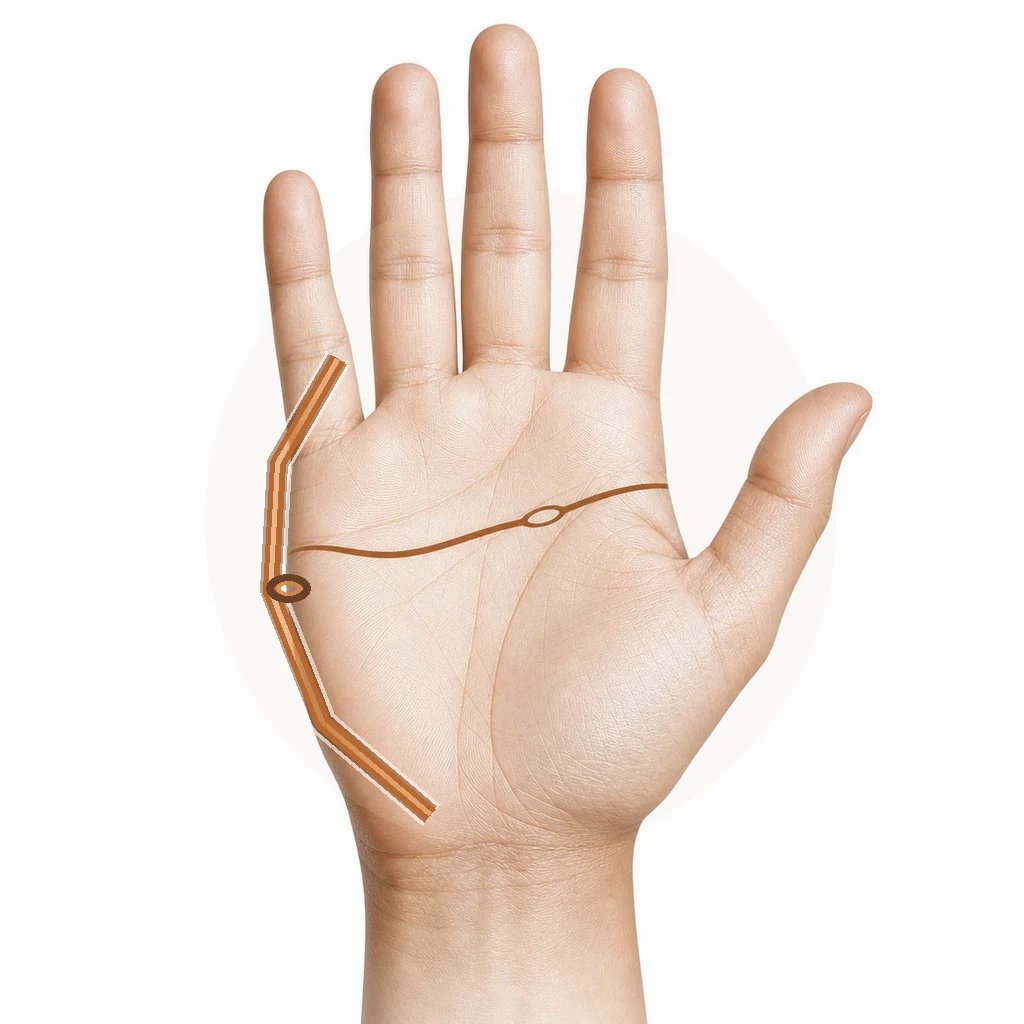
Some palmistry texts, particularly older ones, suggested that a broken or interrupted children's line indicated pregnancy loss. A small horizontal line crossing a children's line was sometimes interpreted as a miscarriage. These claims were presented with the same authoritative confidence that characterised Victorian palmistry at its most damaging.

Modern medicine understands miscarriage as a complex event with many possible causes: chromosomal abnormalities, uterine conditions, hormonal factors, immune system issues, and a significant proportion of cases where the cause cannot be identified at all. None of these causes have any relationship to lines on the palm.

This is one of the most sensitive areas in palmistry ethics. Anyone who uses palm reading to tell a person they will miscarry — or to "explain" a past miscarriage through marks on the hand — is doing something that should not be described in polite terms.
02HISTORICAL CLAIMS

What older traditions claimed

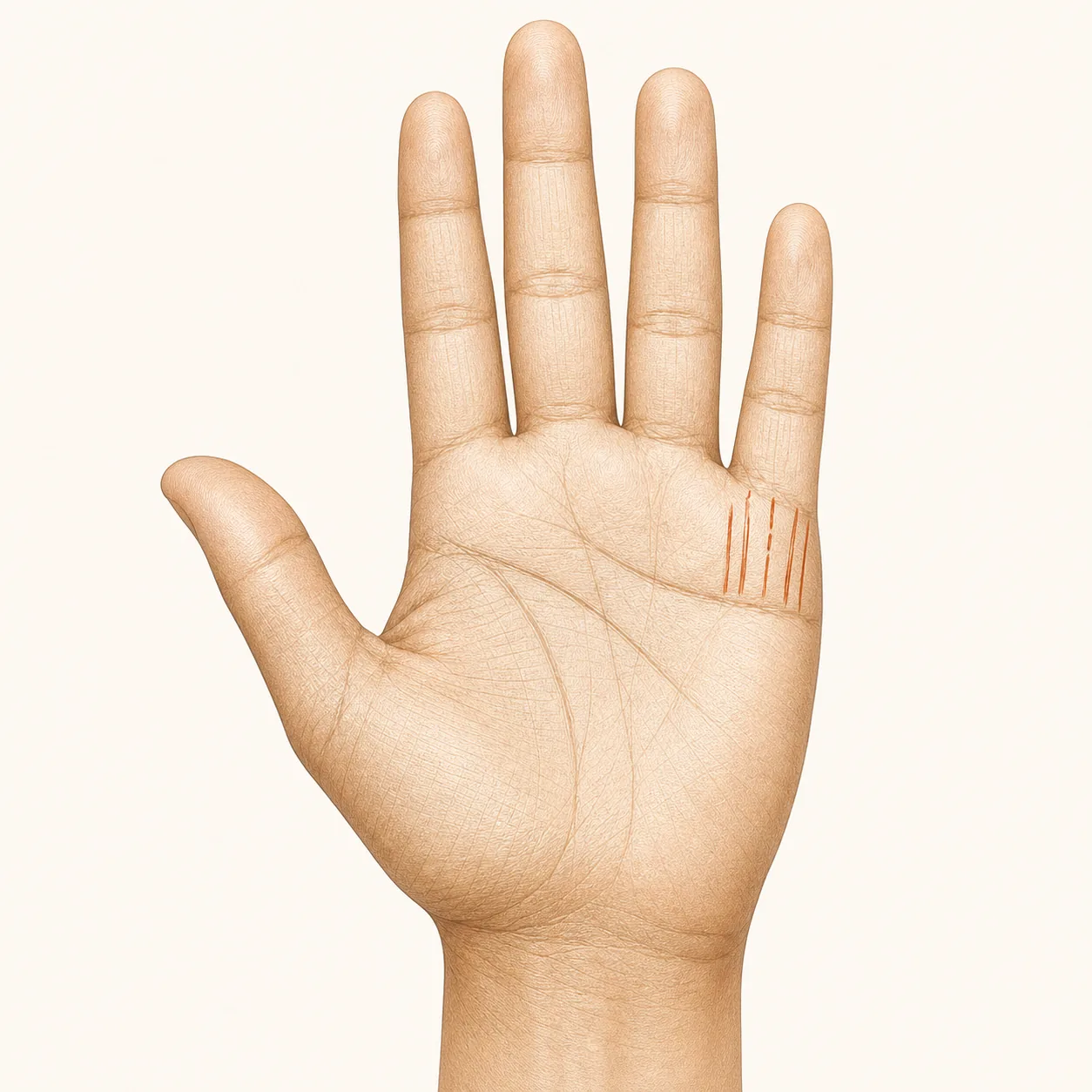
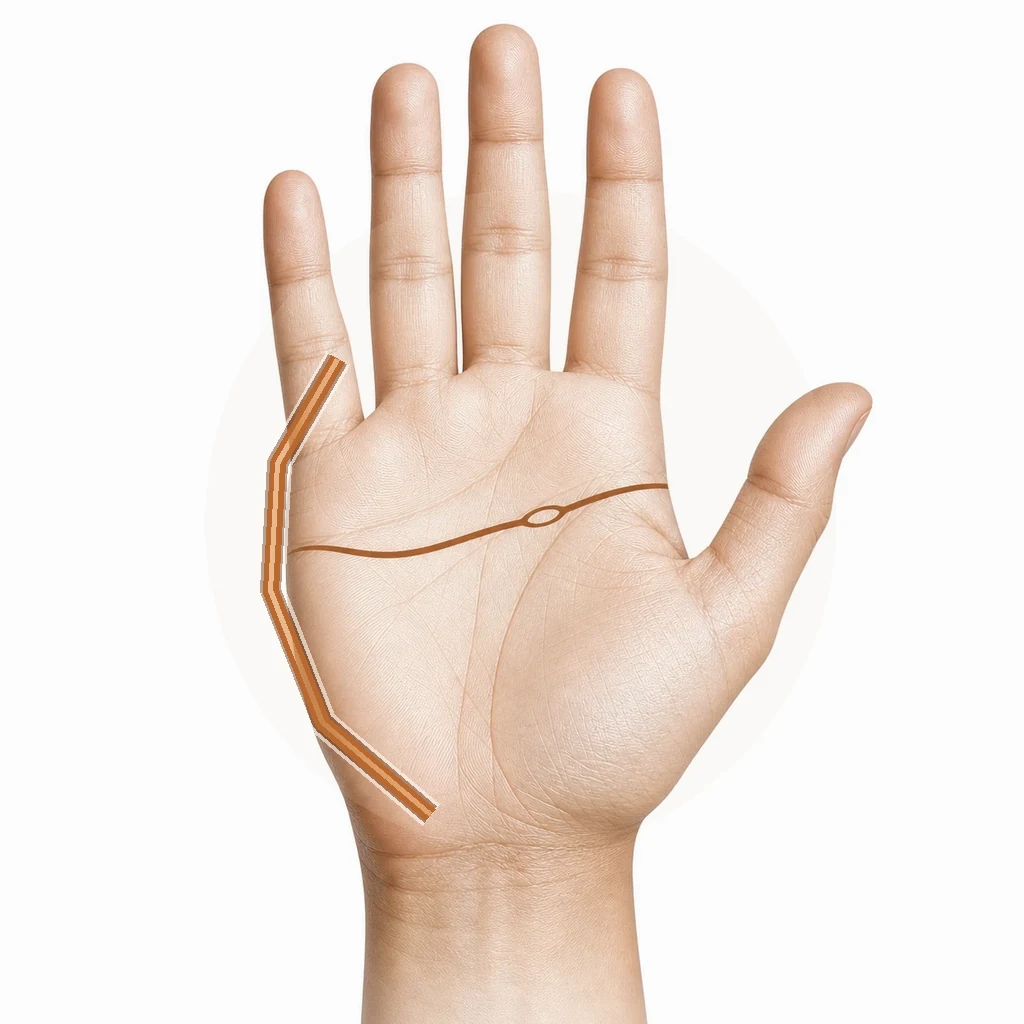
In several palmistry traditions, the children's lines — those faint vertical marks on the percussion edge below the little finger — were examined not just for their number but for their condition. A line that started clearly but faded was said to indicate a difficult pregnancy. A short horizontal bar crossing a children's line was read, by some practitioners, as a pregnancy that did not result in a live birth.

The emotional logic of this interpretation is not hard to understand. People who had experienced miscarriage were looking for meaning. A palmist who could point to a mark and say "yes, I see it here, it is in your hand" was offering a kind of explanation. The problem is that the explanation was false. It was not a medical insight. It was a pattern imposed on a grieving person's hand.

There is also a troubling forward-looking version of this claim: that palmistry can predict a miscarriage before it happens. This is worse. It asks a person to carry dread through a pregnancy based on nothing more reliable than a faint crease on their palm.

03AN ETHICAL LINE THAT CANNOT BE CROSSED

An ethical line that cannot be crossed

No palm reader should ever tell a pregnant person that their hand shows a risk of miscarriage. No palm reader should ever "explain" a past miscarriage through a mark on the hand. Grief and anxiety deserve compassion and, where needed, genuine medical support. They do not deserve palm readings. If a reader ventures here, they have caused harm, whatever their intentions.

04MISCARRIAGE MYTHS

Myth versus reality

Myth

A horizontal bar on a children's line means a past miscarriage.

Reality

These small lines are skin creases. They vary constantly. They do not record reproductive history.

Myth

A broken children's line predicts pregnancy loss.

Reality

There is no documented correlation between any palm feature and miscarriage risk.

Myth

Palmistry can explain why a miscarriage happened.

Reality

Even medicine often cannot fully explain individual miscarriages. Palmistry certainly cannot. It can only offer the false comfort of an explanation that isn't one.

05DECISION TEST

The decision test

Should you consult a palm reader about pregnancy loss, past or potential?

No. If you are grieving a miscarriage, you deserve real support — from medical professionals, grief counsellors, or trusted people in your life. Palm reading cannot offer what you actually need.

06PERSPECTIVE

The search for meaning after loss

The human need to find meaning in loss is real and profound. After a miscarriage, many people search for explanations — something to hang it on, some way to make it make sense. This search is natural. The problem with palmistry in this context is that it offers a false answer in the place where a true answer is either unavailable or requires medical investigation. Finding a mark on your palm is not finding a reason. It is borrowing someone else's story and wearing it as your own.

07TAKEAWAYS

Verdict

Palmistry cannot predict miscarriages.

Supporting Finding

No palm mark records or predicts pregnancy loss.

Important Limit

Using palmistry in this context is among the most harmful applications of the practice.

Practical Use

Pregnancy loss concerns should be addressed with medical professionals, not palm readers.

08FAQ

FAQ

Common follow-up questions

Can a palm reading help me process a miscarriage emotionally?

Only if framed very carefully and without any predictive claims. A compassionate reader who focuses entirely on emotional support, not on marks "explaining" the loss, might provide comfort — but a grief counsellor is better equipped for this.

Are there any palm features linked to difficult pregnancies?

No. There are no validated connections between palm features and pregnancy outcomes of any kind.

Why do some palmists still make these claims?

Tradition, and because grieving people sometimes find them temporarily comforting. This does not make the claims true or the practice ethical.