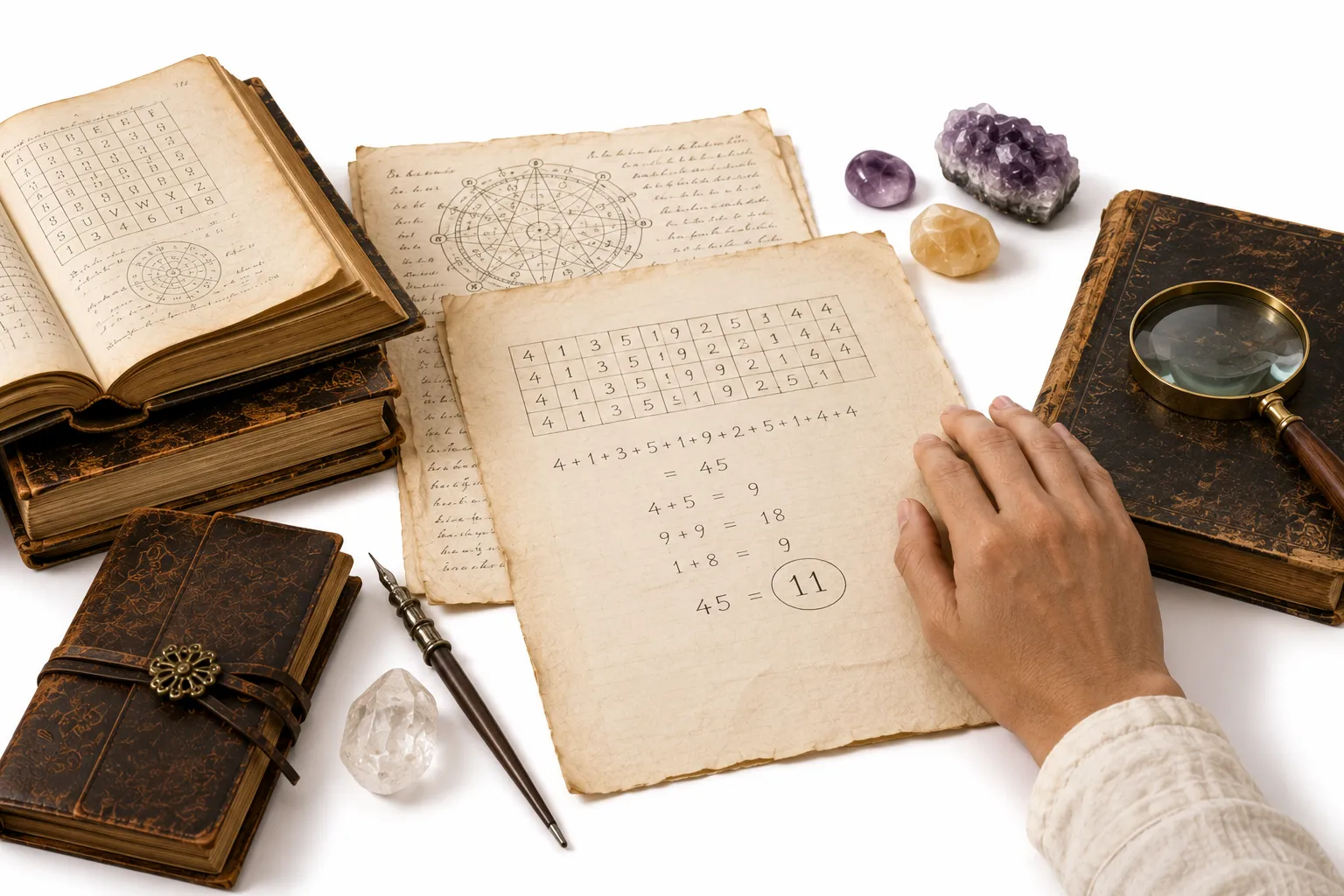
Master Numbers

Is 11 a Good Destiny Number?

Numerology's whole method is reduction — add the digits, keep adding, until one number is left.

11 is one of the few totals the tradition refuses to reduce. That refusal is the entire reason it has a special reputation at all.

Quick answer

"Good" isn't quite how the tradition frames it. 11 is a master number, and most Western numerology sources describe it as intense and gifted rather than simply lucky — associated with heightened intuition and insight, alongside a well-documented reputation for being harder to live with than a "regular" number.

This page describes a numerology tradition's claims about the master number 11. It does not assert that a destiny number predicts personality, success, or life outcomes.

Two vertical numeral 1s standing side by side like twin pillars, unreduced into a single digit
11 (master)Number
2, if not preservedReduces to
Intuition, sensitivityTradition says
Not empiricalEvidence
01Overview

Overview

Why 11 gets treated as a different category, not just a lucky one

Interpretation is traditional

Every core number in Western numerology gets there by reduction: add the digits, then add them again, until a single figure between 1 and 9 remains. 11 is where the system, by convention, breaks its own rule. Most schools stop reducing at 11 and let it stand, rather than collapsing it down to 2.

That exception is the whole reason 11 gets discussed differently from any single digit. It's not framed as "good" the way 1 or 6 are; it's framed as amplified — a heightened version of 2's cooperative, intuitive qualities, turned up to an intensity the tradition says is harder to carry comfortably.

This is also why the question "is 11 good" doesn't have a clean yes. Numerology's own literature tends to describe master numbers as a package deal: real gifts, paired explicitly with real strain, in a way single digits rarely are.

02TRADITIONAL READING

What the tradition says about an 11

Numerology writing on 11 leans on words like intuitive, visionary, sensitive, and inspired. It's often called the "intuitive illuminator," built on 2's cooperative, perceptive base but described as operating at a higher pitch — more insight, but also more nervous energy.

That intensity is the recurring theme. Nearly every serious source pairs 11's gifts with an explicit caution: anxiety, self-doubt, difficulty grounding big ideas into practical action. Numerology treats master numbers less like a bonus prize and more like a harder assignment.

Some schools go further and describe 11 as requiring the person to "grow into" the number, implying that its higher potential isn't automatic. That's a notably different structure than how single digits like 1 through 9 are usually discussed.

03THE REDUCTION RULE

Why 11 doesn't reduce to 2

Preserved

1111

Preserved as a master number

Most Western schools stop here by convention, treating 11 as its own distinct figure rather than collapsing it further.

Reduced

22

The reduced alternative

A minority of schools reduce 11 to 1 + 1 = 2 anyway, treating master numbers as optional rather than mandatory to preserve. This is why two calculators can disagree on the same name.

04TAKEAWAYS

Verdict

11 is a master number, preserved rather than reduced by most Western schools.

Reading Context

The tradition frames it as intensified intuition, not simply "lucky."

Why It Feels True

Its difficulties — anxiety, feeling ungrounded — are discussed as openly as its gifts.

Evidence Status

No evidence supports a link between the calculation and real personality outcomes.