1. Ancient India & Classical Antiquity:
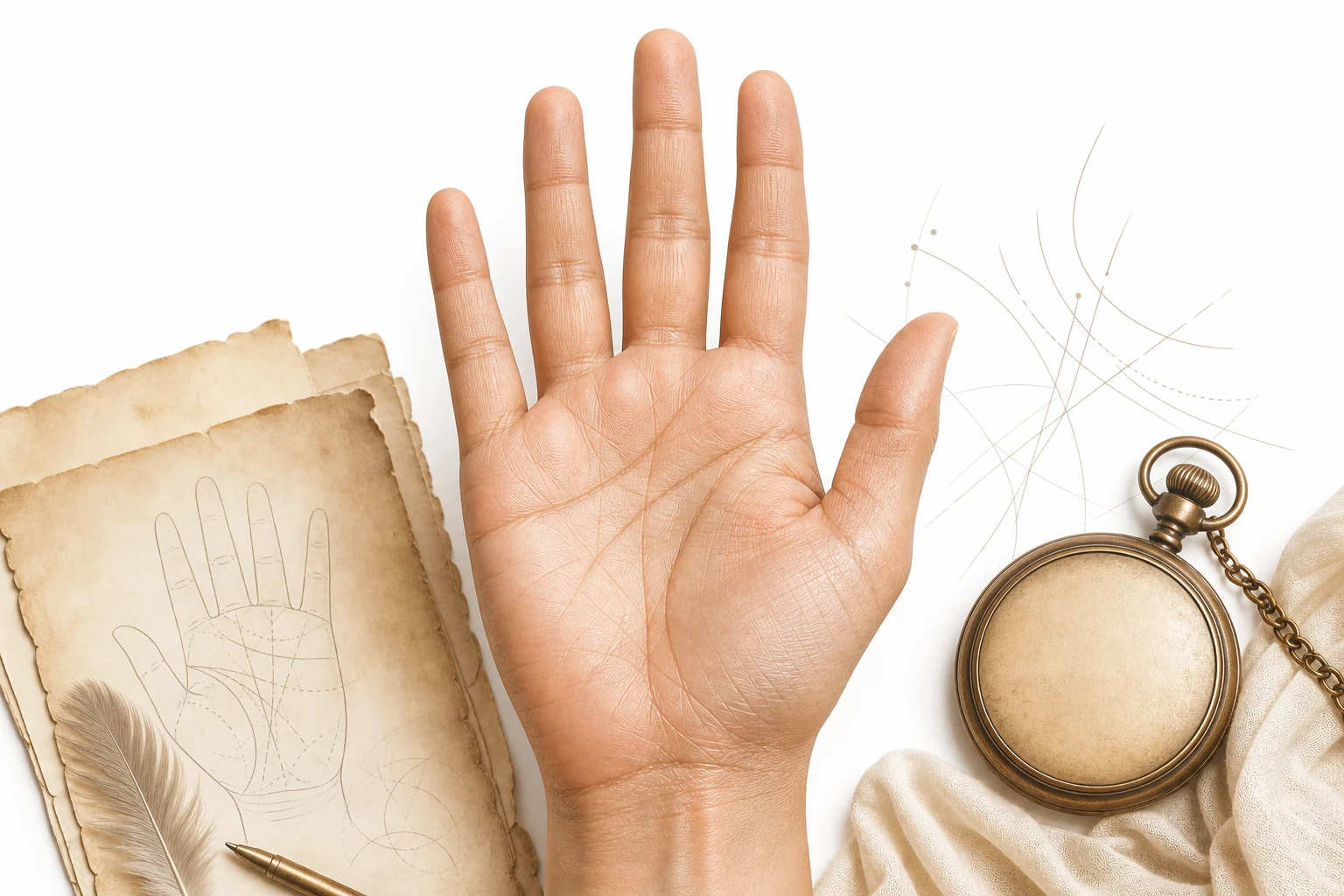
In India, hand reading developed as a sub-branch of Samudrika Shastra (the analysis of bodily marks). While early oral traditions date back to the 1st millennium BCE, surviving textual codices (such as sections of the Garuda Purana and Varahamihira's 6th-century Brihat Samhita) document palmar line reading alongside body typology. In classical Greece, Aristotle noted in Historia Animalium that individuals with long palm lines tend to be longer-lived, establishing an early observational connection between palm creases and vitality.
2. Medieval Europe & Islamic Scriptoriums:
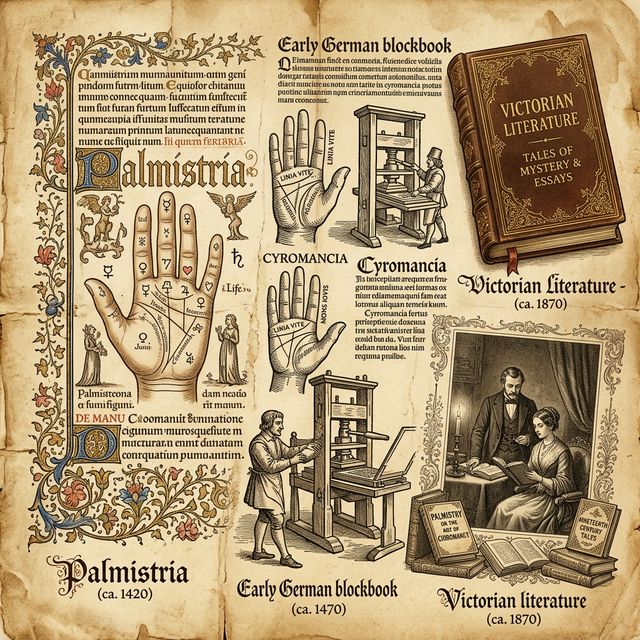
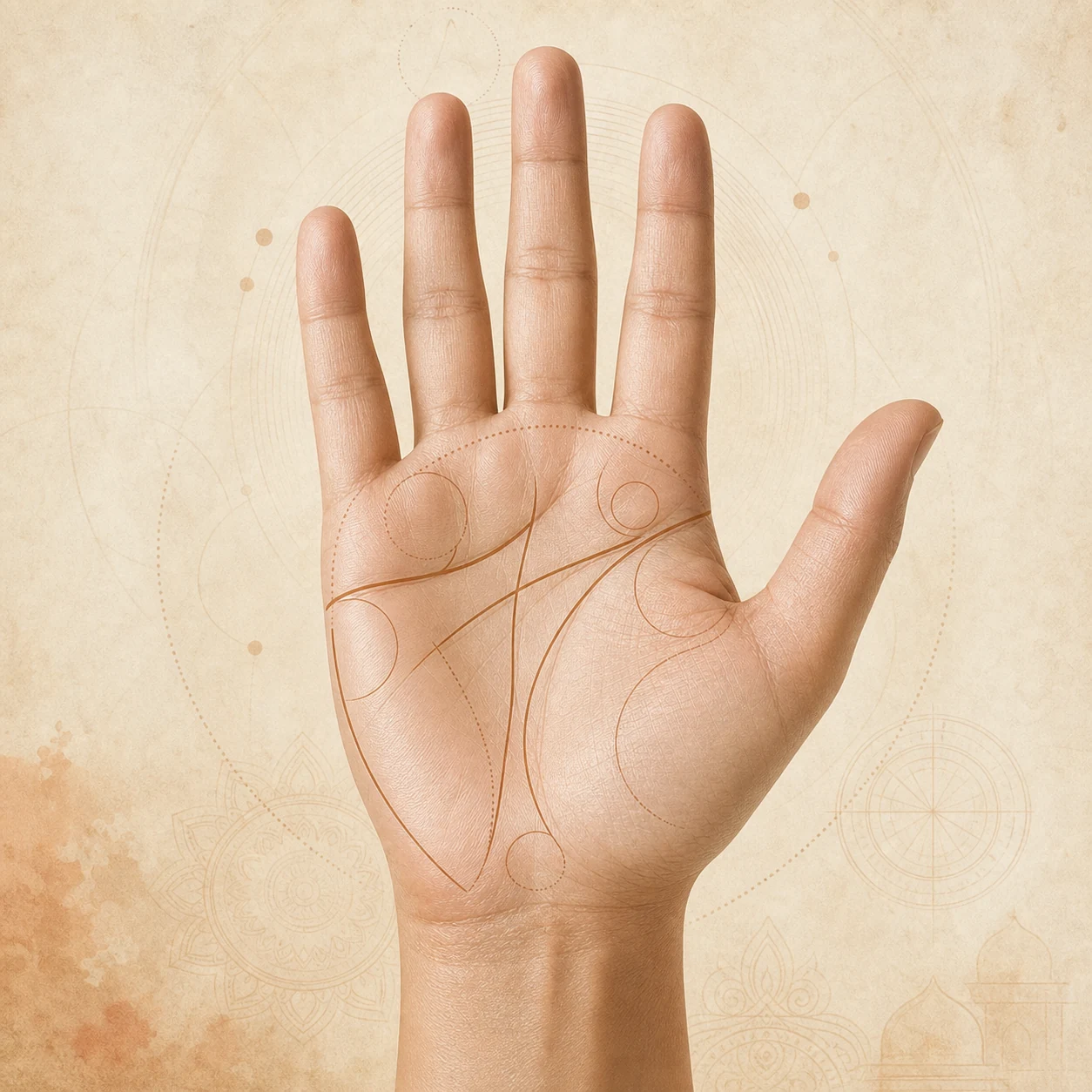
Between the 12th and 14th centuries, Latin manuscript culture produced the first dedicated hand-reading treatises in Europe. Works like the Summa Chiromantiae codified the palm into specific regions assigned to classical planets (Jupiter, Saturn, Sun, Venus, Mercury, Mars, Moon), establishing the planetary mount framework that persists today.
3. Early Modern Print Revolution (15th–17th Century):
The invention of the printing press transformed palmistry from a restricted manuscript tradition into a mass-market phenomenon. Johann Hartlieb's Die Kunst Ciromantia (1475) was among the earliest printed block-books. Renaissance scholars like Johannes Indagine (1522) and Bartolommeo Della Rocca / Cocles (1504) published heavily illustrated manuals that integrated palmistry with Renaissance medicine and anatomical study.
4. 19th-Century French Typological Revolution:
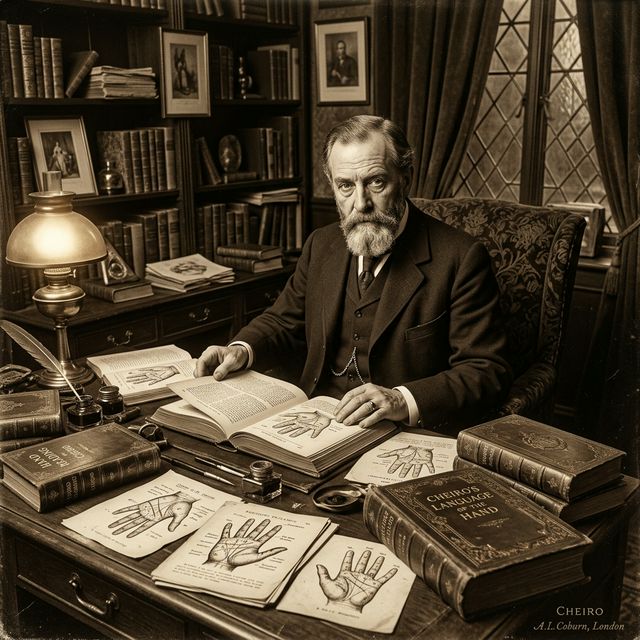
In 1839, French officer Casimir Stanislas d'Arpentigny published La Chirognomie, shifting focus away from predictive line reading toward hand-shape classification (categorizing hands into 7 structural types: Elementary, Square, Spatulate, Philosophic, Conic, Psychic, and Mixed). Twenty years later, Adolphe Desbarrolles published Les Mystères de la Main (1859), fusing d'Arpentigny's hand shapes with kabbalistic and astrological line analysis, creating the foundation for 19th-century celebrity palmists like Cheiro.
5. 20th-Century Medical & Psychological Reinterpretation:
The 20th century saw two major reinterpretation movements: William G. Benham's 1900 Laws of Scientific Hand Reading modernized anatomical line analysis, while Dr. Charlotte Wolff (The Human Hand, 1942) and Dr. Harold Cummins (the father of modern dermatoglyphics, 1926/1943) investigated palmar creases and fingerprint ridge patterns in psychiatric and medical research settings.