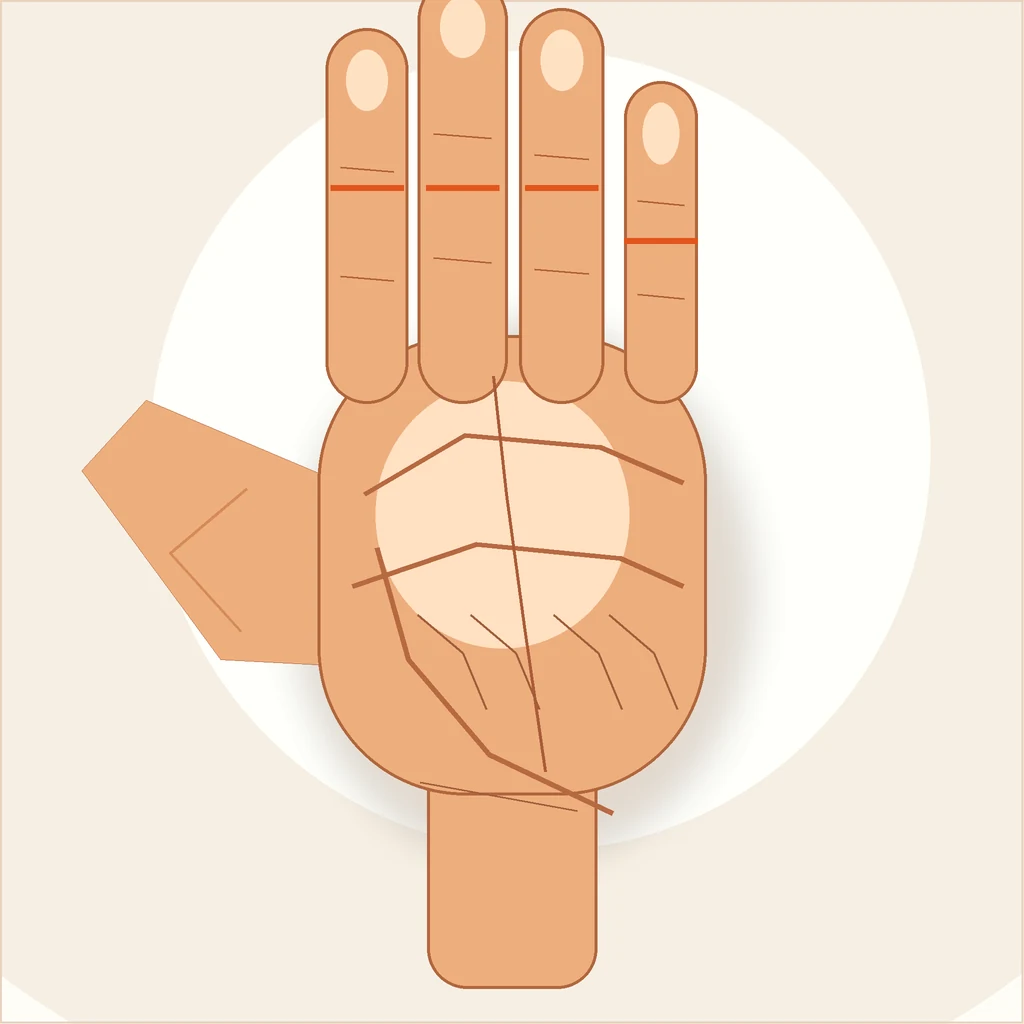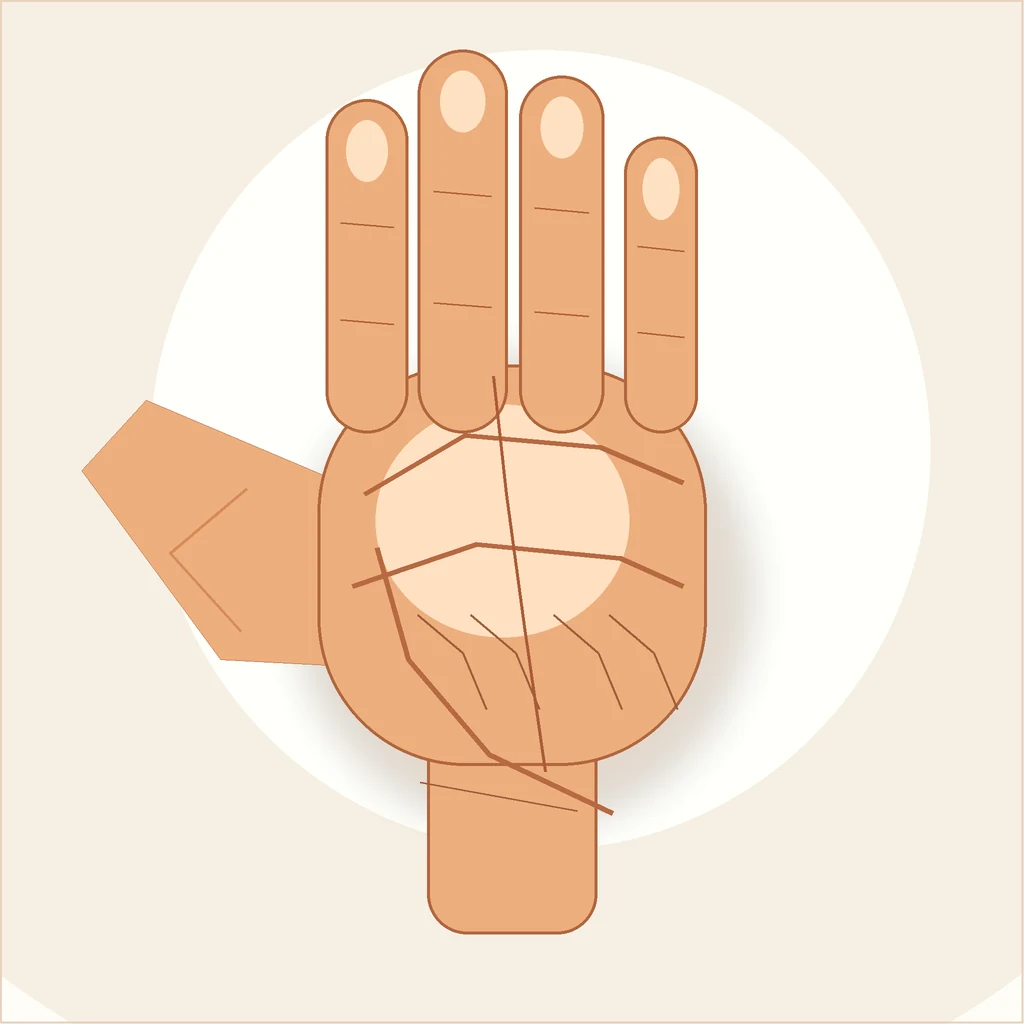
Hand Types

What Are the 4 Types of Palms?

The four-element system of hand classification is one of palmistry's neater inventions — a twentieth-century simplification of the older seven-type system, organised around the classical elements and therefore immediately legible to anyone who has ever read a horoscope, taken an element quiz online, or sat through a chemistry class.

What is interesting about the system is how much psychological work it manages to do with just two measurements: palm shape and finger length. The resulting types have a surprising amount of descriptive power, even for sceptics.

Quick answer

The four elemental hand types are: Earth (square palm, short fingers — practical, reliable), Air (square palm, long fingers — intellectual, communicative), Fire (rectangular palm, short fingers — energetic, impulsive), and Water (rectangular palm, long fingers — intuitive, emotional). These are identified by comparing palm shape (square vs oblong) and finger length relative to the palm.

Comparison diagram of four elemental hand types
Museum field-note editorial illustration showing four hand outlines representing Earth, Air, Fire, and Water types in a 2x2 grid, annotated with palm shape and finger length markers, aged parchment style.
Square palm, short fingersEarth Hand
Square palm, long fingersAir Hand
Oblong palm, short fingersFire Hand
Oblong palm, long fingersWater Hand
01Overview

Overview

The short answer

The four-element system identifies hand type by two measurements. First, palm shape: is the palm roughly as wide as it is long (square) or noticeably longer than wide (oblong/rectangular)? Second, finger length: are the fingers shorter than the palm (short) or roughly as long or longer (long)? This two-by-two grid produces the four types.

Earth hands (square, short): Practical, grounded, dependable, and physically capable. Comfortable with routine, less comfortable with ambiguity. Often found in trades, agriculture, and any work requiring physical reliability.

Air hands (square, long): Intellectually curious, communicative, analytical, and prone to overthinking. The long fingers on a sturdy palm produce someone who thinks carefully and communicates well. Prone to anxiety when overstimulated.

Fire hands (oblong, short): Energetic, enthusiastic, impulsive, and charismatic. The long palm drives action; the short fingers process quickly rather than carefully. Leaders, entrepreneurs, and anyone who prefers doing to planning.

Water hands (oblong, long): Intuitive, emotionally receptive, creative, and sensitive. The combination of long palm and long fingers produces someone immersed in inner experience. Artists, therapists, and empaths cluster here in the traditional description.
AI capability map

What the model can detect versus what it cannot know

Can do

Describe visible features, compare lines, and apply a learned palmistry framework.

Cannot do

Verify future events, hidden facts, spiritual claims, or medical conclusions.

02PERSPECTIVE

Perspective

The four-element system is palmistry's most accessible framework and, not coincidentally, the one most easily mapped onto the Big Five personality traits that modern psychology actually uses. Earth corresponds roughly to conscientiousness. Air to openness and intellect. Fire to extraversion and drive. Water to agreeableness and emotional sensitivity. Whether this correspondence reveals something deep about human typology, or simply shows that any four-category model of personality will approximate any other four-category model, is a question worth sitting with.

03TAKEAWAYS

Verdict

The four elemental hand types are Earth, Air, Fire, and Water.

Supporting Finding

They are determined by palm shape (square or oblong) and finger length relative to the palm.

Reading Context

Each type is associated with a distinct set of personality traits in the palmistry tradition.

Reader Guidance

Most hands are mixed types sharing features from more than one category.

04FAQ

FAQ

Common follow-up questions

How do I measure my palm to identify my hand type?

Measure the palm from the base of the middle finger (where it meets the palm) to the wrist crease. Then measure the width across the widest part of the palm. If height and width are roughly equal, your palm is square. If height significantly exceeds width, your palm is oblong. For fingers, measure from the base to the tip of the middle finger and compare to the palm height.

What if I seem to be between two types?

Most people are. The system is a framework rather than a sorting machine. Mixed types are common and are usually read by identifying which type predominates.