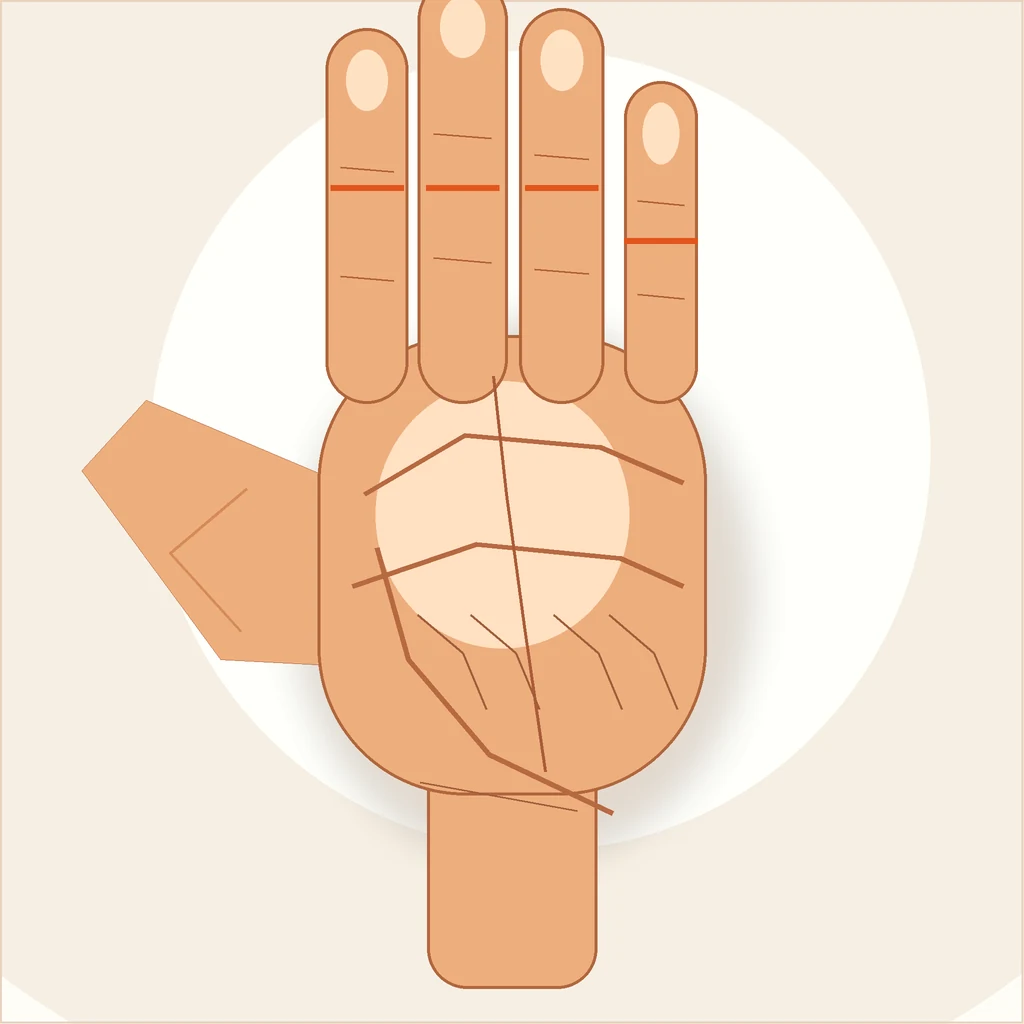
Hand Classification

What Are the 7 Types of Hands?

The Victorian era had a remarkable appetite for classification. They classified plants, animals, clouds, criminals, races, and social classes with the same methodical enthusiasm. It should come as no surprise that they also classified hands — and did so in seven types, which is either three more than strictly necessary or exactly right, depending on how seriously you take the system.

The seven-type system is more textured than the modern four-element version, and it carries within it a set of assumptions about character and social position that tell you as much about the nineteenth century as about hands.

Quick answer

The seven classical hand types are: Elementary (thick, coarse, basic), Square (practical, reliable), Spatulate (action-oriented, inventive), Philosophic (scholarly, analytical), Artistic (creative, sensitive), Psychic (intuitive, impractical), and Mixed (elements of several types). The system was dominant in Western palmistry from roughly 1860 to 1950 before being simplified into the four-element framework.

Comparison diagram of the seven classical hand types
Museum field-note editorial illustration showing seven hand silhouettes in a row, each subtly different in shape, labelled with type names, aged parchment educational style.
Victorian Western PalmistrySystem Origin
7Number of Types
PsychicRarest Type
MixedMost Common
01Overview

Overview

The seven types

The Elementary hand: thick, broad palm with coarse skin and short, stiff fingers. Victorian palmistry associated it with basic drives, physical strength, and limited intellectual range. The interpretation was explicitly hierarchical in its era — this has not aged well. The hand type itself (broad, thick, strong) is real; the Victorian characterisation of its owner is not.

The Square hand: rectangular palm with roughly equal finger length, blunt fingertips, clear straight lines. Reliability, practicality, punctuality, and a deep comfort with rules and routine. The backbone of Victorian society, in the view of its palmists.

The Spatulate hand: distinctive spatulate (spade-shaped) fingertips that flare wider at the tip. Inventors, engineers, explorers — people for whom the world is a problem to be solved. Action-oriented, restless, original.

The Philosophic hand: long, knotted fingers (prominent knuckle joints), narrow palm, thoughtful lines. The philosophical mind: analytical, systematic, drawn to abstraction, occasionally impractical. Victorian palmistry saw this hand in academics and theologians.

The Artistic hand: smooth, tapered fingers, soft palm, elegant overall form. Creative sensitivity, aesthetic awareness, emotional depth, and a certain impracticality about daily life.

The Psychic hand: the most extreme form of the artistic type — very narrow, very long fingers, almost impossibly delicate. The rarest type and, in Victorian palmistry, the most spiritually gifted and the least practically equipped.

The Mixed hand: the most common type, showing features from two or more categories. Read by identifying the dominant combination.
AI capability map

What the model can detect versus what it cannot know

Can do

Describe visible features, compare lines, and apply a learned palmistry framework.

Cannot do

Verify future events, hidden facts, spiritual claims, or medical conclusions.

02PERSPECTIVE

Perspective

The seven-type system is a Victorian document as much as a palmistry document. It encodes the period's class consciousness (the Elementary hand), its faith in progress (the Spatulate hand), its reverence for scholarship (the Philosophic hand), and its Romantic cult of the artistic temperament. Reading it now is reading a society's assumptions about what kinds of people exist and what they are worth.

03TAKEAWAYS

Verdict

The seven classical hand types range from Elementary (physical, basic) to Psychic (spiritual, rare).

Supporting Finding

The system was dominant in Victorian Western palmistry and has largely been replaced by the four-element framework.

Important Limit

Mixed type is the most common; Psychic type is the rarest.

Practical Use

The system carries Victorian social assumptions that should be read critically.

04FAQ

FAQ

Common follow-up questions

How do I identify my hand type in the seven-type system?

Look primarily at palm shape and fingertip form. Square palm with smooth, even fingertips = Square. Long narrow palm with knotted fingers = Philosophic. Broad strong hand = Elementary. Spatula-tipped fingers = Spatulate. Tapering, elegant fingers on a soft palm = Artistic or Psychic.

Is the seven-type system still used?

It appears in older palmistry books and is used by some traditional practitioners, but the four-element system (Earth, Air, Fire, Water) is now far more common in contemporary palmistry.