Palmistry Marks

What Is a Healer's Mark?

If you work in medicine, therapy, teaching, or any profession that involves helping people through difficulty, someone has probably looked at your palm and said, knowingly, "you have the healer's mark." This is either because you genuinely have a notable formation beneath your little finger, or because the healer's mark is sufficiently common that most empathetic people who look for it find something they can call one.

The truth, as usual, is somewhere between the mystical and the mundane — and it is more interesting than either extreme.

Quick answer

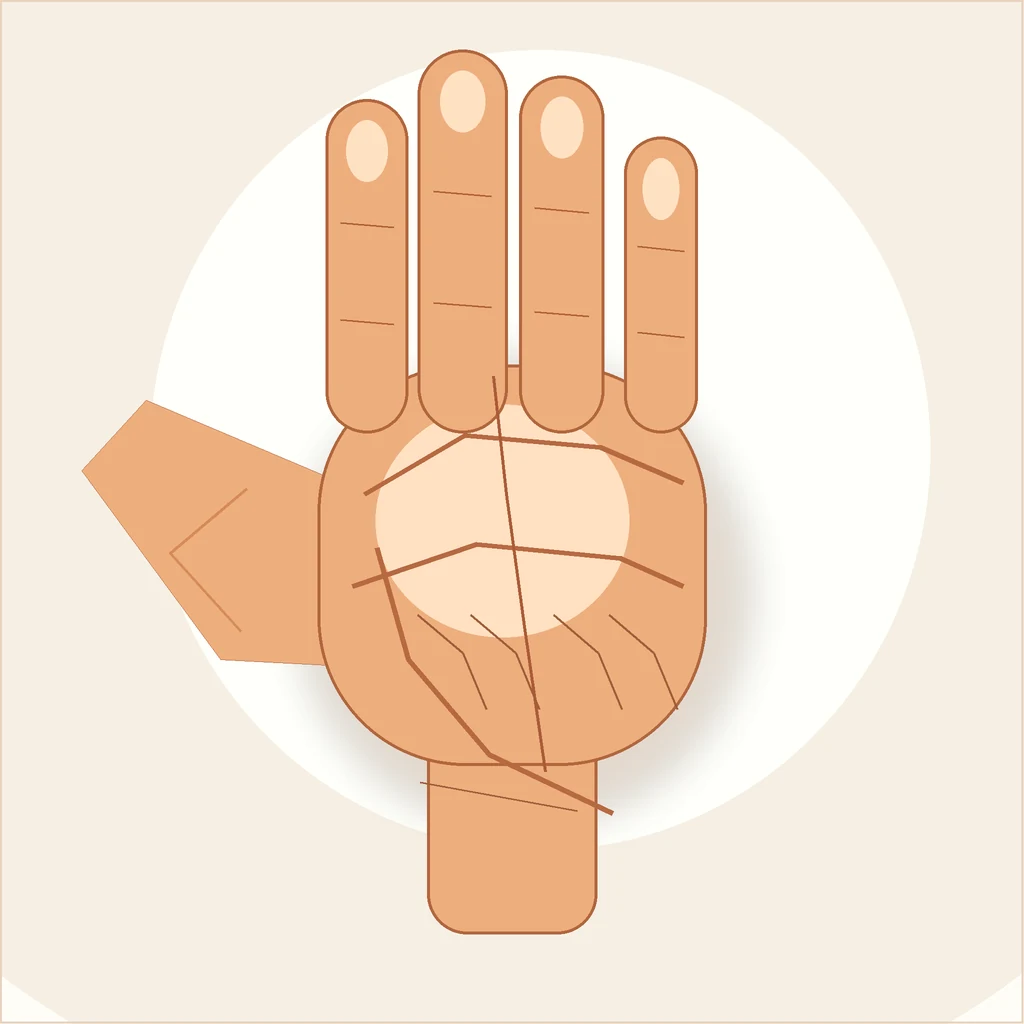
The healer's mark in palmistry refers to a series of short vertical lines (typically three to five) found on the Mount of Mercury, the fleshy area beneath the little finger. Sometimes called "medical stigmata" in older texts, they were associated with healing ability, empathy, and a strong draw toward medicine or caregiving. They are relatively common and appear in many people outside healing professions.

Editorial illustration of the base of the little finger area with small vertical lines
Museum field-note editorial illustration of the upper palm near the little finger with small vertical lines highlighted on the Mercury mount, warm aged parchment style.
Mount of Mercury (below little finger)Location
3–5 short vertical linesAppearance
Medical StigmataAlso Called
Moderately commonHow Common
01Overview

Overview

The short answer

The Mount of Mercury sits at the base of the little finger. In classical palmistry, Mercury ruled commerce, communication, medicine, and the ability to connect with others — a broad portfolio that the god managed apparently without difficulty. Lines on this mount were interpreted according to which Mercurial trait they seemed most aligned with.

Short vertical lines — typically between three and five — on this mount were named "medical stigmata" in Victorian palmistry, which was nothing if not dramatic in its terminology. They were associated with healing aptitude, diagnostic sensitivity, and a deep empathetic connection with others' distress. Practitioners like Cheiro described them as extremely common among doctors, nurses, and healers of all kinds.

They are also common among teachers, therapists, social workers, parents, and — in my observation — nearly anyone who has ever sat with someone in difficulty and tried to help. Which either means the mark is an accurate indicator of caring aptitude, or that caring aptitude is widespread and the mark is common enough to appear in most people who exhibit it.
AI capability map

What the model can detect versus what it cannot know

Can do

Describe visible features, compare lines, and apply a learned palmistry framework.

Cannot do

Verify future events, hidden facts, spiritual claims, or medical conclusions.

02TRADITION

What tradition says about it

Victorian palmistry was particularly enthusiastic about the healer's mark, partly because the nineteenth century was fascinated with categorising human aptitude, and partly because medicine was becoming professionalised and there was genuine interest in identifying who might be best suited to it. The medical stigmata appeared in nearly every major palmistry text of the period, described with varying degrees of confidence as a reliable indicator.

Indian palmistry traditions have analogous formations, though they may be interpreted slightly differently. The emphasis in Indian traditions tends toward healing as a spiritual calling rather than a technical profession, linking the marking to the ability to channel prana or vital energy rather than simply to diagnostic intelligence.

Modern palmists tend to broaden the interpretation to include any kind of healing — physical, emotional, or spiritual — which makes the mark significantly more common but also, arguably, more accurate. Very few people have no capacity to offer comfort to another person in distress.

03HOW COMMON IS IT?

The frequency problem

The healer's mark is described by most sources as relatively common — far more so than rarer formations like the simian line or the Ring of Solomon. This is worth bearing in mind when someone tells you that having it makes you special. Having a common marking that tradition associates with empathy means you share that marking with a very large number of human beings, many of whom probably do not work in healing professions at all. The mark, if it tracks anything, may be tracking a personality dimension that is itself widespread.

04MYTHS

Myth versus reality

Myth

Only healers and medical professionals have this mark.

Reality

It is moderately common across the general population. Many people outside healing professions have it; many healers have lines that do not perfectly match the described formation.

Myth

The more lines, the greater the healing ability.

Reality

Classical texts vary on this. More lines were sometimes associated with greater healing aptitude, but this is not a consistent finding across traditions.

Myth

It means you should become a healer.

Reality

The tradition describes aptitude and inclination, not prescription. It is a tendency, not a career directive.

05PERSPECTIVE

Perspective

The healer's mark is perhaps the most philosophically generous of palmistry's formations. It says: here is evidence that you have the capacity to help. Whether that is mystically written into your hand or simply reflects the reality that most humans are capable of empathy when they choose to exercise it, the net effect is the same — a small encouragement toward care.

06TAKEAWAYS

Verdict

The healer's mark is three to five short vertical lines on the Mount of Mercury, below the little finger.

Practical Use

It was called "medical stigmata" in Victorian palmistry and associated with healing aptitude and empathy.

Important Limit

It is moderately common and appears in many people beyond healing professions.

Reading Context

Modern interpretations broaden it to include emotional and spiritual healing, not just medicine.

07FAQ

FAQ

Common follow-up questions

Is the healer's mark the same as the witch's mark?

No. The healer's mark is vertical lines below the little finger. The witch's mark is associated with the Luna mount (lower palm, little-finger side) and the intuition line. They are different formations with overlapping cultural associations around sensitivity.

How many lines count as a healer's mark?

Most sources say three to five clear, parallel vertical lines. Fewer than three is ambiguous; more than five is sometimes interpreted as nervousness or overextension rather than healing capacity.