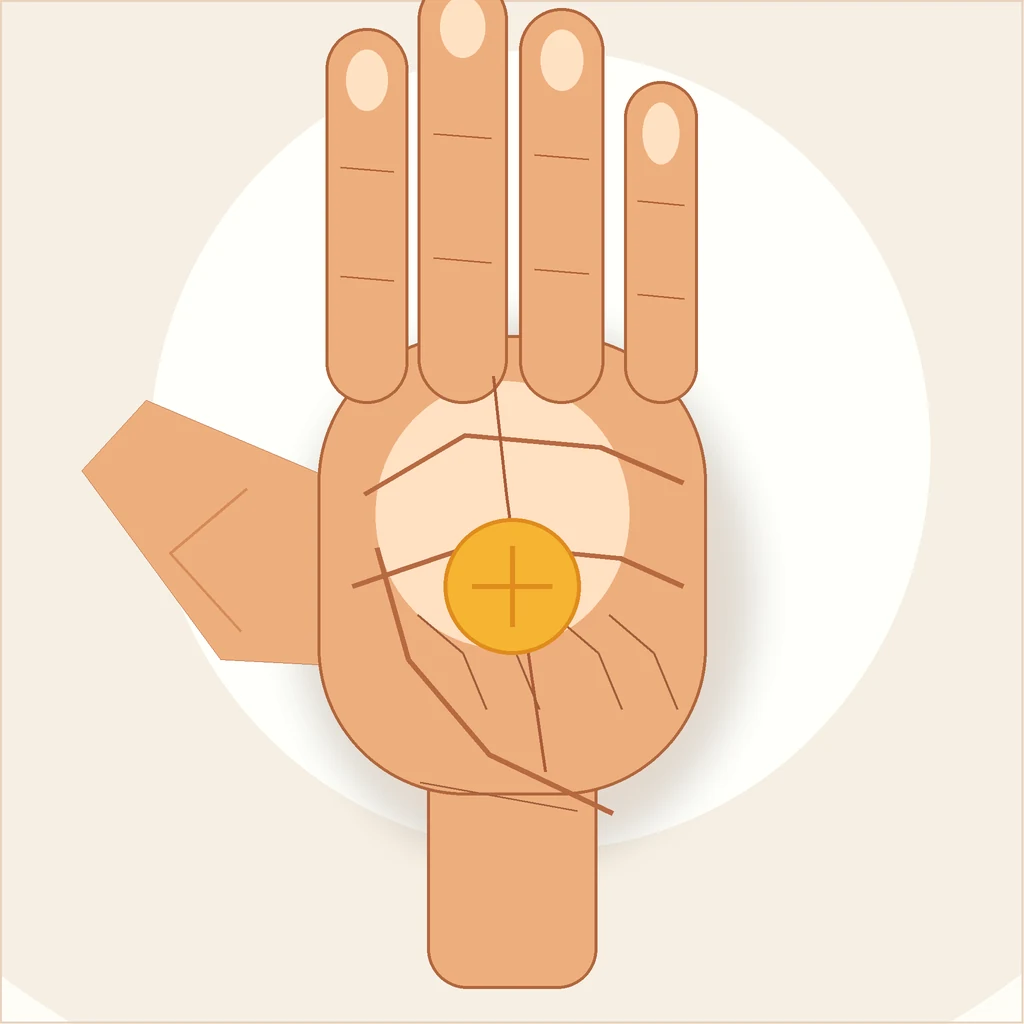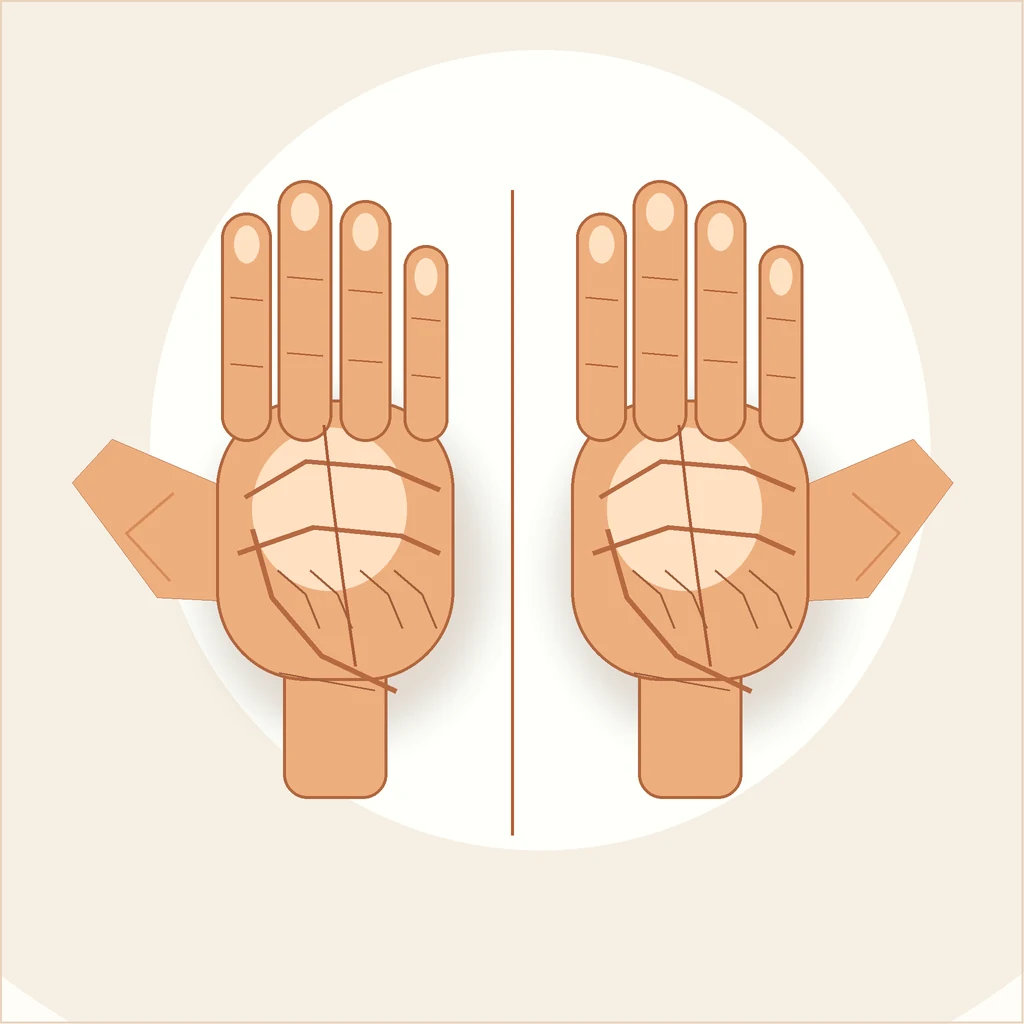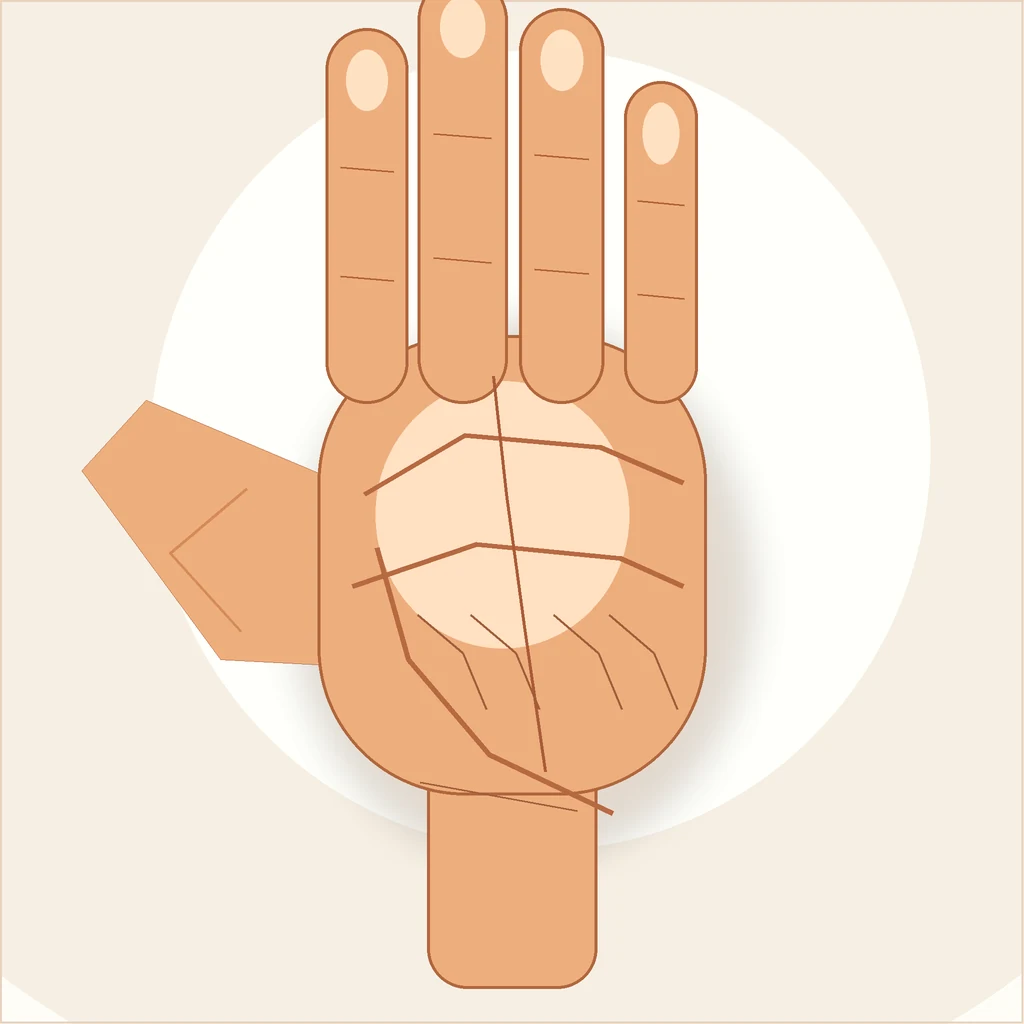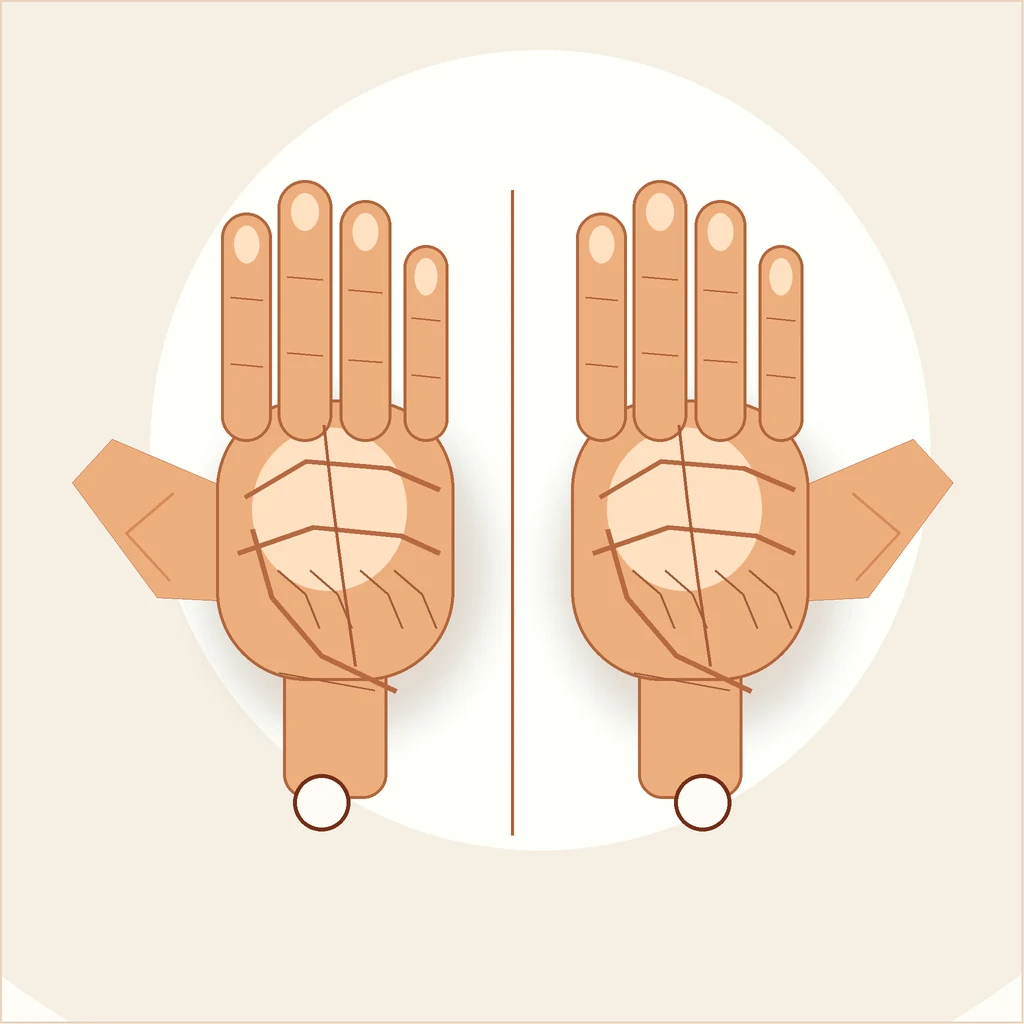
The Western convention is clear and logical: the dominant hand first, because it shows the life you are actively living. This is the hand whose lines reflect what you have done, the choices you have made, and the direction you are currently heading. The non-dominant hand is read second, as a reference point — what you started with, what your innate character and potential looked like before circumstance got involved.
The Indian convention reverses the logic by substituting a gender-based framework for the handedness-based one. The right hand (solar, active) is read first for men; the left hand (lunar, receptive) is read first for women. This reflects the classical Indian view that the solar and lunar energies should be read before comparing the two sides.
Most contemporary palmists — operating without strong allegiance to either convention — read both hands and compare them, starting with whichever produces the most immediate information. For most right-handed people, that is the right hand. The differences between the two hands are often where the interesting observations emerge.