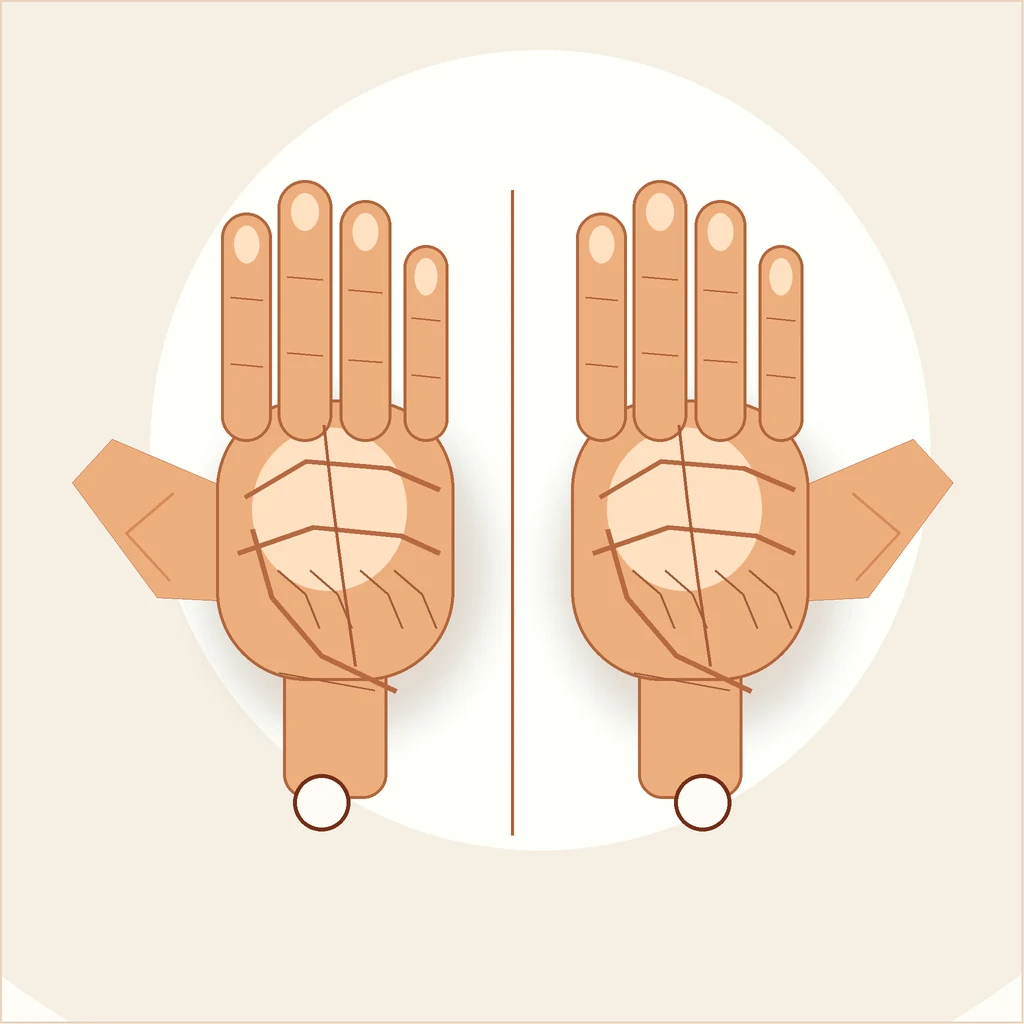
The Indian convention — left for women, right for men — is grounded in the concept of Shakti (feminine cosmic energy) as lunar and receptive, and Shiva (masculine cosmic energy) as solar and active. The left side of the body was associated with lunar energy and therefore with the feminine principle, regardless of individual handedness. Reading the left hand of a woman was reading the hand that corresponded to her primary cosmic energy.
Western palmistry did not adopt this gender-based convention consistently. It developed instead around the dominant/non-dominant distinction, which is functionally different: it tracks activity and passivity in an individual's actual experience rather than assigning them based on a cosmological system.
Most contemporary palmists, working in a global and gender-diverse context, read both hands for everyone and compare them. The differences between the two hands are often the most informative part of a reading, regardless of the person's gender.