Palmistry Explained

Why Do Palm Lines Look Different on Each Hand?

You look at your left palm. The life line is long and clear. You look at your right palm. The life line is shorter and fainter. Same person. Different hands. Different lines.

Does that mean something important? Or is there a simpler explanation?

Left and right palms are not twins. They are siblings.

Quick answer

Palm lines look different on each hand for two reasons. Anatomically, hands are not identical. Your dominant hand often has deeper lines from use. Traditionally, the left hand is read as potential or innate nature, and the right as actualised or lived experience.

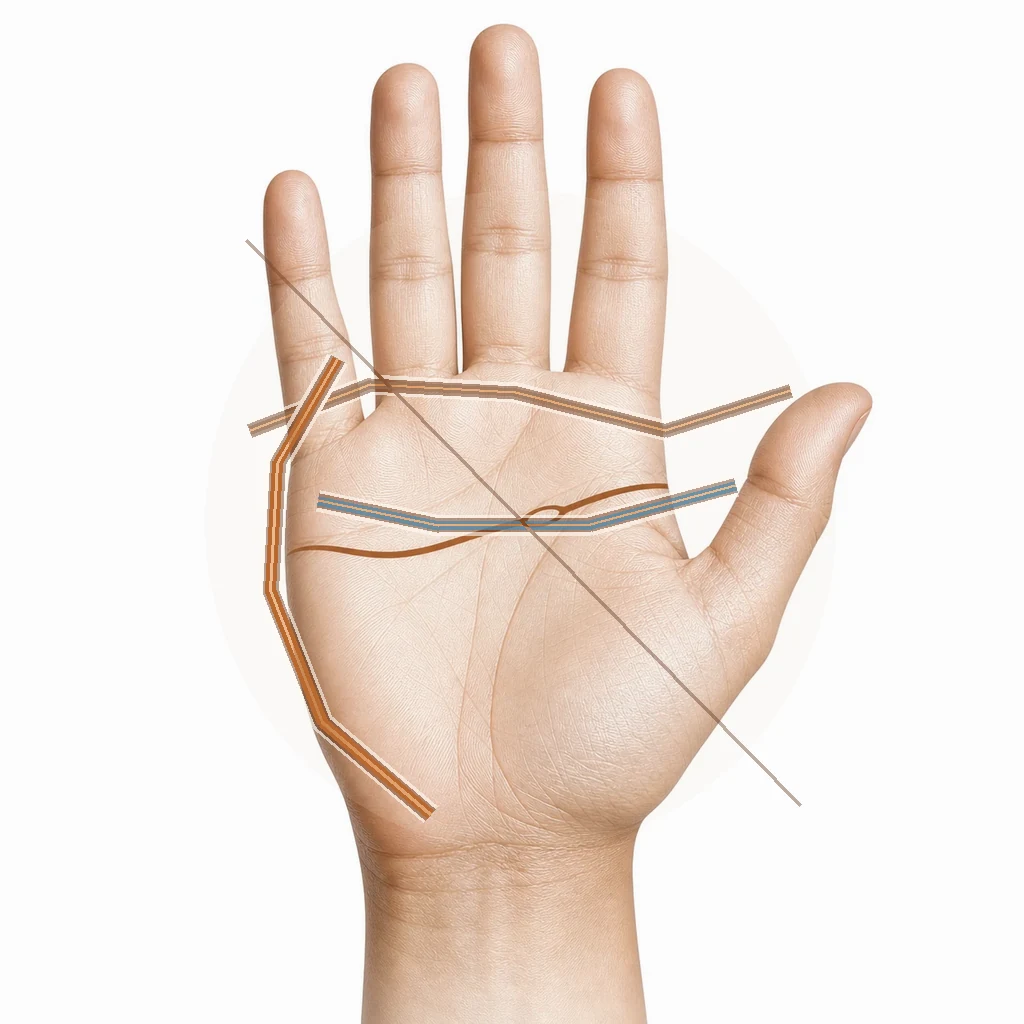
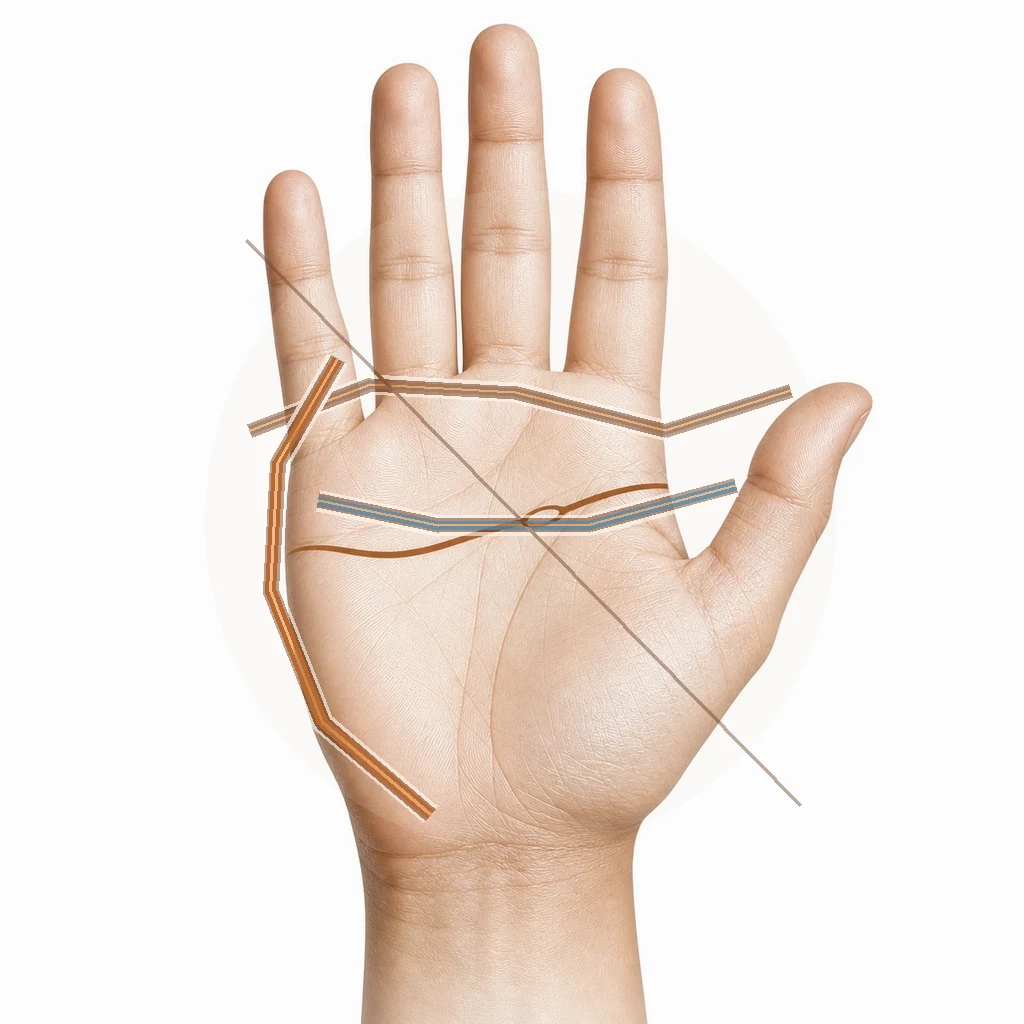
Left and right palms side by side showing different line patterns
Editorial image, left and right open palms side by side, different line patterns visible, soft comparative lighting.
YesAnatomically different?
YesDominant hand effect?
Potential vs. actualTraditional meaning?
Anatomical, not predictiveEvidence?
01Overview

Overview

The short answer

Your left and right hands are not identical. They never were. Handedness, use, and genetics all play a role. The dominant hand (right for most people) typically has deeper, more pronounced lines because it is used more. The non dominant hand often shows fainter lines.

Traditional palmistry adds a layer of interpretation. In many schools, the left hand is read as potential, innate nature, or what you were born with. The right hand is read as actualised life, what you have made of that potential.

The anatomical explanation is simpler and better supported. Lines change with use. The more you use a hand, the more its creases develop. That is not destiny. That is friction.
02ANATOMY

The anatomical explanation

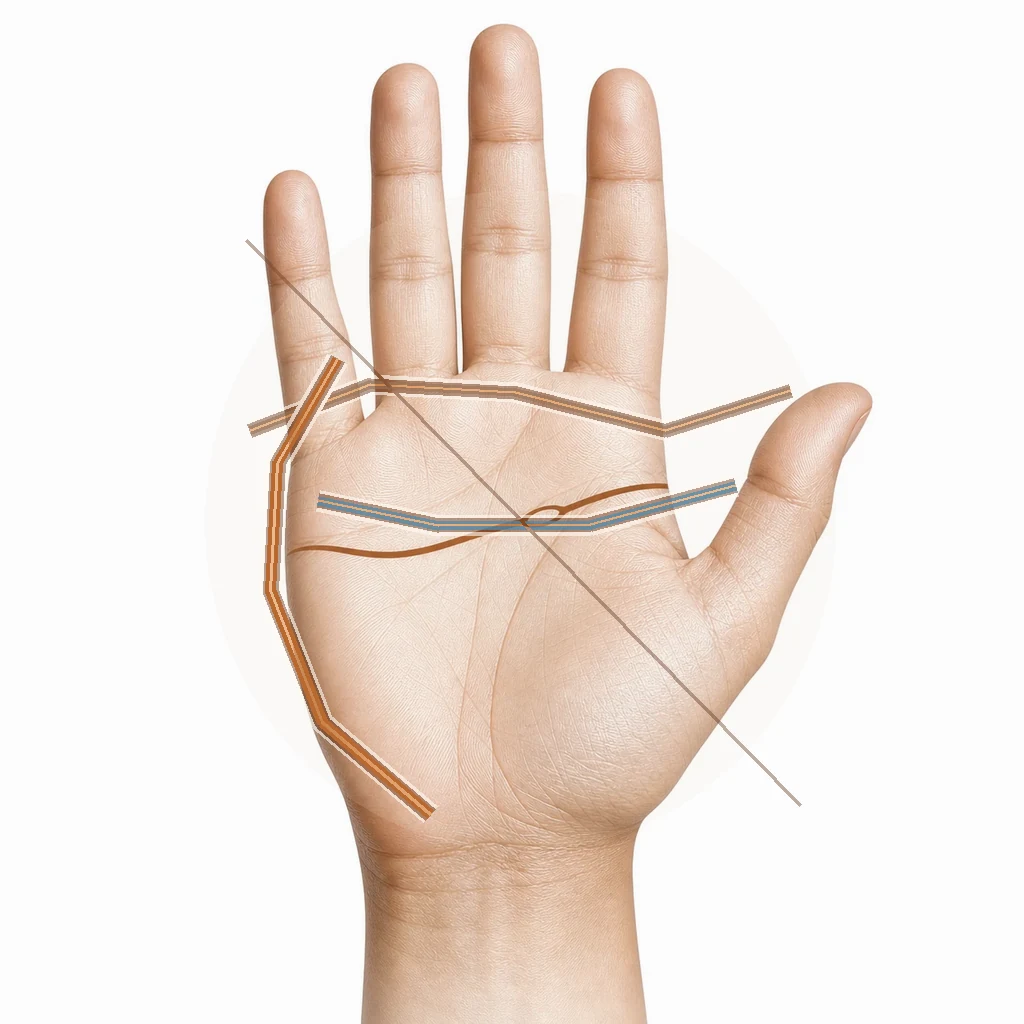
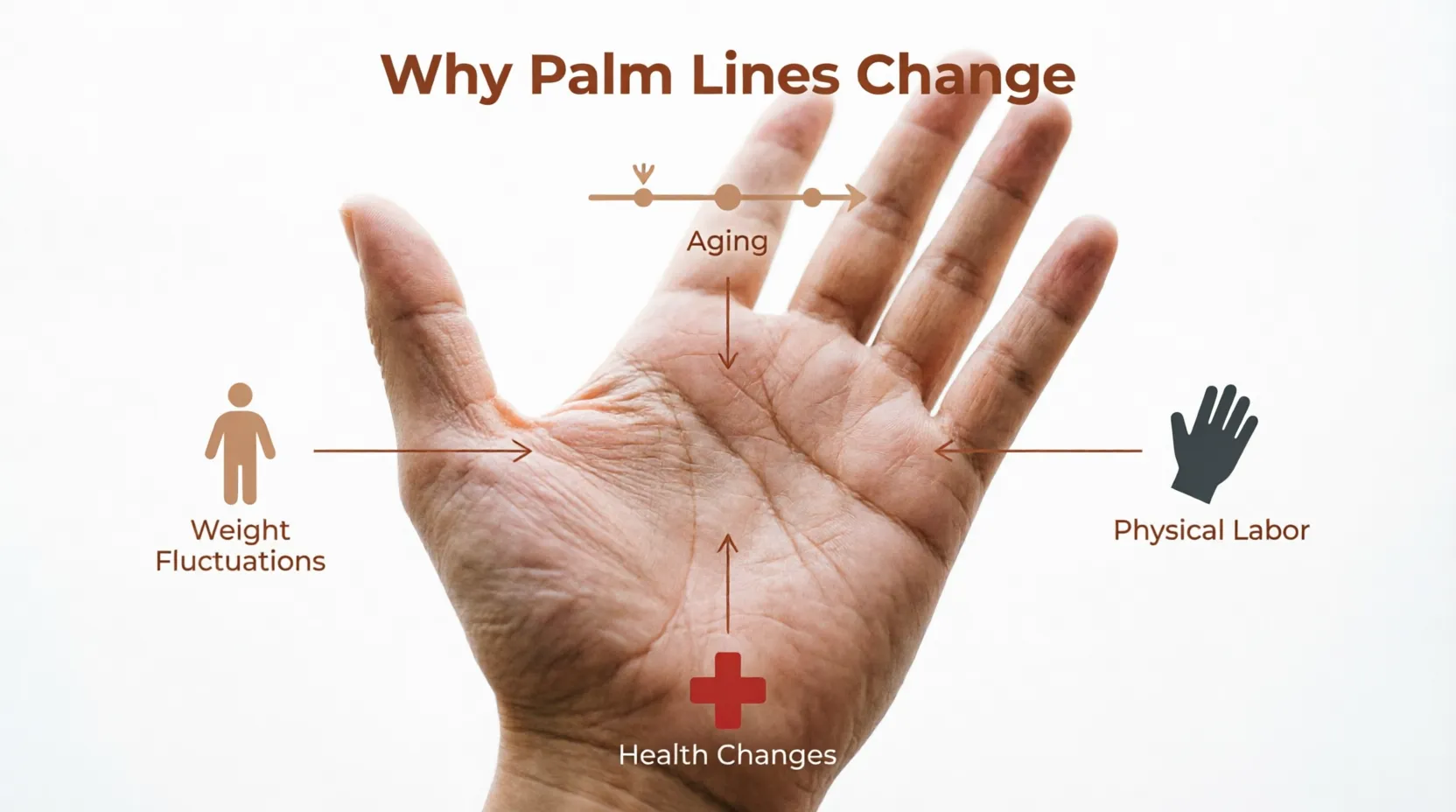
Your hands are not mirror images. They are similar but not identical. Finger lengths can differ slightly. Mount development can differ. And line patterns can differ significantly.

The dominant hand, the one you write with, typically shows deeper, clearer lines. This is because hand use affects skin creasing. Gripping, writing, typing, and manual work all deepen the natural folds of the skin.

The non dominant hand, used less, often shows fainter lines. Some lines may be shorter or even absent. This is not mysterious. It is mechanical.

03TRADITION

The traditional interpretation

Traditional palmistry assigns different meanings to each hand. The left hand (in Western traditions) is the hand of potential, innate nature, or what you were born with. The right hand is the hand of actualised life, what you have made of that potential.

In Indian palmistry, this is often reversed. The right hand is for men, the left for women. Or the active hand is read as present life, the passive hand as past life.

These interpretations vary by tradition. There is no consensus. There is also no evidence that one hand shows "potential" and the other "actuality." That is a useful story, not a fact.

04COMPARISON

Visual guide

Left vs. right palm

How the same person's hands can show different line patterns.

  1. 1Left handNon dominant. Fainter lines.
  2. 2Right handDominant. Deeper lines.
  3. 3DifferenceNormal and expected.
05WHAT SKEPTICS NOTICE

What skeptics notice

The traditional interpretation of left as potential and right as actuality is a post hoc story. There is no evidence that the left hand shows innate nature or that the right shows lived experience. The simpler explanation is mechanical. Use changes lines.

06HAND DIFFERENCE MYTHS

Myth versus reality

Myth

The left hand shows your true self.

Reality

Both hands are you. The difference is largely mechanical.

Myth

The right hand shows your future.

Reality

The right hand shows more use. That is all.

Myth

If lines match, you are balanced.

Reality

Matching lines are less common. Differences are normal.

07DECISION TEST

The decision test

Should you worry if your hands look very different?

No. Hand differences are normal. They do not predict anything about your personality, your future, or your balance.

08PERSPECTIVE

A useful way to see the difference

If you want to use the traditional interpretation, it can be a helpful framework. Left is what you brought into the world. Right is what you have done with it. That is a story, not a fact. But stories can be useful. Just do not mistake them for science.

09TAKEAWAYS

Verdict

Palm lines differ on each hand because hands are not identical.

Practical Use

The dominant hand typically has deeper lines from use.

Reading Context

Traditional interpretations (left potential, right actual) are stories, not facts.

Practical Use

Differences are normal. Do not worry about them.

10FAQ

FAQ

Common follow-up questions

Which hand should I read?

Traditionalists often read both. The dominant hand for actualised life, the non dominant for potential. Many modern readers focus on the dominant hand.

Do left handed people read the opposite?

Some traditions reverse the meanings for left handed people. Others do not. There is no standard.

Why do some lines appear on one hand but not the other?

Use, genetics, and random variation. It is normal.